Search
for
Sort by
Research
540-570 / 1000+ resultsresearch CRISPR/Cas9-Mediated Generation of COL7A1-Deficient Keratinocyte Model of Recessive Dystrophic Epidermolysis Bullosa.
Scientists created a cell model to study and find treatments for a skin disease called RDEB.
research Plica neuropathica: Bird's nest under dermatoscope
Plica neuropathica is a tangled hair condition that may be caused by hair damage or psychiatric issues and is treated by cutting the hair and addressing mental health.
research Expression of MK6a dominant-negative and C-terminal mutant transgenes in mice has distinct phenotypic consequences in the epidermis and hair follicle
Mutant MK6a transgenes in mice cause blistering, hair loss, and potential human alopecia.
research Lichen Planopilaris with Pili Torti and Ectodermal Dysplasia: a hair curling case report.
Early detection and treatment are crucial to prevent irreversible hair loss in Lichen Planopilaris.
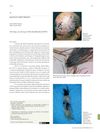
research Exuberant tufted folliculitis
Tufted folliculitis is common in patients with folliculitis decalvans.
research Epithelial Cells in the Hair Follicle Bulge do not Contribute to Epidermal Regeneration after Glucocorticoid-Induced Cutaneous Atrophy
Hair follicle bulge cells don't help skin regrow after glucocorticoid damage; interfollicular epidermis cells do.
research O02 Ubiquitomics of CYLD-deficient skin tumours reveals dysregulation of hair follicle keratinocyte processes
CYLD deficiency in skin tumors disrupts hair follicle cell processes and protein secretion.
research PSEUDOPELADE: AN INHERITED ALOPECIA
Pseudopelade is a rare inherited hair loss condition with a genetic cause.
research Epidermolysis Bullosa in Calves in the United Kingdom
Epidermolysis bullosa in calves was not caused by mutations in the keratin genes bKRT5 and bKRT14.
research Monilethrix
A boy with monilethrix has brittle hair that breaks easily due to a genetic condition, which might improve by puberty.

research 745 Full thickness wound healing in the Lanyu pig
Full thickness wounds on Lanyu pigs' skin resulted in abnormal skin structure and function due to changes in molecular expression patterns.
research Activation of the Notch pathway in the hair cortex leads to aberrant differentiation of the adjacent hair-shaft layers
Notch pathway activation causes abnormal hair layer development.
research Outbreak of dermatophytosis in farmed mink in the USA.
A fungal infection caused skin lesions in farmed mink kits, but they remained healthy.
research 875 A novel animal model of Desmoglein 1 (Dsg1) deficiency reveals an essential role for Dsg1 in epidermal barrier formation
Dsg1 is essential for maintaining a healthy skin barrier in mice.
research Wwox Deficiency Causes Downregulation of Prosurvival ERK Signaling and Abnormal Homeostatic Responses in Mouse Skin
WWOX deficiency in mice causes skin and fat tissue problems due to disrupted cell survival signals.
research Cicatricial (Scarring) Alopecias
Scarring alopecias are complex hair loss disorders that require early treatment to prevent permanent hair loss.
research Structural changes in hair with fungus infections
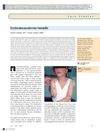
research Erythrokeratodermia Variabilis
A 4-year-old girl was diagnosed with erythrokeratodermia variabilis after other treatments failed.
research Single-cell transcriptomics defines keratinocyte differentiation in avian scutate scales
The research identified two types of keratinocytes in chicken scales: one for hard scales and another for soft skin, with similarities to human skin differentiation.
research Immunohistochemical demonstration of keratins in the epidermal layers of the Malayan pangolin (Manis javanica), with remarks on the evolution of the integumental scale armour
Keratins in Malayan pangolins vary by region, suggesting scales evolved from the tail towards the head.

research A case of cutis verticis gyrata developing in a patient with primary scarring alopecia: A unique presentation of a rare disorder
A rare scalp condition, cutis verticis gyrata, was found in a woman with primary scarring alopecia.

research Tissue Mechanics in Haired Murine Skin: Potential Implications for Skin Aging
Older mice have stiffer skin with less elasticity due to changes in collagen and skin structure, affecting aging and hair loss.
research 660 Complex cellular flows shape feather follicle topology
Cell movements and forces shape feather growth in chicken skin.
research Homozygous Nonsense Mutation in DSC3 Resulting in Skin Fragility and Hypotrichosis
A boy's skin fragility and sparse hair were caused by a genetic mutation affecting skin cell adhesion.
research Loss of Dicer in Newborn Melanocytes Leads to Premature Hair Graying and Changes in Integrin Expression
Removing Dicer from pigment cells in newborn mice causes early hair graying and changes in cell migration molecules.
research An Electron Microscopy Study of Keratin Degradation by the Fungus Microsporum gypseum in vitro
Microsporum gypseum fungus breaks down keratin in hair by digesting it enzymatically, starting with less keratinized parts.
research Histologic Changes in the Skin of Hairless Mice Following Peeling With Salicylic Acid
Salicylic acid can safely exfoliate and regenerate skin without causing inflammation.

research Heterozygous COL5A1 deletion in a cat with classical Ehlers–Danlos syndrome
A cat's poor wound healing was linked to a genetic deletion in the COL5A1 gene.
research Hypotrichosis with juvenile macular dystrophy: a case report with molecular study
A new genetic mutation was found causing hair and eye issues in a boy.