 59 citations
,
June 2008 in “Journal of The American Academy of Dermatology”
59 citations
,
June 2008 in “Journal of The American Academy of Dermatology” The article explains the genetic causes and symptoms of various hair disorders and highlights the need for more research to find treatments.
 47 citations
,
January 2017 in “RSC Advances”
47 citations
,
January 2017 in “RSC Advances” Keratin peptides can change hair shape gently without harsh chemicals.
 43 citations
,
January 2013 in “Indian Journal of Dermatology, Venereology and Leprology”
43 citations
,
January 2013 in “Indian Journal of Dermatology, Venereology and Leprology” The article concludes that advancements in hair cosmetics require dermatologists to stay informed about products and their potential risks, including allergies and higher risks for hairdressers.
 42 citations
,
April 2008 in “Acta materialia”
42 citations
,
April 2008 in “Acta materialia” Different ethnicities and treatments affect human hair strength and structure.
 38 citations
,
October 2011 in “Analytical biochemistry”
38 citations
,
October 2011 in “Analytical biochemistry” Hair proteins have weak spots in their α-helical segments.
 33 citations
,
June 2017 in “Developmental Biology”
33 citations
,
June 2017 in “Developmental Biology” Mice can correct hair follicle orientation without certain genes, but proper overall alignment needs those genes.
 32 citations
,
February 1998 in “The journal of investigative dermatology/Journal of investigative dermatology”
32 citations
,
February 1998 in “The journal of investigative dermatology/Journal of investigative dermatology” Two specific hair keratin genes are active during hair growth and decline as hair transitions to rest.
 29 citations
,
February 2013 in “Proceedings of the National Academy of Sciences of the United States of America”
29 citations
,
February 2013 in “Proceedings of the National Academy of Sciences of the United States of America” Loss of Fz6 disrupts hair follicle and associated structures' orientation.
 26 citations
,
September 1990 in “Ophthalmology”
26 citations
,
September 1990 in “Ophthalmology” The study found no common cause for a girl's crystalline cataract and uncombable hair, suggesting their co-occurrence might be coincidental.
 20 citations
,
July 2010 in “Skin Research and Technology”
20 citations
,
July 2010 in “Skin Research and Technology” Aging makes hair thinner and rougher, with less clear edges.
 17 citations
,
December 2003 in “Veterinary dermatology”
17 citations
,
December 2003 in “Veterinary dermatology” Some masked palm civets in Japan have a skin disease caused by mites.
 13 citations
,
March 2006 in “International Journal of Cosmetic Science”
13 citations
,
March 2006 in “International Journal of Cosmetic Science” The study found that a polymer treatment changes the charge on hair surfaces, making bleached hair smoother and less porous.
 12 citations
,
January 1978
12 citations
,
January 1978 Friesian heifers take about 18 months to adapt to Kenya's climate, with hair changes not strongly linked to weight gain.
 11 citations
,
February 1989 in “Journal of veterinary medicine. Series A”
11 citations
,
February 1989 in “Journal of veterinary medicine. Series A” Crossbreeding certain European cattle breeds may cause hair and physical issues in cattle.
 11 citations
,
June 2012 in “Archives of Dermatological Research”
11 citations
,
June 2012 in “Archives of Dermatological Research” L-cystine and vitamin B6 at high doses prevented hair loss in mice treated with a chemotherapy drug.
 7 citations
,
August 2018 in “Journal of cosmetic dermatology”
7 citations
,
August 2018 in “Journal of cosmetic dermatology” Chemical hair straightening improves smoothness and shine but may cause side effects, suggesting a need for safer methods.
 5 citations
,
May 2021 in “International Journal of Cosmetic Science”
5 citations
,
May 2021 in “International Journal of Cosmetic Science” Healthy scalp leads to better hair quality and less damage.
 3 citations
,
January 1998 in “ACTA HISTOCHEMICA ET CYTOCHEMICA”
3 citations
,
January 1998 in “ACTA HISTOCHEMICA ET CYTOCHEMICA” Hair keratins are mainly on macrofibrils in the cortex and in the endocuticle in the cuticle.
 1 citations
,
July 2024 in “International Journal of Dermatology Venereology and Leprosy Sciences”
1 citations
,
July 2024 in “International Journal of Dermatology Venereology and Leprosy Sciences” Cysteine strengthens hair, and glutamine fuels hair growth.
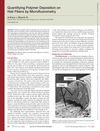 1 citations
,
July 2019 in “Microscopy Today”
1 citations
,
July 2019 in “Microscopy Today” Microfluorometry effectively measures how much polymer coats and penetrates hair, useful for evaluating hair products.
 1 citations
,
July 2005 in “Drugs and the pharmaceutical sciences”
1 citations
,
July 2005 in “Drugs and the pharmaceutical sciences” Targeting drugs to hair follicles can treat skin conditions, but reaching deep follicle areas is hard and needs more research.
 December 2025 in “International Journal For Multidisciplinary Research”
 Muridae species have unique hair patterns specific to each genus and species.
 April 2024 in “Research Square (Research Square)”
 16-MHA can restore the barrier and moisture of damaged hair, making it similar to undamaged hair.
 June 2021 in “Journal of emerging technologies and innovative research”
 Onion and Aloe vera can help protect hair from damage caused by hair dyes.
 October 2007 in “Journal of Investigative Dermatology”
 The meeting highlighted the genetic basis of female pattern hair loss and various skin health insights.
 316 citations
,
June 2004 in “The journal of investigative dermatology/Journal of investigative dermatology”
316 citations
,
June 2004 in “The journal of investigative dermatology/Journal of investigative dermatology” Microspheres about 1.5 micrometers in size can best penetrate hair follicles, potentially reaching important stem cells.
 122 citations
,
April 2011 in “European Journal of Pharmaceutics and Biopharmaceutics”
122 citations
,
April 2011 in “European Journal of Pharmaceutics and Biopharmaceutics” Particles around 100 nm can penetrate and stay in hair follicles without passing through healthy skin, making them safe for use in topical products and useful for targeted drug delivery.
 94 citations
,
September 2014 in “Therapeutic Delivery”
94 citations
,
September 2014 in “Therapeutic Delivery” Nanoparticles can improve skin treatments by better targeting hair follicles, but more research is needed for advancement.
 39 citations
,
November 2013 in “European journal of pharmaceutics and biopharmaceutics”
39 citations
,
November 2013 in “European journal of pharmaceutics and biopharmaceutics” Massage increases how deep both rigid and flexible liposomes can go into skin, with flexible ones going deeper, and covering the skin (occlusion) helps rigid ones more.
 16 citations
,
November 2020 in “International journal of pharmaceutics”
16 citations
,
November 2020 in “International journal of pharmaceutics” Using longer PEG chains helps nanoparticles penetrate hair follicles better, improving drug delivery for conditions like alopecia.