57 citations
,
August 2002 in “American Journal Of Pathology” Cathepsin L deficiency causes hair and skin issues in mice.
 7 citations
,
July 2008 in “Experimental Dermatology”
7 citations
,
July 2008 in “Experimental Dermatology” The study concluded that a protein important for hair strength is regulated by certain molecular processes and is affected by growth phases.
36 citations
,
July 1988 in “Archives of Dermatological Research” Pili annulati is caused by a protein metabolism disorder affecting hair structure.
63 citations
,
April 2005 in “Mechanisms of development” Mice with too much Claudin-6 have skin barrier problems and abnormal hair growth.
 22 citations
,
December 2016 in “PloS one”
22 citations
,
December 2016 in “PloS one” A specific protein in chicken embryos links early skin layers to feather development.
44 citations
,
March 2019 in “Experimental Dermatology” A wide range of proteins are integrated into the skin's protective layer.
February 1999 in “The anatomical record” Two mouse mutants have defective hair cuticle cross-linking.
 April 2017 in “Journal of Investigative Dermatology”
 The protein CTCF is essential for skin development, maintaining hair follicles, and preventing inflammation.
56 citations
,
July 2004 in “Mechanisms of Development” Pax9 is crucial for proper tongue surface development and preventing skin-like changes.
33 citations
,
June 2007 in “Gene Expression Patterns” CTIP2 may help in skin development and maintenance.
30 citations
,
February 2010 in “The journal of investigative dermatology/Journal of investigative dermatology” Plet-1 protein helps hair follicle cells move and stick to tissues.
 5 citations
,
March 2009 in “Pediatric Dermatology”
5 citations
,
March 2009 in “Pediatric Dermatology” The study found that pili bifurcati causes hair to intermittently split into two branches, each with its own outer layer.
 January 2001 in “Biomedical Research”
 THH and PAD type III appear together early in hair growth, but deiminated THH appears later, suggesting another factor is involved.
24 citations
,
January 2018 in “Development” Frizzled 3 and Frizzled 6 together control the orientation of mouse hair follicles.
26 citations
,
January 1993 in “Dermatology” A rare case of isolated trichothiodystrophy was identified, marked by brittle hair with low sulfur content.
16 citations
,
June 1992 in “Journal of Investigative Dermatology” 58 citations
,
November 2004 in “The journal of investigative dermatology/Journal of investigative dermatology” The Foxn1 gene is essential for normal nail and hair development.
29 citations
,
August 2011 in “PubMed” Hair and nail proteins, mainly keratins, are crucial for structure and can indicate health issues.
38 citations
,
December 2006 in “Journal of Investigative Dermatology” Keratin patterns in hair follicles help understand hair growth and potential hair and nail disorders.
91 citations
,
December 2000 in “The journal of cell biology/The Journal of cell biology” Scientists successfully created mouse hair proteins in the lab, which are stable and similar to natural hair.
375 citations
,
June 2013 in “Biochimica et biophysica acta. Molecular cell research” Cornification is how skin cells die to form the protective outer layer of skin, hair, and nails.
 1 citations
,
January 2018 in “Acta dermato-venereologica”
1 citations
,
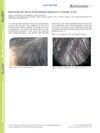
January 2018 in “Acta dermato-venereologica” A teenager's hair with alternating white and dark bands, known as Pili annulati, is a genetic condition that is usually harmless and often considered attractive.
28 citations
,
January 2015 in “Journal of Cell Science” PINCH-1 is crucial for skin cell adhesion and movement, working with EPLIN and ILK.
4 citations
,
April 1989 in “The Journal of Dermatology” Trichohyalin granules help inner root sheath cells in hair follicles harden by integrating with keratin filaments.
4 citations
,
April 2012 in “The journal of investigative dermatology/Journal of investigative dermatology” Krt16-deficient mice help understand skin disorders like PC and FNEPPK.
11 citations
,
May 2013 in “Journal of Investigative Dermatology” KRTAP10 proteins help form the hair shaft's tough outer layer by interacting with specific hair keratins.
8 citations
,
January 2011 in “International journal of trichology” Accurate diagnosis of APL is crucial to avoid unnecessary treatments.
22 citations
,
May 2007 in “Molecular Biotechnology” 21 citations
,
April 2004 in “Australasian Journal of Dermatology” A 3-year-old girl has a rare condition causing sparse hair and nail issues, with minimal improvement from treatment.