 April 2019 in “Journal of Investigative Dermatology”
 Women with scarring alopecia are less likely to have used hormone replacement therapy or oral contraceptives compared to those with female pattern hair loss.
 April 2019 in “The journal of investigative dermatology/Journal of investigative dermatology”
 HDAC inhibitors, like Vorinostat and Entinostat, can help regrow hair in alopecia areata.
 April 2019 in “The journal of investigative dermatology/Journal of investigative dermatology”
 848 genes related to fat and metabolism are less active in people with Central Centrifugal Cicatricial Alopecia.
 July 2018 in “Elsevier eBooks”
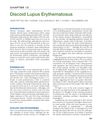
 Discoid Lupus Erythematosus often causes scarring hair loss, is influenced by genetics and environment, and requires early treatment to prevent worsening.
 May 2018 in “White Rose eTheses Online (University of Leeds, The University of Sheffield, University of York)”
 Alopecia areata may be treated by using EGCG to balance immune cells and reduce inflammation.
 April 2018 in “Journal of Investigative Dermatology”
 DPP4 is important for scarring and skin regeneration, and managing its activity could improve skin healing treatments.
 April 2018 in “Journal of Investigative Dermatology”
 The study found that p63 needs signals from morphogens to help skin cells differentiate properly.
 April 2018 in “Journal of Investigative Dermatology”
 Older hair follicle stem cells have a reduced ability to renew themselves, leading to more hair loss.
 April 2018 in “Journal of Investigative Dermatology”
 People with palmoplantar pustulosis, especially with bone issues, have different mouth bacteria compared to healthy people.
 April 2018 in “Journal of Investigative Dermatology”
 BLZ-100 is safe for use in skin cancer surgery and may help identify cancerous tissue.
 April 2018 in “Journal of Investigative Dermatology”
 High amphiregulin in the skin is a bad sign for acute graft-versus-host disease.
 April 2018 in “Journal of Investigative Dermatology”
 IL-17C is important in inflammatory skin diseases and could be a target for treatment.
 April 2018 in “Journal of Investigative Dermatology”
 Cutaneous lupus patients have higher levels of certain immune cells in their blood and skin.
 April 2018 in “The journal of investigative dermatology/Journal of investigative dermatology”
 Skin heals with scars because only one type of fibroblast is used, not a mix.
 April 2018 in “Journal of Investigative Dermatology”
 Both Th1 and Th2 immune responses are increased in alopecia areata, with Th2 response more strongly linked to how severe the disease is.
 April 2018 in “Journal of Investigative Dermatology”
 Activating Nrf2 helps wounds heal faster by increasing hair follicle stem cells.
 April 2018 in “Journal of Investigative Dermatology”
 Topical tofacitinib is effective in promoting hair growth for non-scarring alopecia.
 April 2018 in “The journal of investigative dermatology/Journal of investigative dermatology”
 The model can effectively test gene functions and drug responses in human skin.
 January 2018 in “Springer eBooks”
 PDE inhibitors, especially PDE4 inhibitors like apremilast, are effective for certain inflammatory skin conditions but have side effects and can be costly.
 April 2017 in “The journal of investigative dermatology/Journal of investigative dermatology”
 HSD11b1 affects skin nerves and increases non-histaminergic itch.
 April 2016 in “Plastic and reconstructive surgery. Global open”
 Tafluprost could be a potential treatment for hair loss by promoting hair growth phase changes.
 April 2016 in “Plastic and reconstructive surgery. Global open”
 Surgery may help infants with sagittal craniosynostosis develop more typical language processing.
 January 2016 in “Human & Experimental Toxicology”
 A specific DNA sequence caused hair loss in male mice by activating immune cells and increasing a certain immune signal.
 January 2016 in “Springer eBooks”
 New materials and methods could improve skin healing and reduce scarring.
 January 2014 in “Journal of Investigative Dermatology”
 Proteins like aPKC and PDGF-AA, substances like adenosine and ATP, and adipose-derived stem cells all play important roles in hair growth and health, and could potentially be used to treat hair loss and skin conditions.
 January 2014 in “Durham e-Theses (Durham University)”
 Notch1 helps skin heal by attracting cells that aid repair.

Higher cholesterol levels increase aggressive prostate cancer risk.
 January 2012 in “heiDOK (Heidelberg University)”
 Dormant melanoma cells in mice interact minimally with memory T cells due to a suppressive tumor environment.
 January 2011 in “International Journal of Trichology”
 The document concludes that doctors should recognize congenital triangular alopecia to avoid unnecessary treatments, as it does not respond to steroids like alopecia areata does.
 December 2010 in “Jurnal Natural (Faculty of Mathematics and Natural Science, Syiah Kuala University)”
 Age, race, family history, and certain genetic factors increase prostate cancer risk.