 59 citations
,
February 2003 in “Veterinary Dermatology”
59 citations
,
February 2003 in “Veterinary Dermatology” Cyclosporin is effective for treating skin conditions in small animals, but requires careful dosing and monitoring for side effects.
 36 citations
,
January 2006 in “Veterinary Dermatology”
36 citations
,
January 2006 in “Veterinary Dermatology” Cyclosporin effectively and safely treated skin diseases in three pets with no side effects.
 36 citations
,
May 2004 in “The journal of small animal practice/Journal of small animal practice”
36 citations
,
May 2004 in “The journal of small animal practice/Journal of small animal practice” Combining cyclosporine A and ketoconazole can effectively treat anal furunculosis in dogs, with some experiencing recurrences and mild side effects.
 34 citations
,
January 2005 in “Journal of the American Veterinary Medical Association”
34 citations
,
January 2005 in “Journal of the American Veterinary Medical Association” Cyclosporine A can reduce inflammation in dogs with sebaceous adenitis, but ongoing treatment is needed.
23 citations
,
December 1988 in “British Journal of Dermatology” Topical cyclosporin may help delay hair loss.
 7 citations
,
February 2014 in “Talanta”
7 citations
,
February 2014 in “Talanta” Researchers developed a method to identify and analyze cyclosporin compounds and their structures effectively.
 29 citations
,
March 2015 in “Journal of Investigative Dermatology”
29 citations
,
March 2015 in “Journal of Investigative Dermatology” Cyclosporine A promotes hair growth and prolongs the active growth phase in human hair follicles, but may work differently than in rodents.
25 citations
,
December 1991 in “The Journal of Dermatology” Cyclosporin A promotes hair growth in young nude mice.
 15 citations
,
November 1997 in “Australasian Journal of Dermatology”
15 citations
,
November 1997 in “Australasian Journal of Dermatology” A combination of oral cyclosporin and PUVA treatment worked well for a severe skin condition called generalized pustular psoriasis.
10 citations
,
July 1994 in “Journal of Dermatological Science” Cyclosporin extends hair growth in mice, but high-dose corticosteroids block this effect.
5 citations
,
January 1991 in “Acta Dermato Venereologica” Topical cyclosporin promotes hair growth.
 4 citations
,
January 1994 in “Journal of hepatology”
4 citations
,
January 1994 in “Journal of hepatology” Cyclosporine A therapy changes sex hormone levels differently in pre-menopausal and post-menopausal women with primary biliary cirrhosis.
 3 citations
,
March 2014 in “Journal of Industrial Microbiology & Biotechnology”
3 citations
,
March 2014 in “Journal of Industrial Microbiology & Biotechnology” Scientists found a new gene in a bacterium that can modify an immunosuppressant drug, potentially helping to treat hair loss.
 1 citations
,
October 2024 in “Journal of Nepal Paediatric Society”
1 citations
,
October 2024 in “Journal of Nepal Paediatric Society” Stopping Cyclosporine A led to hair regrowth in a child with alopecia.
 1 citations
,
November 2001 in “British Journal of Dermatology”
1 citations
,
November 2001 in “British Journal of Dermatology” Oral cyclosporin doesn't stop hair loss.
1 citations
,
January 2004 in “Linchuang pifuke zazhi” Topical cyclosporin-A is recommended for severe alopecia areata.
 April 2023 in “Journal of Investigative Dermatology”
 Cyclosporin A, a drug, reduces TGF-β2 expression in skin cells, potentially causing excessive hair growth through a process involving the calcineurin/NFAT pathway.
 July 2008 in “British Journal of Dermatology”
 Cyclosporin doesn't stop hair loss.
 84 citations
,
March 2004 in “Veterinary Dermatology”
84 citations
,
March 2004 in “Veterinary Dermatology” Cyclosporin is effective in treating dog skin diseases and has fewer side effects compared to other treatments.
 11 citations
,
September 2012 in “Journal of Nanjing Medical University”
11 citations
,
September 2012 in “Journal of Nanjing Medical University” Cyclosporine A was found to increase hair growth in mouse whisker follicles.
33 citations
,
February 1990 in “Journal of the American Academy of Dermatology” Topical cyclosporine led to significant hair growth in some men with male pattern baldness.
 24 citations
,
May 2010 in “Veterinary dermatology”
24 citations
,
May 2010 in “Veterinary dermatology” Oral ciclosporin A and topical treatments both reduce hair loss and scaling in dogs with sebaceous adenitis, but using both together is most effective.
 23 citations
,
October 2005 in “Journal of The American Academy of Dermatology”
23 citations
,
October 2005 in “Journal of The American Academy of Dermatology” Two transplant patients on cyclosporine unexpectedly developed hair loss.
 21 citations
,
January 2013 in “Annals of dermatology/Annals of Dermatology”
21 citations
,
January 2013 in “Annals of dermatology/Annals of Dermatology” The combination of cyclosporine and PUVA might help treat severe alopecia areata.
 21 citations
,
April 2010 in “Veterinary Dermatology”
21 citations
,
April 2010 in “Veterinary Dermatology” Hydroxychloroquine showed some potential, but overall, the three drugs had limited success in treating lupus in dogs.
20 citations
,
July 2009 in “Experimental and Clinical Endocrinology & Diabetes” Cyclosporin A does not change sex hormone levels.
20 citations
,
March 1990 in “Archives of Dermatology” Nonimmunosuppressive cyclosporines might treat skin diseases by affecting cell growth.
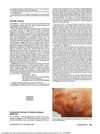 18 citations
,
March 1990 in “Archives of Dermatology”
18 citations
,
March 1990 in “Archives of Dermatology” Cyclosporine cleared a woman's resistant skin condition quickly and kept it away for over a year.
16 citations
,
July 1989 in “British journal of dermatology/British journal of dermatology, Supplement” Topical cyclosporin A doesn't work for alopecia totalis because it doesn't penetrate the skin well.
14 citations
,
January 2016 in “Annals of dermatology/Annals of Dermatology” Oral cyclosporine is more effective and safer than betamethasone for treating alopecia areata.