 1 citations
,
July 2024 in “International Journal of Dermatology Venereology and Leprosy Sciences”
1 citations
,
July 2024 in “International Journal of Dermatology Venereology and Leprosy Sciences” Cysteine strengthens hair, and glutamine fuels hair growth.
 1 citations
,
July 2022 in “Clinical and Experimental Dermatology”
1 citations
,
July 2022 in “Clinical and Experimental Dermatology” Amino acid supplements may not be necessary for all women with chronic hair loss.
 August 2022 in “Clinical and Experimental Dermatology”
 Amino acid supplements may not be necessary for all women with chronic hair loss.
 28 citations
,
October 2011 in “International Journal of Molecular Medicine”
28 citations
,
October 2011 in “International Journal of Molecular Medicine” Adenosine helps hair grow longer and stronger by boosting certain growth factors and signaling pathways.
6 citations
,
January 1998 in “Journal of applied cosmetology” 21 citations
,
January 2000 in “Fetal Diagnosis and Therapy” Prenatal diagnosis of trichothiodystrophy is possible in the second trimester using fetal eyebrow biopsy, with sulfur content analysis being more reliable.
 48 citations
,
July 1993 in “The journal of investigative dermatology/Journal of investigative dermatology”
48 citations
,
July 1993 in “The journal of investigative dermatology/Journal of investigative dermatology” Hair growth is controlled by specific gene clusters and proteins, and cysteine affects hair gene expression in sheep.
 34 citations
,
January 2011 in “Fundamental & Clinical Pharmacology”
34 citations
,
January 2011 in “Fundamental & Clinical Pharmacology” New treatments for PCOS show promise, but no current medication treats all aspects of the condition.
18 citations
,
January 1978 in “Advances in experimental medicine and biology” Hair cystine levels may indicate protein malnutrition, but more research is needed.
 January 2011 in “Yearbook of Dermatology and Dermatologic Surgery”
 Hair relaxers are linked to reduced cystine levels and potential hair damage.
74 citations
,
July 1995 in “PubMed” Lowering homocyst(e)ine levels can reverse skin and hair lightening by restoring enzyme activity needed for pigmentation.
4 citations
,
December 1989 in “The Journal of Dermatology” Human hair proteins have similar cysteine and glycine levels to skin proteins.
December 2024 in “The Eurasia Proceedings of Science Technology Engineering and Mathematics” Higher ꝩ-GCS enzyme levels in PCOS patients may play a role in the disease.
January 2011 in “대한피부과학회지” A 7-year-old girl was diagnosed with trichothiodystrophy due to low sulfur levels in her hair.
6 citations
,
September 2010 in “Pigment Cell & Melanoma Research” We know less about human hair pigmentation than mouse coat color, but pH and cysteine levels are key factors.
4 citations
,
January 1976 in “Archives of Dermatological Research” Metabolic disorders can cause hair structure defects and growth issues, but amino acid levels in hair remain normal.
January 2020 in “Korean journal of ophthalmology/Korean Journal of Ophthalmology” Minoxidil increases cell layer permeability by reducing tight junction proteins and raising ROS levels.
 40 citations
,
July 2015 in “Journal of Cellular Biochemistry”
40 citations
,
July 2015 in “Journal of Cellular Biochemistry” Cysteine helps maintain keratin production in skin cells even when iron is low.
 7 citations
,
January 1982 in “Acta agriculturae Scandinavica”
7 citations
,
January 1982 in “Acta agriculturae Scandinavica” Mink use L-methionine and L-cystine slightly better than natural amino acids for hair growth, but D-methionine is not effective.
 4 citations
,
April 1955 in “Textile Research Journal”
4 citations
,
April 1955 in “Textile Research Journal” The effectiveness of reducing agents on hair fibers depends on their electrode potentials.
GV-350 improves hair growth and quality of life in iron-deficient women without side effects.
 40 citations
,
November 1998 in “The journal of investigative dermatology/Journal of investigative dermatology”
40 citations
,
November 1998 in “The journal of investigative dermatology/Journal of investigative dermatology” S100A3 protein is crucial for hair shaft formation in mice.
28 citations
,
July 1980 in “British Journal of Dermatology” The hair disorder was caused by abnormal protein formation, making hair easily damaged.
26 citations
,
January 1983 in “PubMed” Trichothiodystrophy involves brittle hair due to low sulfur amino acids, not a transport defect.
 19 citations
,
March 1961 in “Nature”
19 citations
,
March 1961 in “Nature” A fatty acid/protein complex in human hair helps protect it from damage.
 14 citations
,
November 2015 in “Annals of the New York Academy of Sciences”
14 citations
,
November 2015 in “Annals of the New York Academy of Sciences” Changing the diet of mice lacking the enzyme CBS can affect symptoms related to the genetic condition.
10 citations
,
May 1974 in “American journal of diseases of children” The girl had a rare disorder causing mental and physical symptoms, with weak hair and unclear neurological issues.
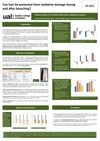 September 2018 in “University of the Arts London Research Online (University of the Arts London)”
 L-arginine, hydrolysed keratin, and cystine-silanol copolymer can help protect hair from damage during and after bleaching.
 2 citations
,
November 1995 in “American Journal of Obstetrics and Gynecology”
2 citations
,
November 1995 in “American Journal of Obstetrics and Gynecology” Taking vitamin B6 corrected a pregnant woman's metabolic disorder, which changed her hair color.
 26 citations
,
September 1990 in “Ophthalmology”
26 citations
,
September 1990 in “Ophthalmology” The study found no common cause for a girl's crystalline cataract and uncombable hair, suggesting their co-occurrence might be coincidental.