 9 citations
,
June 2021 in “International Journal of Pharmaceutics”
9 citations
,
June 2021 in “International Journal of Pharmaceutics” Using polymeric micelles to deliver spironolactone topically could improve wound healing in skin affected by glucocorticoids.
 January 2024 in “Research Square (Research Square)”
 Traditional Chinese medicine may help treat ischemic stroke by targeting specific genes and pathways.
 69 citations
,
April 2019 in “Biomedicines”
69 citations
,
April 2019 in “Biomedicines” PRP and HF-MSCs treatment improves hair growth, thickness, and density in androgenetic alopecia.
 66 citations
,
July 2007 in “Journal of Molecular Medicine”
66 citations
,
July 2007 in “Journal of Molecular Medicine” Stress increases certain chemicals in the skin and nerves, which might worsen skin conditions.
 33 citations
,
December 2023 in “Cell Death Discovery”
33 citations
,
December 2023 in “Cell Death Discovery” Cepharanthine may help treat gastric cancer by causing cancer cell death and affecting energy use.
 4 citations
,
May 2023 in “Research Square (Research Square)”
4 citations
,
May 2023 in “Research Square (Research Square)” Cepharanthine can potentially treat gastric cancer by stopping tumor growth.
 April 2026 in “Inflammopharmacology”
 Punica granatum leaf extract may help treat skin fibrosis by reducing inflammation and oxidative stress.
 January 2024 in “Journal of Biosciences and Medicines”
 Combining Ginkgo biloba and butylphthalide improves cognitive recovery and reduces inflammation after a stroke.
 1 citations
,
January 2023 in “Portuguese Journal of Dermatology and Venereology”
1 citations
,
January 2023 in “Portuguese Journal of Dermatology and Venereology” JAK inhibitors effectively treat skin conditions and topical forms are safer.
 1 citations
,
April 2018 in “Journal of Investigative Dermatology”
1 citations
,
April 2018 in “Journal of Investigative Dermatology” Oleoylethanolamide (OEA) safely boosts fat production in skin cells and may help treat dry skin and reduce inflammation.
 3 citations
,
February 2019 in “Animal biotechnology”
3 citations
,
February 2019 in “Animal biotechnology” The PLP2 gene affects cashmere fiber quality in goats and is linked to hair growth and loss.
 January 2012 in “Journal of Investigative Dermatology”
 Small molecule DMF improves psoriasis and multiple sclerosis, adult skin cells can be made to grow new hair, certain skin cells initiate hair growth, IL-17C controls gut health and can cause skin inflammation, and skin cells produce IL-17 that can lead to psoriasis.
 8 citations
,
March 2014 in “American Journal of Pathology”
8 citations
,
March 2014 in “American Journal of Pathology” Damaged hair follicles make mice more prone to skin inflammation and skin cancer after UV exposure.
 159 citations
,
October 2015 in “Science Advances”
159 citations
,
October 2015 in “Science Advances” Blocking JAK-STAT signaling can lead to hair growth.
 133 citations
,
May 2016 in “Cell Host & Microbe”
133 citations
,
May 2016 in “Cell Host & Microbe” Human dermal fibroblasts are the main cells targeted by a virus that can cause a deadly skin cancer, and a certain inhibitor can effectively block this infection.
 42 citations
,
November 2018 in “Archives of dermatological research”
42 citations
,
November 2018 in “Archives of dermatological research” Apremilast was not effective in treating moderate-to-severe alopecia areata.
 32 citations
,
January 2005 in “Advances in Biochemical Engineering / Biotechnology”
32 citations
,
January 2005 in “Advances in Biochemical Engineering / Biotechnology” Fetal wounds heal without scarring because of different biological factors, which could help improve adult wound healing.
 20 citations
,
August 2014 in “PloS one”
20 citations
,
August 2014 in “PloS one” MED1 affects skin wound healing differently in young and old mice.
 14 citations
,
January 2020 in “Advances in Dermatology and Allergology”
14 citations
,
January 2020 in “Advances in Dermatology and Allergology” Higher interleukin-15 levels are linked to more severe alopecia areata, but not to age or gender.
 1 citations
,
July 2019 in “Clinical Rheumatology”
1 citations
,
July 2019 in “Clinical Rheumatology” Leflunomide is more likely to help treat alopecia areata than cause it.
 August 2024 in “New Zealand Medical Student Journal”
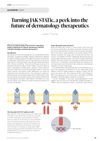
 JAK inhibitors show promise for treating skin diseases effectively and safely.
 April 2021 in “Journal of Investigative Dermatology”
 People with atopic dermatitis have more CD4+ T cells that respond to a certain bacterial lipid, which may play a role in the skin condition's inflammation.
 10 citations
,
July 2011 in “British Journal of Dermatology”
10 citations
,
July 2011 in “British Journal of Dermatology” Lower growth factors linked to balding in androgenetic alopecia.
 77 citations
,
June 2017 in “Advances in Therapy”
77 citations
,
June 2017 in “Advances in Therapy” New treatments for Alopecia Areata, like JAK inhibitors, show promise for hair regrowth and are likely to change future treatment approaches.
 June 2023 in “Livestock studies”
 The article concludes that understanding the molecular processes in hair follicle development can improve the quality of fibers like Angora and cashmere.
Activin A increases inner ear hair cell development, while follistatin decreases it.
 September 2024 in “Journal of the Pakistan Medical Association”
 A 589 nm laser increases IL-2 and IFN-y gene expression in human T-cells.
 252 citations
,
April 2009 in “Seminars in Cell & Developmental Biology”
252 citations
,
April 2009 in “Seminars in Cell & Developmental Biology” The immune system plays a key role in tissue repair, affecting both healing quality and regenerative ability.
 43 citations
,
August 2018 in “Cell Stem Cell”
43 citations
,
August 2018 in “Cell Stem Cell” Hoxc genes control hair growth through Wnt signaling.
PRP may help reduce brain inflammation and protect brain cells.