July 2003 in “Current Prostate Reports” Combining different treatments may be needed to effectively manage chronic prostatitis.
30 citations
,
January 2001 in “Journal of the American Veterinary Medical Association” High adrenal sex hormones in dogs with hypercortisolemia can mislead adrenal hyperplasia diagnosis.
 2 citations
,
December 2008 in “Journal of Chemical Crystallography”
2 citations
,
December 2008 in “Journal of Chemical Crystallography” The research shows that hydrogen bonds greatly affect the crystal structure of a Finasteride derivative.
 March 2016 in “Reactions Weekly”
 A woman experienced hair loss, nail changes, bone marrow suppression, and low blood protein after taking azathioprine.
January 2026 in “Human Mutation” T cell subsets are crucial in kidney cancer, and a new model predicts patient outcomes using key genes.
1 citations
,
November 2007 in “Neuro-chirurgie/Neurochirurgie” Cyproterone acetate is a safe treatment that causes modest feminization in transgender female adolescents, and works better with added estrogens.
 63 citations
,
May 2011 in “Clinical cancer research”
63 citations
,
May 2011 in “Clinical cancer research” The topical inhibitor CUR61414 was not effective in treating basal cell carcinoma in human trials.
March 2015 in “DergiPark (Istanbul University)” PUVA treatment is effective and safe for alopecia areata.

A new topical treatment for hair loss is effective and safe with faster results.
21 citations
,
April 2021 in “ACS omega” Curcumin can be effectively loaded into polystyrene nanoparticles, which are safe for human cells and more biocompatible with curcumin inside.
 January 2019 in “Proceedings for Annual Meeting of The Japanese Pharmacological Society”
 Nε-(carboxymethyl) lysine delays hair growth by blocking a key protein.
 August 2013 in “Nature Reviews Drug Discovery”
 New treatments may restore cancer-blocking proteins, slow prostate cancer, identify drug targets, and potentially regrow hair.
55 citations
,
March 2014 in “EMBO Reports” Protein ubiquitylation is crucial for controlling stem cell functions and could be targeted for cancer treatment.
 3 citations
,
January 2017 in “Revista chilena de nutrición”
3 citations
,
January 2017 in “Revista chilena de nutrición” Certain natural compounds called terpenes may help prevent prostate cancer.
October 2025 in “Plant Science Today” Cytokinins help Vitex negundo grow better and bloom more.
 January 2023 in “IntechOpen eBooks”
 The document concludes that specific methods for making diazine-based drugs can lead to high yields and are important for creating effective treatments for various diseases.
14 citations
,
January 2015 in “Annals of dermatology/Annals of Dermatology” Corticosteroid pulse therapy is more effective for severe alopecia areata than combination therapy.
20 citations
,
July 2009 in “Experimental and Clinical Endocrinology & Diabetes” Cyclosporin A does not change sex hormone levels.
Antiandrogen treatment helps reduce hair follicles and sebaceous glands in hirsute women.

A new topical treatment for hair loss is effective and safe with faster results.

A new topical treatment for hair loss is effective and safe with faster results.

A new topical treatment for hair loss is effective and safe with faster results.

A new topical treatment for hair loss is effective and safe with faster results.
 4 citations
,
January 2014 in “RSC Advances”
4 citations
,
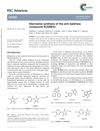
January 2014 in “RSC Advances” A new, less toxic and more efficient method to create the anti-baldness compound RU58841 was developed in 2014.
January 1975 in “NJEA Review” The drug showed promise in treating renal cell carcinoma with manageable side effects.
 April 2017 in “Journal of Investigative Dermatology”
 Triptolide effectively and safely reduces actinic keratosis lesions in mice.
13 citations
,
July 2017 in “Annals of Oncology” Chemotherapy toxicity might be reduced by using DNA neutralizing agents.
9 citations
,
February 2002 in “International Journal of Dermatology” The patient's symptoms improved with treatment but recurred when the steroid dose was reduced, requiring ongoing therapy.
16 citations
,
July 1989 in “British journal of dermatology/British journal of dermatology, Supplement” Topical cyclosporin A doesn't work for alopecia totalis because it doesn't penetrate the skin well.
 31 citations
,
February 2019 in “International Journal of Cosmetic Science”
31 citations
,
February 2019 in “International Journal of Cosmetic Science” Caffeine applied to the scalp can protect hair follicles from UV damage.