36 citations
,
February 1998 in “Journal of Anatomy” Fibre optic confocal imaging can visualize skin layers, blood vessels, and nerves in live mice.
 January 2025 in “Iraqi Journal of Science”
 PDCD4 protein levels, affected by genetics and breastfeeding, may predict breast cancer treatment response.
 July 2021 in “International journal of dermatology, venereology and leprosy sciences”
 Diphenylcyclopropenone is more effective and has fewer side effects than dinitrochlorobenzene for treating alopecia areata.
 44 citations
,
February 2015 in “Journal of the American Academy of Dermatology”
44 citations
,
February 2015 in “Journal of the American Academy of Dermatology” Combining diphenylcyclopropenone with anthralin is more effective for hair regrowth in alopecia areata than using diphenylcyclopropenone alone, but may cause more side effects.
 March 2008 in “Aging health”
 Docetaxel is safe and works well for older people with cancer, with manageable side effects.
 May 2019 in “Pakistan Journal of Pharmaceutical Sciences”
 CO2 laser treatment may be more effective for skin rejuvenation.
4 citations
,
October 2018 in “Skin appendage disorders” Co-washing is gentler on hair but can cause residue buildup.
20 citations
,
April 2000 in “Experimental dermatology” ODC transgenic mice can model human hair loss with skin lesions.
 May 2024 in “Animal genetics”
 A cat's poor wound healing was linked to a genetic deletion in the COL5A1 gene.

Vitamin D is crucial for skin health and managing skin diseases.
14 citations
,
June 2020 in “Journal of the American Academy of Dermatology” Global collaboration in dermatology improved data sharing and patient care during COVID-19.
 April 2019 in “Journal of Investigative Dermatology”
 Increasing COX-2 in mouse skin causes bigger sebaceous glands and thinner hair, but stopping COX-2 can reverse hair thinning.
13 citations
,
November 2005 in “Epilepsia” Deoxycorticosterone and its metabolites help prevent seizures by interacting with specific receptors.
September 2024 in “Journal of the American Academy of Dermatology” Subcision is the most efficient, cost-effective, and safest treatment for post-acne boxcar scarring in skin of color.
 39 citations
,
January 2016 in “PubMed”
39 citations
,
January 2016 in “PubMed” Understanding how EDC genes are regulated can help develop better drugs for skin diseases.
 61 citations
,
March 2009 in “The Journal of the American Board of Family Medicine”
61 citations
,
March 2009 in “The Journal of the American Board of Family Medicine” Early diagnosis and treatment of discoid lupus erythematosus improve outcomes.
 1 citations
,
June 2018 in “International Journal of Dermatology”
1 citations
,
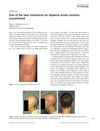
June 2018 in “International Journal of Dermatology” DNCB is highly effective for treating alopecia areata with minimal long-term side effects.
 1 citations
,
January 2023 in “Journal of cosmetic dermatology”
1 citations
,
January 2023 in “Journal of cosmetic dermatology” Combining CO2 laser with platelet-rich plasma is more effective for treating acne scars than laser alone.
 March 2024 in “bioRxiv (Cold Spring Harbor Laboratory)”
 Minoxidil treatment improves heart defects in a DiGeorge syndrome model.
 42 citations
,
July 2010 in “International Journal of Dermatology”
42 citations
,
July 2010 in “International Journal of Dermatology” Dermatoscopy and videodermatoscopy are useful and reliable for tracking treatment progress in various skin conditions.
 July 2022 in “Journal of Investigative Dermatology”
 Dkk4 is necessary for the initial development and arrangement of hair follicles.

A portable imaging system shows promise for diagnosing skin diseases and checking laser treatment effects.
 October 2018 in “Journal of Cosmetic Dermatology”
 The September 2018 Journal of Cosmetic Dermatology covered various dermatology topics and emphasized its dedication to diverse global contributions.
 December 2025 in “Scientific Reports”
 Gut microbiota and metabolic pathways may play a key role in PCOS development.
August 2025 in “Journal of Polymer Science” AcD scaffolds improve tissue repair and regeneration by combining stem cells with a supportive matrix.
 November 2022 in “Journal of Investigative Dermatology”
 Most Recessive Dystrophic Epidermolysis Bullosa patients with a specific mutation likely have Sephardic ancestry from about 500 years ago.
1 citations
,
August 2024 in “Skin Health and Disease” Topical immunotherapy with DPCP led to some hair regrowth in most pediatric alopecia areata patients, especially those with milder cases and longer treatment.
29 citations
,
December 2004 in “Developmental biology” cDermo-1 causes dense skin, feathers, and scales in chickens.
 April 2017 in “Journal of Investigative Dermatology”
 The hair follicle dermal sheath is essential for hair shedding and needs to communicate with the outer root sheath for normal hair growth cycles.
 21 citations
,
September 2016 in “Journal of Dermatological Treatment”
21 citations
,
September 2016 in “Journal of Dermatological Treatment” The new classification system for skin disorders emphasizes the importance of understanding a patient's awareness of their condition for better treatment.