16 citations
,
June 1983 in “Journal of Neurochemistry” Copper therapy improved health and enzyme activity in mice with copper deficiency.
55 citations
,
February 2013 in “The Anatomical Record” Mouse nails are similar to human nails, making them useful for studying nail diseases.
76 citations
,
January 1998 in “Mammalian Genome” 49 citations
,
September 2016 in “Genes Brain & Behavior” Zfp462 deficiency in mice causes anxiety-like behaviors and excessive self-grooming.
2 citations
,
October 2023 in “PubMed” Scientists created a cell model to study and find treatments for a skin disease called RDEB.
June 2023 in “bioRxiv (Cold Spring Harbor Laboratory)” Scientists created cell lines to study a genetic skin disorder using CRISPR technology.
7 citations
,
October 1988 in “Clinics in Dermatology” Minoxidil can promote hair growth in hairless mice.
11 citations
,
January 2005 in “Brazilian Journal of Medical and Biological Research” Hairless USP mice have enlarged skin cysts as they age.
5 citations
,
March 2022 in “STAR Protocols” The method helps study hair follicle stem cells and calcium signals in mouse skin.
27 citations
,
July 1997 in “PubMed” The harlequin ichthyosis mouse mutation causes thick skin and early death, resembling a human skin disorder.
Whiskers can form without sensory nerves or Foxd1, thanks to Meis2 in mesenchymal cells.
3 citations
,
May 2008 in “Journal of Visualized Experiments” Mouse Epidermal Neural Crest Stem Cells can become various cell types.
 35 citations
,
August 2010 in “The American journal of pathology”
35 citations
,
August 2010 in “The American journal of pathology” Researchers created a new mouse model for studying Citrullinemia Type I and similar conditions, showing symptoms and treatment responses like those in humans.
1 citations
,
July 2006 in “Journal of Investigative Dermatology” A 4kb fragment of the desmocollin 3 promoter targets gene expression to specific skin and hair follicle areas.
 58 citations
,
June 2006 in “Plastic and Reconstructive Surgery”
58 citations
,
June 2006 in “Plastic and Reconstructive Surgery” Mice healed without scars as fetuses but developed scars as adults, suggesting scarless healing might be replicated with further research.
 March 1998 in “Journal of dermatological science”
 Diphencyprone initially increases mouse hair growth, then slows it, possibly due to changes in specific protein levels.
 May 2023 in “Stem cell research & therapy”
 New method efficiently isolates hair growth cells from newborn mouse skin.

Meis2 is essential for touch sensation and proper nerve connection to touch receptors in certain skin areas of mice.
1 citations
,
May 2024 in “Communications Biology” Dab2 protein is crucial for hair follicle stem cell renewal and preventing early aging.
48 citations
,
June 2000 in “Japanese Journal of Cancer Research” Dimethylarsinic acid speeds up skin tumor growth in certain mice.
 March 2022 in “Osaka City University (Osaka City University)”
 Ovariectomy in mice affects hair growth and skin thickness, suggesting potential for obesity treatment research.
 418 citations
,
September 2012 in “Nature”
418 citations
,
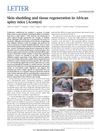
September 2012 in “Nature” African spiny mice can regenerate skin, hair, and cartilage, but not muscle, and their unique abilities could be useful for regenerative medicine.
 1 citations
,
January 2020 in “bioRxiv (Cold Spring Harbor Laboratory)”
1 citations
,
January 2020 in “bioRxiv (Cold Spring Harbor Laboratory)” Dicer is crucial for hair growth in mice.
Researchers created a new mouse model, G4, that mimics human PCOS symptoms and links the condition to a specific gene.
8 citations
,
September 2011 in “Scanning” Multiphoton microscopy effectively images mouse skin layers and structures.
4 citations
,
April 2023 in “bioRxiv (Cold Spring Harbor Laboratory)” The improved genome of the African spiny mouse helps study its tissue regeneration.
April 2019 in “Journal of Investigative Dermatology” The humanized AA mouse model is better for testing new alopecia areata treatments.
28 citations
,
June 1995 in “The Journal of Dermatology” The flaky skin mouse mutation is a natural model for studying human psoriasis.
 16 citations
,
February 2014 in “Journal of Investigative Dermatology”
16 citations
,
February 2014 in “Journal of Investigative Dermatology” Researchers developed a mouse model that tracks hair growth using bioluminescence, improving accuracy in studying hair cycles.
 March 2024 in “EMBO molecular medicine”
 Antiviral drugs, especially daclatasvir, may be a new treatment for a rare skin disease, improving survival and reducing symptoms in mice.