September 2023 in “Membranes” 3D-printed membranes with smart sensors can greatly improve tissue healing and have many medical applications.
32 citations
,
June 2024 in “Pharmaceutics” Nanoformulations improve drug delivery through the skin, reducing side effects and enhancing effectiveness.
 30 citations
,
July 2022 in “Scientific Reports”
30 citations
,
July 2022 in “Scientific Reports” Obesity and lifestyle strongly affect heart aging.
 November 2025 in “Scientific Reports”
 AI improves accuracy and consistency in diagnosing male pattern hair loss.
 6 citations
,
July 2024 in “The Journal of the American Board of Family Medicine”
6 citations
,
July 2024 in “The Journal of the American Board of Family Medicine” GPT-4 performs well on medical exams but still needs human doctors for critical thinking.
 47 citations
,
June 2019 in “Nature Communications”
47 citations
,
June 2019 in “Nature Communications” Noncoding dsRNA boosts hair growth by activating TLR3 and increasing retinoic acid.
 April 2026 in “Cellular and Molecular Immunology”
 SPT6 prevents excessive skin inflammation by blocking a feedback loop.
New peptides can delay aging and improve cell function.
 4 citations
,
December 2022 in “Frontiers in cell and developmental biology”
4 citations
,
December 2022 in “Frontiers in cell and developmental biology” Zebrafish larvae are used to study and find treatments for ear cell damage because they are easier to observe and test than mammals.
 March 2026 in “Dermatology and Therapy”
 Distinct miRNA signatures could help diagnose and treat severe Alopecia Areata.
 October 2025 in “Pakistan journal of urology.”
 Personalized, minimally invasive treatments improve urology outcomes.
 February 2023 in “International Journal of Multimedia Computing”
 The improved algorithm enhances low-dose CT image quality significantly better than other methods.
 January 2024 in “Wiadomości Lekarskie”
 AI improves vascular surgery by enhancing diagnostics, planning, and monitoring.
 January 2024 in “Wiadomości Lekarskie”
 AI is transforming healthcare by improving diagnostics and therapy, despite challenges with data and trust.
 January 2024 in “Wiadomości Lekarskie”
 Robotic surgery and artificial hearts are revolutionizing cardiac surgery.
 January 2024 in “Wiadomości Lekarskie”
 Social media and virtual reality increase dissatisfaction with natural appearance, boosting demand for aesthetic surgery.
 January 2024 in “Wiadomości Lekarskie”
 Virtual surgical planning improves efficiency, coordination, and precision in complex surgeries.
 1 citations
,
October 2023
1 citations
,
October 2023 Syntax-based neural networks can match Transformers in handling unseen sentences.
Pre-trained Transformers need extreme retraining to perform well on DarkNet data.
 13 citations
,
January 2020 in “Neuroscience”
13 citations
,
January 2020 in “Neuroscience” Blocking 5α-reductase can harm memory and brain structure, and increase harmful brain changes in male mice used for Alzheimer's disease research.
 9 citations
,
November 2018 in “Drug Discovery Today”
9 citations
,
November 2018 in “Drug Discovery Today” Using skin stem cells and certain molecules might lead to scar-free skin healing.
 2 citations
,
January 1979 in “Yearbook of English studies”
2 citations
,
January 1979 in “Yearbook of English studies” Nineteenth-century British drama closely reflected the era's societal values and concerns.
 1 citations
,
October 2022
1 citations
,
October 2022 OTEC power output is higher in summer due to greater temperature differences.
 June 2026 in “Journal of Biological Engineering”
 Stem cell therapies are advancing quickly with new technologies and need supportive regulations for clinical use.
 May 2026 in “Organoid Research”
 Hydrogel-based hair follicle organoids could help treat hair loss and improve drug testing.
 May 2025 in “The Journal of Rheumatology”
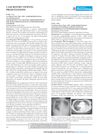
 Proactive physical therapy improved mobility, reduced fatigue, and pain in lupus patients.

The conference emphasized innovative solutions for global challenges, including disaster architecture, education, health, and economic impacts.
 January 2020 in “Durham e-Theses (Durham University)”
 UK law does not effectively ensure workplace equality for people with visible differences.
 September 2003 in “Journal of the Royal Society of Medicine”
 Improving end-of-life care at home requires better coordination, communication, and support.
EFBL offers hidden incisions, faster recovery, and fewer risks, but may raise hairline and cost more.