49 citations
,
February 2025 in “Science Advances” Biomimetic synthetic vesicles could improve precision medicine by combining natural and synthetic benefits.
10 citations
,
November 2018 in “bioRxiv (Cold Spring Harbor Laboratory)” New laser particles can track thousands of cells in 3D models, improving single-cell analysis.
2 citations
,
June 2025 in “Nano Research” Gold nanoclusters can improve detection, imaging, and therapy in medicine.
August 2023 in “Journal of Investigative Dermatology” Skin organoids can regenerate hair by forming specific cell units with certain signals.
 28 citations
,
September 2013 in “Journal of Investigative Dermatology”
28 citations
,
September 2013 in “Journal of Investigative Dermatology” The document concludes that dermal papilla cells are key for hair growth and could be used in new hair loss treatments.
 February 2026 in “Nano Research”
 A new microneedle treatment can help regrow hair by improving lymphatic function and metabolism.
164 citations
,
February 2010 in “Journal of Cell Science” Human dermal stem cells can become functional skin pigment cells.
 May 2024 in “Nano letters”
 Polydopamine and quercetin together can speed up hair regrowth.
January 2016 in “Frontiers in Bioengineering and Biotechnology” Keratin-based hydrogels can be improved for medical use by adding PEG, making them more soluble and adjustable.
 March 2024 in “Bioactive Materials”
 New treatment using engineered nanovesicles in hydrogel improves hair growth by repairing hair follicle cells in a mouse model of hair loss.
8 citations
,
April 2017 in “Journal of The Royal Society Interface” Giant axonal neuropathy changes the structure of keratin in human hair.
 15 citations
,
January 2020 in “ACS Applied Materials & Interfaces”
15 citations
,
January 2020 in “ACS Applied Materials & Interfaces” Nanofiber structure helps regenerate hair follicles.
17 citations
,
October 2023 in “Polymers” Electrospun nanofibers are promising for medical, sensing, and energy uses, especially with 3D printing.
29 citations
,
September 2020 in “Polymers” The PCL/PHB blend allows for slower, more controlled curcumin release than individual polymers.
 April 2025 in “BMC Chemistry”
 Thiadiazole chitosan conjugates improve hair manageability, moisture, and protection in conditioners.
 October 2025 in “Journal of Molecular Structure”
 Hyaluronic acid microneedles help deliver minoxidil derivatives effectively for hair regrowth.
 January 2022 in “Current Enzyme Inhibition”
 New nonsteroidal molecules can potentially increase dihydrotestosterone in neurons by blocking certain enzymes, without affecting prostate and seminal vesicle weight.
November 2025 in “OPAL (Open@LaTrobe) (La Trobe University)” DAB labeling effectively identifies collagen type III and PDGFR in horse skin, but may show false positives.
 April 2025 in “Cellular and Molecular Biology”
 Human dermal stem/progenitor cells can divide and differentiate more than hair follicle dermal papilla cells.
28 citations
,
October 2024 in “Advanced Materials” Artificial skin can heal wounds without scars and regenerate hair, oil, and sweat glands.
January 2007 in “The FASEB journal” Human hair keratins help nerve regeneration and support Schwann cell activity.

Encapsulating hair loss drugs in cyclodextrins improves their solubility and reduces scalp irritation.
47 citations
,
September 1997 in “Journal of Pharmaceutical Sciences” Properly formulated large molecules can reach active levels at the hair bulb.
Ceramide may help delay hair aging by restoring stressed hair cells.
 1 citations
,
June 2018 in “International Journal of Dermatology”
1 citations
,
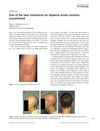
June 2018 in “International Journal of Dermatology” DNCB is highly effective for treating alopecia areata with minimal long-term side effects.
4 citations
,
October 2021 in “Journal of Clinical Medicine” Carriers of a specific gene mutation have subtle skin changes without visible symptoms.
September 2016 in “Toxicology letters” The 5050 MHA42MCS45 hydrogel blend is suitable for repairing load-bearing soft tissues.
12 citations
,
May 2017 in “Journal of pharmaceutical and biomedical analysis” The method shows that zinc pyrithione and climbazole from anti-dandruff shampoo effectively reach the scalp.
 December 2023 in “Materials Today Sustainability”
 Scientists made glow-in-the-dark dots from human hair that can detect iron, prevent counterfeiting, and reveal fingerprints.
1 citations
,
May 2025 in “Current Issues in Molecular Biology” Centipeda minima and brevilin A protect skin cells from damage and aging.