 108 citations
,
November 2006 in “Phytomedicine”
108 citations
,
November 2006 in “Phytomedicine” Green tea component EGCG could potentially promote human hair growth.
 63 citations
,
October 2013 in “Dermatologic Surgery”
63 citations
,
October 2013 in “Dermatologic Surgery” Platelet-Rich Plasma (PRP) increases the number of new hair follicles and speeds up hair formation.
 51 citations
,
July 2013 in “Bioorganic & Medicinal Chemistry Letters”
51 citations
,
July 2013 in “Bioorganic & Medicinal Chemistry Letters” Compounds from Polygonum multiflorum root, especially a new one, can boost hair growth more effectively than common treatments.
 29 citations
,
April 2020 in “Journal of Tissue Engineering and Regenerative Medicine”
29 citations
,
April 2020 in “Journal of Tissue Engineering and Regenerative Medicine” The experiment showed that human skin grown in the lab started to form early hair structures when special cell clusters were added.
 25 citations
,
March 2014 in “Experimental Dermatology”
25 citations
,
March 2014 in “Experimental Dermatology” Leptin helps start the growth phase of hair.
 15 citations
,
April 2020 in “Journal of The American Academy of Dermatology”
15 citations
,
April 2020 in “Journal of The American Academy of Dermatology” Botulinum toxin injections may help treat hair loss by blocking harmful secretion in hair follicles.
13 citations
,
September 2017 in “Cytometry Part A” Horse hair follicles could be a new source of stem cells for healing horses.
 13 citations
,
July 2012 in “Dermatologic Surgery”
13 citations
,
July 2012 in “Dermatologic Surgery” Platelet-rich plasma (PRP) may help promote hair growth and improve graft survival after hair transplantation, but more research is needed to confirm its effectiveness and determine the best dosage.
 13 citations
,
April 1994 in “Journal of Investigative Dermatology”
13 citations
,
April 1994 in “Journal of Investigative Dermatology” Androgen receptors found in monkey scalps, similar to humans, affect hair growth.
 11 citations
,
May 2016 in “Naunyn-Schmiedeberg's Archives of Pharmacology”
11 citations
,
May 2016 in “Naunyn-Schmiedeberg's Archives of Pharmacology” A substance called 15-deoxy prostaglandin J2 can cause hair follicle cells to die, which might explain how prostaglandin D2 can lead to hair loss.
 9 citations
,
July 2018 in “European journal of dermatology/EJD. European journal of dermatology”
9 citations
,
July 2018 in “European journal of dermatology/EJD. European journal of dermatology” Disrupted sleep patterns can harm skin and hair cell renewal, but melatonin might help.
 8 citations
,
June 2011 in “Nature Biotechnology”
8 citations
,
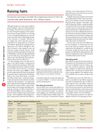
June 2011 in “Nature Biotechnology” Stem cell treatments can potentially treat baldness, with one trial showing hair growth after injecting a hair-stimulating complex, and no safety issues were reported.

Ocu-miR-205 affects hair density in Rex rabbits by promoting cell changes and influencing hair follicle phases.
3 citations
,
August 2018 in “Stem cells international” Hair follicle cells help maintain and support stem cells and blood cell formation.
 3 citations
,
November 2011 in “European Journal of Dermatology”
3 citations
,
November 2011 in “European Journal of Dermatology” 4-O-methylhonokiol from Magnolia officinalis significantly promotes hair growth.

Ocu-miR-205 affects hair density in Rex rabbits by promoting cell changes and influencing hair follicle phases.
 1 citations
,
August 2023 in “The Journal of Pathology”
1 citations
,
August 2023 in “The Journal of Pathology” Different types of skin fibroblasts have unique roles in skin health and disease.
 April 2026 in “Frontiers in Immunology”
 Blocking the CXCL12–CXCR4 axis may help treat hair loss in alopecia.
November 2025 in “Biomolecules” FGF22 helps hair follicle stem cells grow and develop.

Ocu-miR-205 affects hair density in Rex rabbits by influencing cell processes and signaling pathways.
 August 2019 in “Stem cells”
 New treatments for hair loss, fertility, and wound healing are being explored.
 April 2018 in “The journal of investigative dermatology/Journal of investigative dermatology”
 Researchers created a 3D-printed skin model that grew human hair when grafted onto mice by improving blood supply to the grafts.
 June 2016 in “Experimental Dermatology”
 Changing hair follicle identity could potentially reverse balding.
 April 2016 in “Journal of Investigative Dermatology”
 Boosting HGF signaling could improve the creation of hair follicles in lab-made skin.
 January 2015 in “Springer eBooks”
 Fat-derived stem cells and their secretions show promise for treating skin aging and hair loss.
 January 2014 in “Journal of Investigative Dermatology”
 Proteins like aPKC and PDGF-AA, substances like adenosine and ATP, and adipose-derived stem cells all play important roles in hair growth and health, and could potentially be used to treat hair loss and skin conditions.
 January 2006 in “The Journal of Korean Medicine Ophthalmology and Otolaryngology and Dermatology”
 Rubus coreanum may help hair growth but not through the tested mechanisms, and none of the herbal extracts help with acne.
 May 2021 in “Experimental Cell Research”
 FOXC1 boosts SFRP1 in hair loss, suggesting new treatments.
 December 2016 in “Paleontological Journal”
 Hair growth can be induced by transplanting certain cells, but these cells lose their properties during culturing. The best cell interaction happens in a liquid medium under gravity, and using collagen doesn't help. Future research could focus on using growth factors to stimulate these cells.
Fgf20 is crucial for hair follicle formation by influencing cell movement and growth.