 16 citations
,
February 2019 in “Pediatric Blood & Cancer”
16 citations
,
February 2019 in “Pediatric Blood & Cancer” Most children with CNS tumors on targeted therapy had skin reactions, which were generally treatable without stopping the therapy.
28 citations
,
July 1993 in “The journal of investigative dermatology/Journal of investigative dermatology”  March 2018 in “Dermatología Argentina”
 The study found that the average age of women diagnosed with Frontal Fibrosing Alopecia in Argentina is higher than in other countries, but their symptoms are similar.
 49 citations
,
January 2003 in “Clinical and Experimental Dermatology”
49 citations
,
January 2003 in “Clinical and Experimental Dermatology” The document concludes that post-menopausal frontal fibrosing alopecia is a poorly understood condition that does not respond well to common treatments.
August 2025 in “American Journal of Dermatopathology” Accurate diagnosis and personalized treatment are crucial in dermatopathology.
July 1979 in “Archives of Dermatology” A 68-year-old woman with benign mucous membrane pemphigoid has eye, mouth, and skin issues, including thick plaques and nail changes.
3 citations
,
February 2017 in “The American journal of dermatopathology/American journal of dermatopathology” Sarcoidosis can mimic other skin disorders, making diagnosis challenging.
19 citations
,
November 1985 in “Archives of Dermatology” The newborn's skin blisters healed without scarring, leaving some light spots, and stopped forming after four months.
April 2019 in “Journal of Investigative Dermatology” Frontal Fibrosing Alopecia involves disrupted cholesterol pathways, fibrosis, and increased mast cells.
 1 citations
,
August 2023 in “The Journal of Pathology”
1 citations
,
August 2023 in “The Journal of Pathology” Different types of skin fibroblasts have unique roles in skin health and disease.

Melanocytes can regenerate around hair follicles in bullous pemphigoid, especially in patients with darker skin.
34 citations
,
January 1998 in “Archiv für Pathologische Anatomie und Physiologie und für Klinische Medicin” Trichoblastomas may mimic fetal skin development by having many Merkel cells, unlike adult skin.
 September 2024 in “BMJ Case Reports”
 An adult had a rare scalp infection in the forehead area, treated successfully with itraconazole.
 April 2021 in “BMJ Case Reports”
 Accurate diagnosis of pseudolymphomatous folliculitis is crucial to avoid mistaking it for more serious conditions.
 March 2026 in “Voprosy dermatologii i venerologii/Dermatologiâ ža̋ne veneralogiâ ma̋selelerì”
 Dermatophytes, like Trichophyton rubrum, can cause allergies and chronic inflammation.
November 2024 in “Dermatology and Therapy” Dermatologists should carefully choose treatments for FFA to avoid worsening the condition.
January 2025 in “Indian Dermatology Online Journal” Mycosis fungoides can have unusual symptoms and may be misdiagnosed, but specific cell markers might suggest a lower risk of worsening.
August 2018 in “Journal of the American Academy of Dermatology” 7 citations
,
May 1996 in “PubMed” Milia en plaque can be caused by skin damage, tumors, or external factors.
1 citations
,
September 2004 in “Experimental Dermatology” MC-1R is present in skin cells and may help reduce inflammation.
7 citations
,
October 2013 in “International Journal of Dermatology” Post-waxing folliculitis is common on arms and forearms, and further biopsies are needed to understand it better.
6 citations
,
September 2014 in “Journal of the American Academy of Dermatology” Researchers found a potential new type of skin growth called follicular mucinous nevus.
 August 2016 in “Journal of the Portuguese Society of Dermatology and Venereology”
 Two women with darker skin had both frontal hair thinning and skin discoloration.
 14 citations
,
July 2012 in “Journal of the American Academy of Dermatology”
14 citations
,
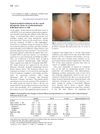
July 2012 in “Journal of the American Academy of Dermatology” Topical tacalcitol ointment can help improve symptoms of EFFC.
1 citations
,
January 2008 in “SKINmed Dermatology for the Clinician” Treatment with prednisolone and dapsone stopped new blisters and partially healed previous ones.
January 2026 in “Indian Journal of Paediatric Dermatology” A rare case shows a possible link between Neurofibromatosis type 1 and Becker nevus due to genetic mutations.
8 citations
,
January 2025 in “Journal of Investigative Dermatology” Fetal skin has diverse fibroblast types that change as it develops.
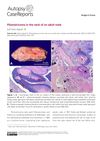 January 2022 in “Autopsy and Case Reports”
 A man had a non-cancerous neck tumor related to hair follicles removed with no return of the tumor.
1 citations
,
July 2016 in “Dermatologic surgery” 5 citations
,
September 2020 in “Proceedings - Baylor University. Medical Center” Tofacitinib successfully treated a woman's severe symptoms from a rare autoimmune condition.