 May 2026 in “Journal of Cutaneous and Aesthetic Surgery”
 Trichoscopy helps monitor changes and detect issues after hair transplants.
 January 2026 in “Acta Dermatovenerologica Alpina Pannonica et Adriatica”
 Accurate diagnosis is crucial for effectively treating severe alopecia and related symptoms.
 January 2026 in “Clinical Cosmetic and Investigational Dermatology”
 Early diagnosis and targeted anti-inflammatory treatments can improve outcomes in androgenetic alopecia with perifollicular inflammation and fibrosis.
 January 2026 in “Journal of Clinical Practice and Research”
 Bitemporal alopecia often occurs with other hair conditions and can help predict and monitor these issues.
 January 2026 in “ITM Web of Conferences”
 Better datasets and methods are needed for reliable vitiligo detection using deep learning.
 September 2025 in “International Journal For Multidisciplinary Research”
 Androgenetic alopecia is linked to a higher risk of metabolic syndrome.
 July 2024 in “International Journal of Dermatology Venereology and Leprosy Sciences”
 Trichoscopy is a useful, painless tool for diagnosing and monitoring children's hair and scalp issues.
 September 2023 in “Cureus”
 Nails can reveal important health information about skin and body conditions.
 June 2023 in “International Journal of Research in Dermatology”
 Early diagnosis and treatment of alopecia areata in children is crucial to prevent severe progression.
 November 2021 in “International Journal of Research in Medical Sciences & Technology”
 Skin surface chemistry and OCT can improve skin disease diagnosis.
 January 2019 in “Open access journal of mycology & mycological sciences”
 The article concludes that proper antifungal treatment is essential for treating scalp fungal infections in children, and trichoscopy is useful for diagnosis and monitoring.
 February 2026 in “Frontiers in Medicine”
 Personalized sonidegib dosing can effectively treat Gorlin-Goltz syndrome with fewer side effects.
 December 2025 in “Cureus”
 Avoiding friction and using topical treatments can significantly improve rough skin caused by repeated rubbing.
 September 2025 in “Journal of Skin and Stem Cell”
 The combination of calcipotriol and PRP is the most effective treatment for alopecia areata.
 September 2025 in “Tạp chí Da liễu học Việt Nam”
 Combining oral methylprednisolone with microneedle radiofrequency improves hair growth in alopecia areata but may cause pain and side effects.
 January 2025 in “Journal of Case Reports and Scientific Images”
 Early recognition and treatment of scalp demodicosis can prevent misdiagnosis and effectively resolve symptoms.
 April 2024 in “International Journal of Research Publication and Reviews”
 Alopecia areata causes hair loss with varied treatment responses and frequent relapses.

The article suggests that patients with Frontal Fibrosing Alopecia may have more contact allergies, but it doesn't prove that allergies cause the condition.

Liquid nitrogen cryotherapy worked well for many patients with stubborn alopecia areata.

Isotretinoin may cause temporary, reversible facial hair growth in some women.
 January 2022 in “The Egyptian Journal of Hospital Medicine”
 Higher IL-21 levels may help predict alopecia areata activity.
 September 2021 in “Mağallaẗ al-Muẖtar li-l-ʿulūm”
 Two sisters have rare hair disorders causing short, fragile, kinky hair.

People with Down syndrome have a higher risk of skin disorders and need better screening and treatment.

The woman has a scalp condition causing hair loss.
 January 2018 in “Springer eBooks”
 Trichotillomania is a condition where people repeatedly pull out their hair, which can be triggered by stress and has various physical signs.
 March 2014 in “Dermatologic Clinics”
 More research, better treatments, and public education are needed for dermatological conditions in people of African descent.
 March 2019 in “European archives of medical research”
 Platelet-rich plasma injections are a cheap and effective way to reduce hair loss and improve hair quality in people with mild to moderate androgenetic alopecia.

Hair loss in African American women, caused by hair care, genetics, and environment, needs more research for better treatment.
 1 citations
,
May 2024 in “Dermatology and Therapy”
1 citations
,
May 2024 in “Dermatology and Therapy” Frontal Fibrosing Alopecia needs better diagnostics and treatments, with dutasteride showing promise.
 July 2024 in “Federal Practitioner”
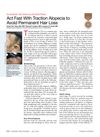
 Act quickly to prevent permanent hair loss from tight hairstyles.