 March 2026 in “Biomedicines”
 Antera 3D® offers more precise and detailed scar assessment than traditional methods.
 March 2023 in “Journal of skin and stem cell”
 Trichoscopy is a good, quick, non-invasive way to diagnose different types of hair loss.
 February 2025 in “Archives of Dermatological Research”
 Polynucleotides effectively promote hair regrowth in androgenetic alopecia without serious side effects.
 January 2019 in “International Journal of Trichology”
 A woman lost all her hair in one day, was diagnosed with a rare type of hair loss, and regrew it in 12 weeks with treatment.

Antioxidant therapy, especially with selenium, can improve skin aging in patients with Metabolic Syndrome.
 20 citations
,
August 2019 in “Journal of Telemedicine and Telecare”
20 citations
,
August 2019 in “Journal of Telemedicine and Telecare” Dermatologists found teledermatology useful and confidence-boosting for diagnosing skin conditions, but faced limitations like technical issues and prescription restrictions. Despite this, they saw its potential to improve access to skin care, especially in remote areas.
4 citations
,
August 2024 in “Journal of Cosmetic Dermatology” The non-cross-linked hyaluronic acid compound effectively and safely improves keratosis pilaris.
 July 2026 in “Diagnostics”
 Integrating various skin imaging technologies improves diagnosis and treatment in dermatology.
January 2026 in “Dermatologic Therapy” Folliculotropic Mycosis Fungoides requires stage-based treatment, with early stages using skin therapies and advanced stages needing aggressive treatments.
September 2025 in “Journal of Cosmetic Dermatology” Single-needle radiofrequency is effective and safe for treating facial sebaceous hyperplasia.
July 2012 in “International Journal of Trichology” Understanding hair health and disorders is important for effective treatment.
56 citations
,
October 2016 in “Journal of dermatological science” New insights into the causes and treatments for the autoimmune hair loss condition Alopecia areata have been made.
22 citations
,
January 2017 in “Acta Endocrinologica” A woman with multiple autoimmune diseases showed improvement in hair loss but not in skin discoloration after treatment.
 3 citations
,
October 2021 in “Clinical, Cosmetic and Investigational Dermatology”
3 citations
,
October 2021 in “Clinical, Cosmetic and Investigational Dermatology” Scalp melanoma, a deadly skin cancer, is often found late due to its hard-to-see location, especially in older men. Early detection, possible treatments, and the role of hairdressers in spotting it early are discussed. More research is needed to improve detection and treatment.
3 citations
,
January 2020 in “International journal of trichology” Congenital triangular alopecia is a hair loss condition present from birth or early childhood with no effective treatment needed.
 2 citations
,
November 2021 in “Frontiers in Medicine”
2 citations
,
November 2021 in “Frontiers in Medicine” New skin imaging, teledermatology, and AI could become key in future dermatology care.
 2 citations
,
February 2021 in “The Journal of clinical and aesthetic dermatology”
2 citations
,
February 2021 in “The Journal of clinical and aesthetic dermatology” Understanding the cause of bitemporal hair loss is key to deciding the right treatment.
 December 2024 in “Archiv Euromedica”
 Trichoscopy is essential for diagnosing and treating autoimmune cicatricial alopecia early.
 November 2023 in “Indian Journal of Dermatology/Indian journal of dermatology”
 A well-equipped resident's bag enhances clinical skills, preparation, confidence, and learning for junior doctors.
 March 2023 in “Journal of Cosmetic Dermatology”
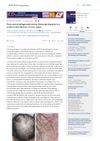
 A woman's progressive hair loss was correctly diagnosed as a rare condition called fibrosing alopecia in a pattern distribution after initially being mistaken for a more common type.
 April 2022 in “Australasian Journal of Dermatology”
 Skin changes during pregnancy are common, and non-invasive imaging is safe for monitoring these changes.
9 citations
,
February 2024 in “Indian Dermatology Online Journal” New imaging technologies improve skin diagnosis but face cost and training challenges.
1 citations
,
July 2014 in “The journal of investigative dermatology/Journal of investigative dermatology” Light affects skin health, aging, and cancer risk, and new light-based treatments and imaging are promising for skin care.
 August 2025 in “Journal of Cosmetic Dermatology”
 Light-based therapy can help regrow hair in different types of hair loss, but more research is needed.
December 2022 in “IntechOpen eBooks” 308 excimer phototherapy is a safe and effective way to treat hair loss from Alopecia Areata.
 18 citations
,
February 2014 in “PubMed”
18 citations
,
February 2014 in “PubMed” Androgenetic alopecia is a common hair loss condition caused by testosterone effects on hair follicles, leading to thinner, shorter, and less pigmented hair, diagnosed using scalp dermoscopy and treated with topical minoxidil, antiandrogen agents, and 5-alpha reductase inhibitors.
January 2026 in “Open Science Framework” AI in alopecia research needs better tools for predicting treatment outcomes and ensuring fairness.
 January 2024 in “Aging medicine”
 A COVID-19 infected patient with chronic kidney disease experienced worsened kidney function, hair loss, and unexpected wart clearance.
 May 2014 in “Hair transplant forum international”
 Scalp tools, tracking progress, targeting scalp inflammation, and avoiding certain hair treatments can improve female hair loss treatment.
76 citations
,
March 2008 in “Journal of the American Academy of Dermatology” Videodermoscopy can help diagnose and monitor nail bed psoriasis.