 3 citations
,
May 2018 in “InTech eBooks”
3 citations
,
May 2018 in “InTech eBooks” Animal models, especially mice, are essential for advancing hair loss research and treatment.
Deleting the MAD2L1 gene in mice led to rapid tumor growth despite chromosomal instability.
 47 citations
,
June 2011 in “Movement Disorders”
47 citations
,
June 2011 in “Movement Disorders” The LRRK2-G2019S mutation in Parkinson's disease has a lifetime penetrance of 25-35%, and finasteride may help reduce symptoms in adult male Tourette syndrome patients.
 5 citations
,
March 2022 in “Frontiers in Endocrinology”
5 citations
,
March 2022 in “Frontiers in Endocrinology” A model using hormone levels, cycle length, and BMI can help identify PCOS in Chinese women but isn't for screening teens.
September 2015 in “Fluids and Barriers of the CNS” Three skull models were found most useful for testing hydrocephalus valve programming.
Understanding hair follicle interactions can help treat male pattern baldness.
 1 citations
,
March 2024 in “Skin research and technology”
1 citations
,
March 2024 in “Skin research and technology” A new AI model diagnoses hair and scalp disorders with 92% accuracy, better than previous models.
 January 2026 in “Immunity & Inflammation”
 Autoimmune skin diseases result from genetic and environmental factors disrupting immune checkpoints.
Nonlinear artificial neural networks are better at identifying different types of animal hair than linear ones.
10 citations
,
April 2018 in “Journal of Mind and Medical Sciences” The mind and body don't directly interact; the mind acts as an interface linking abstract and physical data.
 April 2026 in “Zenodo (CERN European Organization for Nuclear Research)”
 The model improves understanding of androgen interactions by focusing on signal intensity and system capacity.
The model accurately predicts hair breakage in Telogen Effluvium, aiding early detection and treatment.
 8 citations
,
August 2020 in “PLOS Computational Biology”
8 citations
,
August 2020 in “PLOS Computational Biology” A machine learning model called CATNIP can predict new uses for existing drugs, like using antidepressants for Parkinson's disease and a thyroid cancer drug for diabetes.
 January 2026 in “International Journal of Women s Health”
 A new model helps predict treatment success in girls with early puberty.
 58 citations
,
December 2018 in “Nature Communications”
58 citations
,
December 2018 in “Nature Communications” Male pattern baldness is mostly inherited, involves many genes, and is linked to other traits like early puberty and strong bones.
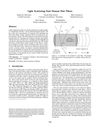
Researchers developed a new model for more realistic computer graphics of hair by considering how light scatters on hair fibers.
5 citations
,
April 2024 in “bioRxiv (Cold Spring Harbor Laboratory)” Cell size independently controls when stem cells divide.
110 citations
,
August 2011 in “Journal of Visualized Experiments” 3D skin models better mimic human skin and melanoma progression than older methods.
 2 citations
,
April 2020 in “bioRxiv (Cold Spring Harbor Laboratory)”
2 citations
,
April 2020 in “bioRxiv (Cold Spring Harbor Laboratory)” The new method found new shared genetic areas linked to both Type 2 Diabetes and Prostate Cancer.
 January 2014 in “Elsevier eBooks”
 The study concluded that genetic mutations affect human hair diseases and identified key genes and pathways involved in hair growth and cycling.
 5 citations
,
January 2021 in “iScience”
5 citations
,
January 2021 in “iScience” Using a combination of specific cell cycle regulators is better for safely keeping hair root cells alive indefinitely compared to cancer-related methods.
April 2019 in “Journal of Investigative Dermatology” The humanized AA mouse model is better for testing new alopecia areata treatments.
April 2017 in “The journal of investigative dermatology/Journal of investigative dermatology” Researchers found three different ways drugs work to treat hair loss from alopecia areata and identified key factors for personalized treatment.
 April 2021 in “Journal of Investigative Dermatology”
 Stem cells control their future role by changing ERK signal timing, affecting tissue regeneration and cancer.
 38 citations
,
January 2001 in “Neuroepidemiology”
38 citations
,
January 2001 in “Neuroepidemiology” The current system can't fully test all combination treatments, so alternative methods and regulatory flexibility are needed.
 43 citations
,
December 2020 in “PLOS Genetics”
43 citations
,
December 2020 in “PLOS Genetics” New method finds genetic links between Type 2 Diabetes and Prostate Cancer not seen before.
 16 citations
,
February 2018 in “BMC Genomics”
16 citations
,
February 2018 in “BMC Genomics” Certain genetic markers linked to reproductive potential were identified by their impact on a protein's ability to bind to genes.
May 2026 in “International Journal of Technology in Education and Science” The AI system accurately classifies hair loss types and explains its decisions.
 December 2022 in “Research Square (Research Square)”
 The QuantAnts machines can find cancer markers and create CRISPR targets for them.
8 citations
,
May 2025 in “Biomolecules” Forensic genetics can now predict physical traits and lifestyle habits, with future advancements expected from new technologies.