8 citations
,
May 2025 in “Biomolecules” Forensic genetics can now predict physical traits and lifestyle habits, with future advancements expected from new technologies.
 867 citations
,
November 2020 in “Nature Communications”
867 citations
,
November 2020 in “Nature Communications” Collider bias can distort our understanding of COVID-19 risk and severity.
 85 citations
,
June 2015 in “Scientific Reports”
85 citations
,
June 2015 in “Scientific Reports” The study found that diseases can be grouped by symptoms and that the accuracy of predicting disease-related genes varies with the data source.
 7 citations
,
January 2012
7 citations
,
January 2012 Neural networks can effectively predict hair loss.
 24 citations
,
January 2008 in “KARGER eBooks”
24 citations
,
January 2008 in “KARGER eBooks” The document concludes that ongoing research using animal models is crucial for better understanding and treating Alopecia Areata.
August 2024 in “Clinical and Experimental Dermatology” DALL-E 2 can create realistic hair images but struggles with specific hair disorders.
 January 2023 in “Türkiye klinikleri adli tıp ve adli bilimler dergisi”
 DNA markers can help predict male pattern baldness, useful in criminal and missing person cases.
April 2021 in “Journal of Investigative Dermatology” A deep learning model was developed to help diagnose trichothiodystrophy by analyzing hair patterns.
28 citations
,
March 2014 in “Biological reviews/Biological reviews of the Cambridge Philosophical Society” The document concludes that hair curvature can be explained by the growth patterns caused by the shape and separation of cells in the hair follicle and is affected by specific molecular pathways.
A new CNN model can detect Alopecia Areata with 98% accuracy.
16 citations
,
May 2023 in “Journal of the American Statistical Association” A new method makes analyzing large datasets with rare events faster and more efficient.
 July 2023 in “Dermatology practical & conceptual”
 The machine learning model effectively assesses the severity of hair loss and could help dermatologists with treatment decisions.
 November 2025 in “International Journal of Clinical Obstetrics and Gynaecology”
 PCOS is likely inherited in families, increasing risk for first-degree relatives.
1 citations
,
May 2024 in “Human Genomics” Polygenic risk scores can predict the risk and outcomes of benign prostatic hyperplasia.
1 citations
,
October 2007 in “The Cancer Handbook” Malignant melanoma is the deadliest skin cancer, while BCC is the most common but rarely spreads, and SCC is more aggressive than BCC.
 1 citations
,
September 2025 in “PLOS Digital Health”
1 citations
,
September 2025 in “PLOS Digital Health” Large language models often give biased or inaccurate medical responses, especially for LGBTQIA+ prompts.
 35 citations
,
June 2017 in “Pharmaceutical research”
35 citations
,
June 2017 in “Pharmaceutical research” Researchers developed a model that shows hair follicles increase skin absorption of caffeine by 20%.
The new method provides more accurate vibrational frequencies for drug molecules than traditional models.
 January 2025 in “Dermatology Practical & Conceptual”
 A new genetic model may improve treatment and diagnosis for certain inherited skin diseases.
 August 2019 in “bioRxiv (Cold Spring Harbor Laboratory)”
 The model successfully predicted new uses for existing drugs, like using certain hormonal and heart medications for respiratory and Parkinson's diseases, and a cancer drug for diabetes.
 18 citations
,
April 2004 in “The journal of investigative dermatology/Journal of investigative dermatology”
18 citations
,
April 2004 in “The journal of investigative dermatology/Journal of investigative dermatology” Skin patterns are formed by simple reaction-diffusion mechanisms.
June 2025 in “British Journal of Dermatology” The new AI software predicts melanoma outcomes more accurately than traditional methods.
September 2017 in “OhioLink ETD Center (Ohio Library and Information Network)” Caregivers had lower stress hormone levels than non-caregivers, suggesting caregiving stress affects the body differently.
 October 2021 in “Journal of Investigative Dermatology”
 The study concluded that the developed models are effective for studying hair growth mechanisms and testing new treatments.
9 citations
,
May 2020 in “bioRxiv (Cold Spring Harbor Laboratory)” Human melanocytes have unique traits that affect melanoma development and prognosis.
December 2019 in “Periodicals of Engineering and Natural Sciences (International University of Sarajevo)” Machine learning can predict hair health accurately using personal data.
March 2024 in “European Journal of Neuroscience” Dopaminergic neurons in the gut have diverse subtypes with different neurotransmitter contents.
 161 citations
,
July 2003 in “ACM Transactions on Graphics”
161 citations
,
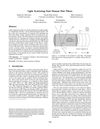
July 2003 in “ACM Transactions on Graphics” Researchers developed a new model for more realistic computer graphics rendering of hair by considering how light scatters on hair fibers.
June 1967 in “Journal of Cellular Physiology” The 3D hair follicle model improves understanding of hair growth and drug testing.
26 citations
,
January 2014 in “ALTEX” Pesticides can cause reproductive and adrenal health issues.