February 1990 in “PubMed” Higher DHEA-S levels in hirsute females affect hair growth phases.
 January 1986 in “Journal of Steroid Biochemistry”
 Women with severe acne, hirsutism, and androgenic alopecia often have higher levels of certain androgens, but the specific pattern can't be predicted just by looking at symptoms.
October 2022 in “International Journal of Research in Dermatology” Hormonal imbalances contribute to female hair loss, and trichoscopy is a useful diagnostic tool.
January 2009 in “Chinese Journal of Dermatovenereology of Integrated Traditional and Western Medicine” Yifa compound effectively treats female pattern hair loss and lowers DHT and DHEA levels.
Women with androgenetic alopecia have normal levels of most blood steroids and binding proteins, but higher dehydroepiandrosterone. Some also have low "sex hormone-binding globulin" and "corticosteroide-binding globulin" capacity, and high "free androgen index" and "free cortisol index". Diane treatment can normalize these levels and improve hair conditions.
 March 2017 in “Journal of Dermatology”
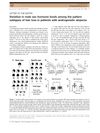
 Different hair loss patterns may be linked to varying male hormone levels.
July 2016 in “International journal of biomedical research” Family history and elevated DHEA-S levels are linked to more severe hair loss.
 December 2015 in “Vestnik dermatologii i venerologii”
 People with hair loss have different hormone levels, and these hormones can affect hair growth.
 April 2012 in “Journal of IMAB”
 Men with male pattern baldness don't necessarily have high levels of Dehydroepyandrosterone-sulfate, and there's no link between its levels and the severity of hair loss.
 October 2004 in “DOAJ (DOAJ: Directory of Open Access Journals)”
 Men with hair loss don't necessarily have higher levels of the hormone DHEA-S, but this hormone tends to decrease with age.
December 1990 in “PubMed” Hirsutism and androgenetic alopecia in women are often due to increased androgen effects, and antiandrogen treatment is recommended to prevent further issues.
13 citations
,
January 1997 in “Biochemical Pharmacology” Human liver enzyme DHEA ST helps process minoxidil.
463 citations
,
September 2004 in “Clinics in dermatology” Effective acne treatments should reduce sebum, bacteria, and inflammation, with isotretinoin being the best for severe cases.
January 2025 in “Mansoura Medical Journal” Age and androgen levels significantly affect meibomian gland structure and function.
August 2024 in “Panggung Kebaikan” Education increased awareness of using clove leaves for hair growth.
 December 2025 in “Molecules”
 DPP may help hair regrowth by improving blood vessel function under stress.
5 citations
,
September 2024 in “Maturitas” The treatment effectively reduces menopausal symptoms and is well tolerated.
 5 citations
,
September 2020 in “Journal of Cosmetic Dermatology”
5 citations
,
September 2020 in “Journal of Cosmetic Dermatology” Dexpanthenol improves hair growth and satisfaction in women without side effects.
 November 2022 in “Journal of the Endocrine Society”
 Estrogen deficiency can reduce the enzyme activity needed to activate vitamin D.
 20 citations
,
August 1987 in “Journal of steroid biochemistry/Journal of Steroid Biochemistry”
20 citations
,
August 1987 in “Journal of steroid biochemistry/Journal of Steroid Biochemistry” Aldactone was more effective in reducing hair growth in women with hirsutism than Diane, despite having less impact on hormone levels.
1 citations
,
November 2024 in “European Journal of Endocrinology” Higher childhood DHEAS levels are linked to advanced puberty and DNA changes.
 64 citations
,
January 1998 in “Drugs”
64 citations
,
January 1998 in “Drugs” Dienogest combined with ethinylestradiol is a highly effective birth control that improves menstrual symptoms and has manageable side effects.
June 2023 in “Clinical Chemistry” Unregulated supplements can contain hidden drugs causing misleading symptoms and test results.
18 citations
,
September 1979 in “DMW - Deutsche Medizinische Wochenschrift” Diane is effective for treating acne, seborrhoea, androgenic alopecia, and mild hirsutism in women.
July 2024 in “International Journal of Molecular Sciences” The inhibitor DPP can promote hair growth.
11 citations
,
October 1986 in “International Journal of Gynecology & Obstetrics” The contraceptive reduced hair growth and altered hormone levels in hirsute women.
 February 1999 in “Strength and Conditioning Journal”
 Androstenedione, a hormone supplement, doesn't improve muscle or performance and can cause harmful side effects.
 1 citations
,
May 2017 in “Asian journal of medical sciences”
1 citations
,
May 2017 in “Asian journal of medical sciences” The dietary supplement significantly improved skin, nails, and hair in older adults.
33 citations
,
January 1979 in “Acta obstetricia et gynecologica Scandinavica” Diane® is an effective contraceptive that also helps treat acne and mild hair growth issues.
April 2019 in “Journal of the Endocrine Society” An over-the-counter vitamin/mineral supplement improved hair loss and blood sugar control in a woman with non-classic 11-hydroxylase deficiency.