1 citations
,
February 2025 in “Toxicology in Vitro” Diphlorethohydroxycarmalol may help treat hair loss better than current medications.
1 citations
,
August 2024 in “Skin Health and Disease” Topical immunotherapy with DPCP led to some hair regrowth in most pediatric alopecia areata patients, especially those with milder cases and longer treatment.
 1 citations
,
August 2023 in “Nature communications”
1 citations
,
August 2023 in “Nature communications” Hdac1 and Hdac2 help maintain and protect the cells that control hair growth.
 15 citations
,
February 2011 in “Journal of Tissue Engineering and Regenerative Medicine”
15 citations
,
February 2011 in “Journal of Tissue Engineering and Regenerative Medicine” The best method for transplanting skin cells to regenerate hair follicles is the Hemi-vascularized sandwich method, as it produces more mature follicles and promotes hair growth.
13 citations
,
January 2014 in “Zhongguo zhongyao zazhi” Dendrobium candidum polysaccharides promote hair growth.
 August 2025 in “International Journal of Contemporary Pediatrics”
 HLD10 can include increased body hair and Mongolian spots.
9 citations
,
June 2017 in “American journal of ophthalmology. Case reports” A new mutation in the CDH3 gene causes hair loss and vision problems in a young girl.
 June 2023 in “Journal of cosmetic dermatology”
 Both DPCP alone and with PRP are effective and safe for treating severe alopecia areata.
November 2024 in “Journal of Investigative Dermatology” ATP-sensitive potassium channels are important for hair growth.
26 citations
,
August 2009 in “Journal of Pediatric Gastroenterology and Nutrition” Hoyeraal-Hreidarsson syndrome in infants causes severe gastrointestinal issues.
September 2019 in “Journal of Investigative Dermatology” PCE-DP brightens skin and promotes hair growth by enhancing cell growth and reducing melanin uptake.

HEM-13HDC, a mix of 8 herbal extracts, helps hair grow and affects hair growth at a molecular level.
3 citations
,
November 2021 in “Skin Appendage Disorders” Home-use treatment for severe alopecia areata is as effective as office-use but costs half as much.
 2 citations
,
February 2015 in “Journal of Tissue Engineering and Regenerative Medicine”
2 citations
,
February 2015 in “Journal of Tissue Engineering and Regenerative Medicine” Transplanting a mix of specific skin cells can significantly improve the repair of damaged hair follicles.
 April 2023 in “Experimental Dermatology”
 Human dermal papilla cells can increase hair thickness and number in pigs with just one injection.
1 citations
,
November 2023 in “Journal of Microbiology and Biotechnology” Immortalized human dermal papilla cells were created that grow better and can still help form hair.
 January 2005 in “Elektronische Hochschulschriften der LMU München (Ludwig-Maximilians-Universität München)”
 Topical immunotherapy with DPCP is most effective for certain alopecia areata types, with success linked to age and disease duration, and influenced by a gene polymorphism.
January 2012 in “RWTH Publications (RWTH Aachen)” pdHGF speeds up wound healing and hair growth.
January 2026 in “Journal of Hair Restoration and Regenerative Medicine” Hair transplantation is unsafe for diffuse unpatterned alopecia; focus on medical treatment and reassessment.
 6 citations
,
January 2024 in “Annals of Dermatology”
6 citations
,
January 2024 in “Annals of Dermatology” Dickkopf-related Protein 2 can help hair grow by activating a specific cell pathway.
16 citations
,
June 2015 in “The journal of investigative dermatology/Journal of investigative dermatology” The enzyme DHHC13 is essential for healthy hair and skin, and its deficiency leads to hair loss and skin problems.
 9 citations
,
August 2015 in “Tissue Engineering and Regenerative Medicine”
9 citations
,
August 2015 in “Tissue Engineering and Regenerative Medicine” Human skin cell byproducts can potentially be used to treat hair loss and promote hair growth.
 8 citations
,
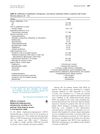
January 2018 in “Journal of the American Academy of Dermatology”
8 citations
,
January 2018 in “Journal of the American Academy of Dermatology” Diphenylcyclopropenone treatment helps prevent hair loss relapse in alopecia areata patients.
 52 citations
,
November 2003 in “Journal of Investigative Dermatology”
52 citations
,
November 2003 in “Journal of Investigative Dermatology” Different harmful mutations in the CDH3 gene cause HJMD, but symptoms vary among individuals.
January 2026 in “Biomaterials”  June 2023 in “International Journal of Clinical Research and Reports”
 Method B with propylene glycol is better for stable low-concentration DPCP solutions for alopecia areata.
45 citations
,
November 2022 in “Acta Biomaterialia” A new 3-D co-culture system improves hair growth potential in cells for hair regeneration.
 4 citations
,
January 2018 in “International Journal of Trichology”
4 citations
,
January 2018 in “International Journal of Trichology” A rare genetic disease causes sparse hair and early blindness due to a gene mutation.
 59 citations
,
October 2012 in “Pharmaceutical Research”
59 citations
,
October 2012 in “Pharmaceutical Research” Squalene-based carriers improve delivery of a treatment to hair follicles for alopecia areata.
 June 2026 in “Applied Biological Chemistry”
 The M5 method is best for isolating cells that help hair growth.