1 citations
,
August 2023 in “Journal of Investigative Dermatology” Farudodstat may help treat alopecia areata by protecting hair follicles.
18 citations
,
August 2020 in “bioRxiv (Cold Spring Harbor Laboratory)” Two existing drugs may help treat COVID-19 by inhibiting a key viral protein.
 April 2023 in “Journal of Investigative Dermatology”
 ALRN-6924 can protect hair follicles from chemotherapy damage by temporarily stopping cell division.
 75 citations
,
November 1965 in “Textile research journal”
75 citations
,
November 1965 in “Textile research journal” Papain and bisulfite break down human hair by dissolving parts of it.
 98 citations
,
November 2002 in “Contact Dermatitis”
98 citations
,
November 2002 in “Contact Dermatitis” Many people had severe allergic reactions to a common hair dye ingredient, causing them to seek medical care and miss work.
May 2026 in “Chemical Engineering Journal”  January 2023 in “Indian dermatology online journal”
 A child with ectodermal dysplasia-syndactyly syndrome has a new mutation in the NECTIN4 gene.
June 2020 in “Zenodo (CERN European Organization for Nuclear Research)” The DNMT3B -579G>T polymorphism may increase the risk of colorectal cancer.

Hair shaft characteristics can affect mitochondrial DNA metrics, but more research is needed.
 15 citations
,
November 2016 in “Journal of The American Academy of Dermatology”
15 citations
,
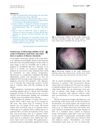
November 2016 in “Journal of The American Academy of Dermatology” Exclamation mark hairs suggest early scalp disease, while white dots indicate it's chronic.
20 citations
,
August 2017 in “Drug testing and analysis” Drugs localize differently in hair strands based on their properties.

Newly designed proteins can effectively degrade specific proteins in cells, offering a potential new therapy method.
6 citations
,
June 2024 in “Drug Testing and Analysis” Nails could be used to check long-term drug use, but more research is needed.
 May 2026 in “Zenodo (CERN European Organization for Nuclear Research)”
 Natural hair dyes like henna and beetroot are safer but have limited colors and may fade easily.
 4 citations
,
January 2018 in “Urology & Nephrology Open Access Journal”
4 citations
,
January 2018 in “Urology & Nephrology Open Access Journal” Hair dye chemicals can cause serious health problems, including kidney damage.
1 citations
,
April 2023 in “Heliyon” Disitamab vedotin and gemcitabine effectively treated bladder cancer without major side effects.
April 2012 in “Neuropediatrics” Trichothiodystrophy is a rare genetic disorder causing hair issues and sometimes linked to DNA repair defects.
 June 2025 in “Samarra Journal of Pure and Applied Science”
 A new method accurately measures minoxidil in tablets.
May 2025 in “Drug Delivery and Translational Research” 21 citations
,
May 2014 in “Toxicological Sciences” Toluene diisocyanate exposure can cause immune sensitization by interacting with proteins in hair follicles and sebaceous glands.
 10 citations
,
March 2014 in “Scandinavian journal of clinical and laboratory investigation”
10 citations
,
March 2014 in “Scandinavian journal of clinical and laboratory investigation” Malondialdehyde-modified DNA may trigger an immune response in alopecia areata patients.
1 citations
,
May 2022 in “The FASEB journal” The document concludes that biotin, folate, and RGD peptides are promising for targeting cancer cells with prodrugs, but the conjugates are not yet tested for use.
56 citations
,
November 1958 in “The Journal of Cell Biology” A unique skin cell similar to hair bulb melanocytes was identified, with better preservation using permanganate fixation.
 November 2022 in “Journal of Investigative Dermatology”
 Dynlt3 is important for melanosome transport and skin coloration.
October 2012 in “Zhongguo shengwu gongcheng zazhi” Effective DNA extraction from hair shafts is crucial for genetic studies.
 May 2024 in “Indian Journal of Dermatology”
 The woman has a rare skin condition called follicular Dowling-Degos disease, which has limited treatment options.
 1 citations
,
March 2023 in “Frontiers in Cardiovascular Medicine”
1 citations
,
March 2023 in “Frontiers in Cardiovascular Medicine” A specific gene variant is linked to heart disease, increased heart muscle, curly hair, and thick skin on palms and soles.
2 citations
,
March 2025 in “PNAS Nexus” Raman spectroscopy can detect radiation exposure in mouse hair with high accuracy for up to 7 days.
September 2006 in “Experimental Dermatology” Targeting multiple pathways and understanding genetic mutations are crucial for effective melanoma therapy.
62 citations
,
January 2009 in “Biochemistry” Vitamin D receptor binds similarly to natural and synthetic ligands, affecting gene regulation.