September 2024 in “Journal of Ethnopharmacology” Terminalia bellirica extracts effectively promote hair regrowth and treat androgenetic alopecia.
40 citations
,
January 2013 in “Clinical Cosmetic and Investigational Dermatology” Desonide is more effective than niacinamide for reducing underarm darkening.
9 citations
,
June 2024 in “BMC Genomics” Wool color in Gangba sheep is influenced by multiple genes and genetic mechanisms.

Ziziphus jujuba and Eclipta alba leaf extracts improve blood sugar levels and cognitive function in diabetic rats.
 3 citations
,
December 2021 in “Journal of medicinal plants”
3 citations
,
December 2021 in “Journal of medicinal plants” Halocnemum strobilaceum has potential health benefits and uses, including anticancer and antimicrobial properties.
2 citations
,
August 2007 in “Zoonoses and Public Health” Two southern chamois in the Eastern Pyrenees had skin infections caused by a fungus.
15 citations
,
September 2009 in “European Journal of Histochemistry” CD90 is abundantly present on stem-like cells in dog hair follicles.
Alopecia areata causes patchy hair loss but hair can regrow on its own.
69 citations
,
September 2013 in “American Journal of Alzheimer s Disease & Other Dementias®” Snakin-Z from jujube fruits may help treat Alzheimer's due to its enzyme inhibition and antioxidant properties.
 November 2016 in “Universiti Putra Malaysia Institutional Repository (Universiti Putra Malaysia)”
 Dendrobium sabin flower extract may help reduce skin aging from UV exposure.
 November 2025 in “Journal of Investigative Dermatology”
 Combination therapy, including JAK inhibitors, effectively regrows hair and reduces severity in Black children with stubborn Alopecia Areata.
2 citations
,
November 2019 in “Jurnal Penelitian Perawat Profesional” Mulberry may help prevent and treat obesity.
The gene Endothelin 3 makes mice's fur darker by increasing pigment cells and pigment levels.
December 2024 in “Jurnal Insan Farmasi Indonesia” Chloroform extract from onchidiid snail promotes hair growth in rats.

Aluminum phosphide poisoning can cause horizontal nail grooves and hair loss.
 January 2025 in “Termometer Jurnal Ilmiah Ilmu Kesehatan dan Kedokteran”
 Tea leaf extract tonic promotes hair growth better than controls but has stability issues.
October 2002 in “Dermatologic Surgery”  July 2024 in “Jurnal PKM Manajemen Bisnis”
 Growing guava can improve health and boost the economy in Pamulang.
 December 2020 in “International Journal of Biosciences (IJB)”
 Eclipta alba shows promise for medicinal use but needs more research.
21 citations
,
May 2024 in “Journal of Ethnopharmacology”  13 citations
,
March 2020 in “Frontiers in cell and developmental biology”
13 citations
,
March 2020 in “Frontiers in cell and developmental biology” A substance called TCQA could potentially darken hair by activating certain genes and increasing melanin.
 11 citations
,
July 2008 in “International Journal of Dermatology”
11 citations
,
July 2008 in “International Journal of Dermatology” Greying hairs may be protected from alopecia areata.
Amla is a fruit with many health benefits, including improving heart, brain, and hair health, but caution is needed for some medical conditions.
 12 citations
,
June 2010 in “Journal of dermatology”
12 citations
,
June 2010 in “Journal of dermatology” Some patients with severe alopecia areata developed skin darkening from their treatment, which may indicate a less effective response to the therapy.
January 2026 in “Indian Journal of Paediatric Dermatology” A 14-year-old boy has a skin condition called nevus comedonicus, treated with tretinoin cream.
 July 2023 in “International Ayurvedic medical journal”
 Ayurvedic treatments showed promise in treating premature graying of hair without harmful effects.
June 2023 in “CRC Press eBooks” Acorus calamus has potential health benefits but needs more safety research.
January 2023 in “Indian Dermatology Online Journal” A 23-year-old man has a benign, non-progressive hair loss patch that doesn't respond to treatment but can be cosmetically treated.
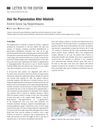 April 2025 in “Turkish Journal of Hematology”
 Nilotinib may cause gray hair to return to its original color.