 3 citations
,
April 2022 in “International Journal of Molecular Sciences”
3 citations
,
April 2022 in “International Journal of Molecular Sciences” Scientists turned mouse skin cells into hair-inducing cells using chemicals, which could help treat hair loss.
January 2025 in “Biochemical Pharmacology” Peficitinib can turn human fibroblasts into cells that help grow hair.
14 citations
,
February 2022 in “The Journal of clinical investigation/The journal of clinical investigation” Scientists made a mouse model of a serious skin cancer by changing skin cells with a virus and a specific gene, which is similar to the disease in humans.
December 2024 in “Regenerative Therapy” Stem cells and new methods can help heal and regenerate damaged skin.
May 2023 in “Experimental Dermatology” Male pattern hair loss may be linked to the developmental origins of hair follicles.
Four transcription factors can convert mouse cells into hair cell-like cells, aiding hearing loss research and treatment.
 1 citations
,
May 2022 in “Frontiers in Pharmacology”
1 citations
,
May 2022 in “Frontiers in Pharmacology” Astilbin can potentially calm overactive immune responses, like in Type 1 Diabetes, by suppressing certain cell activities and reducing inflammation.
 October 2018 in “Current Opinion in Genetics & Development”
 The document emphasizes the importance of ongoing research and ethical considerations in genome editing and cellular reprogramming.
 18 citations
,
November 2020 in “Frontiers in Cell and Developmental Biology”
18 citations
,
November 2020 in “Frontiers in Cell and Developmental Biology” Inflammation plays a key role in activating skin stem cells for hair growth and wound healing, but more research is needed to understand how it directs cell behavior.
 February 2011 in “Journal of Investigative Dermatology”
 New findings suggest targeting IL-23 could treat psoriasis, skin cells can adapt to new roles, direct conversion of skin cells to blood cells may aid cell therapy, removing certain tumor cells could boost cancer immunotherapy, and melanoma may have many tumorigenic cells, not just cancer stem cells.
 138 citations
,
June 2019 in “Stem Cells and Development”
138 citations
,
June 2019 in “Stem Cells and Development” Periodontal ligament stem cells show promise for regrowing tissues but require more research for safe, effective use.
 66 citations
,
December 2014 in “Nature Communications”
66 citations
,
December 2014 in “Nature Communications” Fibroblasts can be turned into melanocytes for potential skin treatments.
 116 citations
,
August 2010 in “Nature”
116 citations
,
August 2010 in “Nature” Scientists turned rat thymus cells into stem cells that can help repair skin and hair.
 26 citations
,
February 2012 in “Journal of Investigative Dermatology”
26 citations
,
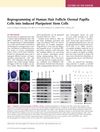
February 2012 in “Journal of Investigative Dermatology” Human hair follicle cells can be successfully transformed into different types of cells, but not more efficiently than other adult cells.
 256 citations
,
October 2013 in “Proceedings of the National Academy of Sciences of the United States of America”
256 citations
,
October 2013 in “Proceedings of the National Academy of Sciences of the United States of America” Growing human skin cells in a 3D environment can stimulate new hair growth.
 123 citations
,
November 2012 in “Stem cells”
123 citations
,
November 2012 in “Stem cells” MicroRNA-302 helps improve the conversion of body cells into stem cells by blocking NR2F2.
 19 citations
,
December 2018 in “Experimental and Molecular Medicine”
19 citations
,
December 2018 in “Experimental and Molecular Medicine” Small molecule IM boosts hair growth by changing stem cell metabolism.
 4 citations
,
May 2014 in “Biochemical Society Transactions”
4 citations
,
May 2014 in “Biochemical Society Transactions” Environmental cues can change the fate and function of epithelial cells, with potential for cell therapy.
 April 2026 in “Journal of Pharmaceutical Investigation”
 Nanotechnology could improve treatment for scars and atopic dermatitis by targeting skin issues more effectively.
 11 citations
,
August 2024 in “Nature Communications”
11 citations
,
August 2024 in “Nature Communications” Quiescent cells have increased mitochondrial activity and ECM gene expression, but reduced glycolysis.
 January 2024 in “Wiadomości Lekarskie”
 pbn-STAC effectively finds strategies for cellular reprogramming using deep reinforcement learning.
 26 citations
,
August 2019 in “Stem Cell Research & Therapy”
26 citations
,
August 2019 in “Stem Cell Research & Therapy” PBX1 helps hair stem cells grow and change by turning on certain cell signals and preventing cell death, which may be useful for hair regrowth treatments.
 54 citations
,
January 2016 in “Cell reports”
54 citations
,
January 2016 in “Cell reports” Activating β-catenin in different skin stem cells causes various types of hair growth and skin tumors.

Blocking autophagy worsens lipid buildup and dysfunction in brain cells after injury.
 9 citations
,
March 2013 in “Expert opinion on biological therapy”
9 citations
,
March 2013 in “Expert opinion on biological therapy” Epidermal stem cells have potential for personalized regenerative medicine but need careful handling to avoid cancer.
 1 citations
,
June 2010 in “Development”
1 citations
,
June 2010 in “Development” The document concludes that pig iPSCs show promise for transplant therapies and the field is advancing in controlling cell behavior for biology and medicine.
 92 citations
,
August 2017 in “Proceedings of the National Academy of Sciences of the United States of America”
92 citations
,
August 2017 in “Proceedings of the National Academy of Sciences of the United States of America” Newborn mouse skin cells can grow hair and this process can be recreated in adult cells to potentially help with hair loss.
9 citations
,
February 2025 in “Journal of Nanobiotechnology” Biomimetic nanovesicles can speed up diabetic wound healing by regulating immune cell behavior and metabolism.
 June 2026 in “Research Square”
 THBS4 helps hair grow by activating hair follicle stem cells.
 April 2026 in “Biomolecules”
 New treatments for PCOS using smart drug delivery, metabolic changes, and AI show promise but need more research.