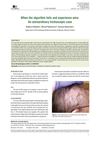
 January 2026 in “Forum Dermatologicum”
 Thorough hair examination is crucial for accurate diagnosis and treatment.
14 citations
,
October 2001 in “British Journal of Ophthalmology” Corneal issues in pemphigus vulgaris may require surgery if medication is not followed.
 15 citations
,
October 2016 in “Journal of dermatological treatment”
15 citations
,
October 2016 in “Journal of dermatological treatment” Proper hair care can prevent and stop hair breakage in people with acquired trichorrhexis nodosa.
April 2016 in “Journal of the American Academy of Dermatology” Treatment improved some symptoms but not all.
14 citations
,
January 1995 in “Archives of Physical Medicine and Rehabilitation” A patient developed excess hair and skin issues on the same side after wearing a cast.
A new genetic mutation was found causing hair and eye issues in a boy.
July 2025 in “International Journal of Trichology” A 6-year-old boy's leg hair loss was due to friction from sitting cross-legged, and it usually resolves on its own.
 February 2021 in “International journal of research in dermatology”
 A boy's hair, nails, and skin improved after 6 months of steroid treatment.
31 citations
,
August 1963 in “Archives of Dermatology” No systemic causes were found for the patients' conditions.
 4 citations
,
October 2008 in “International Journal of Dermatology”
4 citations
,
October 2008 in “International Journal of Dermatology” A toddler's chronic finger ulcer was successfully treated after removing a hair causing hair-thread tourniquet syndrome.
 3 citations
,
October 2022 in “International Journal of Dermatology”
3 citations
,
October 2022 in “International Journal of Dermatology” COVID-19 can cause hair and nail disorders after infection.
 May 2020 in “JOJ Dermatology & Cosmetics”
 A rare skin condition usually on the face was found on a man's heel.
 December 2022 in “Journal of medical sciences and health”
 Examining nail biopsies is useful for diagnosing nail diseases.
 2 citations
,
January 2025 in “Dermatology Practical & Conceptual”
2 citations
,
January 2025 in “Dermatology Practical & Conceptual” Nailfold dermoscopy is a simple, cheap way to check blood vessel changes in COVID-19 patients.
1 citations
,
January 2018 in “Journal of clinical & experimental dermatology research” Some nail changes in chilblains can look like lichen planus and may be severe and long-lasting.
June 2025 in “Dermatologic Surgery” Surgery can effectively treat severe eyelid turning out caused by a rare skin disorder.
7 citations
,
November 2020 in “Journal of Tissue Viability” Transplanting a person's own hair can heal chronic wounds in certain skin conditions.
 January 2022 in “Journal of Skin and Stem Cell”
 Trichodynia is a painful scalp condition needing targeted treatments beyond symptom management.
January 2023 in “Clinical and Experimental Dermatology” Oral minoxidil may help improve fragile hair.
47 citations
,
November 1966 in “Archives of Dermatology” Trichorrhexis nodosa is mainly caused by hair trauma, not a metabolic defect.
 January 2026 in “JOURNAL OF CLINICAL AND DIAGNOSTIC RESEARCH”
 A 62-year-old man with diabetes and kidney disease had itchy skin lesions diagnosed as perforating folliculitis, treated with medication and skin care.
38 citations
,
September 1997 in “The journal of investigative dermatology/Journal of investigative dermatology” A mutation in mice causes hair loss and skin issues due to a defect in a gene affecting cell adhesion.
2 citations
,
September 2004 in “Experimental Dermatology” Keratinocyte adhesion problems can cause skin and hair disorders.
 7 citations
,
January 1998 in “PubMed”
7 citations
,
January 1998 in “PubMed” Hair loss can cause scalp discomfort.
February 2023 in “International Journal of Dermatology” 1 citations
,
January 2018 in “Jornal Brasileiro de Patologia e Medicina Laboratorial” Monilethrix causes brittle hair and hair loss, and it runs in families.
1 citations
,
March 2006 in “Journal of Cosmetic Dermatology” The woman's forehead lesion was caused by ointment use and resolved with treatment.
5 citations
,
June 2008 in “British Journal of Dermatology”  January 2014 in “Pathology”
 Early subungual melanoma might be treated with less aggressive surgery because it invades the skin under the nail more slowly.
4 citations
,
May 2020 in “The journal of pediatrics/The Journal of pediatrics” A boy with monilethrix has brittle hair that breaks easily due to a genetic condition, which might improve by puberty.