7 citations
,
January 2009 in “DOAJ (DOAJ: Directory of Open Access Journals)” D-004 did not harm sperm cells in mice.
3 citations
,
August 2018 in “Journal of Structural Biology” KAP8.1 protein is crucial for hair structure and interacts with keratin 85.
 1 citations
,
October 2012 in “The Journal of Dermatology”
1 citations
,
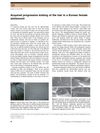
October 2012 in “The Journal of Dermatology” A Korean girl developed kinky hair without known cause or effective treatment.
7 citations
,
August 2008 in “Immunogenetics” A gene mutation in mice causes increased mast cells and disorganized hair follicles in their skin.
6 citations
,
January 2020 in “Open Journal of Psychiatry” The Greek DCQ is a reliable and valid tool for assessing dysmorphic concern.
130 citations
,
April 2003 in “Journal of Investigative Dermatology” Four specific keratins in hair follicles help understand hair structure and function.
1 citations
,
May 2024 in “Communications Biology” Dab2 protein is crucial for hair follicle stem cell renewal and preventing early aging.
12 citations
,
May 2010 in “Journal of Clinical Oncology” MK-5108 is safe and shows potential against tumors, especially alone.
November 2022 in “Munich Personal RePEc Archive (Ludwig Maximilian University of Munich)” Phosphatidylinositol 4-kinases are crucial for root growth, defense, and immunity in Arabidopsis thaliana.
 11 citations
,
June 2012 in “Journal of Dermatological Science”
11 citations
,
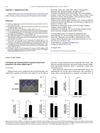
June 2012 in “Journal of Dermatological Science” Scientists identified a group of human skin cells with high growth and regeneration potential.
 January 2013 in “Transactions of the Materials Research Society of Japan”
 CMADK reduces hair damage from bleaching and permanent waving.
3 citations
,
July 2017 in “Journal of Investigative Dermatology” SSEA-4 can distinguish between eccrine and apocrine sweat gland ducts.
 April 2023 in “The journal of investigative dermatology/Journal of investigative dermatology”
 DKK2 and SOSTDC1 together are necessary for the normal timing of the first regression phase in the hair growth cycle.
19 citations
,
February 2016 in “Journal of Biological Chemistry” KCNQ potassium channels help control the sensitivity of touch receptors in the skin.
 March 2026 in “The Indian Journal of Animal Sciences”
 All Indian dromedary camel breeds have the same KRTAP7 gene affecting hair quality.
6 citations
,
August 2016 in “Journal of Visualized Experiments” The CUBIC protocol allows detailed 3D visualization of proteins in mouse skin biopsies.
 9 citations
,
January 2011 in “Skin Research and Technology”
9 citations
,
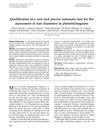
January 2011 in “Skin Research and Technology” The new automatic tool accurately measures hair thickness and is reliable.
 May 2023 in “Journal of Investigative Dermatology”
 Blocking DPP4 can potentially speed up hair growth and regeneration, especially after injury or in cases of hair loss.
 December 2021 in “Molecular genetics and genomics”
 Cats with abnormal hair had DSG4 gene changes causing hair problems.
39 citations
,
November 2005 in “The journal of investigative dermatology/Journal of investigative dermatology” Fatp4 is crucial for healthy skin development and function.
The KRT84 gene is linked to better wool quality in Gansu Alpine Fine-wool sheep.
93 citations
,
July 2006 in “Journal of Investigative Dermatology” K25, K27, and K28 are found in all inner root sheath layers of hair, while K26 is only in the cuticle.
 9 citations
,
October 2022 in “Nature Communications”
9 citations
,
October 2022 in “Nature Communications” The DiLiCre mouse model is an effective tool for precise genome editing using light.
81 citations
,
March 2006 in “Journal of Investigative Dermatology” Mutations in the DSG4 gene cause specific hair and scalp issues.
 June 2024 in “British Journal of Dermatology”
 KRT14 gene variants cause dermatopathia pigmentosa reticularis, affecting nails, teeth, and hair.
 November 2022 in “The journal of investigative dermatology/Journal of investigative dermatology”
 Deleting the CD271 gene in mouse skin cells leads to disorganized skin and increased hair growth, suggesting CD271 is important for skin health.
 13 citations
,
March 2013 in “International Journal of Cosmetic Science”
13 citations
,
March 2013 in “International Journal of Cosmetic Science” AcSDKP may help prevent skin and hair aging and promote their growth.
January 1993 in “Nihon Chikusan Gakkaiho” Trichocytic cytokeratin expression starts earlier in whiskers than in body hair during rat embryo development.
June 1996 in “Journal of Dermatological Science”