7 citations
,
December 2015 in “PloS one” Cryopreserved mouse whisker follicles can grow hair when transplanted into nude mice.
 8 citations
,
February 2005 in “British Journal of Haematology”
8 citations
,
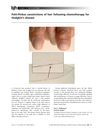
February 2005 in “British Journal of Haematology” Chemotherapy caused the patient's hair to have alternating thick and thin segments.
7 citations
,
September 1980 in “Zoological Journal of the Linnean Society” Dendritic cells help regulate skin development and hair growth in mice.
23 citations
,
October 1958 in “PubMed” 41 citations
,
April 1989 in “Experimental and Applied Acarology” 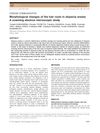 3 citations
,
December 2013 in “Journal of Dermatology”
3 citations
,
December 2013 in “Journal of Dermatology” Scanning electron microscopy revealed four distinct hair root shapes in alopecia areata, suggesting a less invasive diagnostic method.
 June 2011 in “Journal of medicine and life science”
 Hizkia fusiforme seaweed extract can help promote hair growth.
 October 2023 in “Applied materials today”
 New treatment for hair loss using special microneedles shows promise in reducing inflammation and promoting hair growth.
25 citations
,
May 1972 in “Canadian journal of zoology” Black-tailed deer have four types of pelages and molt twice a year.
69 citations
,
July 2002 in “Clinical and Experimental Dermatology” Alopecia areata is influenced by genetics and immune system factors, and better understanding could improve treatments.
11 citations
,
August 1995 in “Journal of Investigative Dermatology”  12 citations
,
November 2003 in “Journal of the American Academy of Dermatology”
12 citations
,
November 2003 in “Journal of the American Academy of Dermatology” Topical diphencyprone helped regrow hair in mice and rats with a condition similar to human hair loss.
 June 2024 in “Frontiers in pharmacology”
 2-deoxy-D-ribose gel may help regrow hair in cases of hair loss.
 April 2018 in “Journal of Investigative Dermatology”
 DNMT3A is crucial for healthy skin and hair growth.
18 citations
,
September 1994 in “Clinical and Experimental Dermatology” Localized trichorrhexis nodosa is a hair condition where hair becomes fragile and breaks easily due to damage.
 7 citations
,
March 2018 in “Asian-Australasian journal of animal sciences”
7 citations
,
March 2018 in “Asian-Australasian journal of animal sciences” OCIAD2 and DCN genes affect hair growth in goats by having opposite effects on a growth signaling pathway and inhibiting each other.
July 2024 in “Journal of Investigative Dermatology” Squaric acid dibutylester helps hair growth by increasing certain immune cells in the skin.
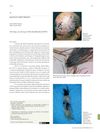 2 citations
,
February 2019 in “Anais brasileiros de dermatologia/Anais Brasileiros de Dermatologia”
2 citations
,
February 2019 in “Anais brasileiros de dermatologia/Anais Brasileiros de Dermatologia” Tufted folliculitis is common in patients with folliculitis decalvans.
4 citations
,
August 2015 in “PloS one” Transplanted whisker follicles caused long hair growth on the spinal cords of mice.
14 citations
,
August 2013 in “Journal of Parasitology” Mite infestations severely harm the health of endangered Amargosa voles.
January 2006 in “DOAJ (DOAJ: Directory of Open Access Journals)” Loose anagen hair syndrome causes easily pulled, thin hair in kids but is harmless and temporary.
2 citations
,
February 2022 in “Genomics” Researchers discovered new cell types in goat hair follicles that could help understand hair regrowth and human hair loss.
November 2025 in “Skin Health and Disease” Autosomal recessive woolly hair is rare and involves tightly coiled hair without other health issues.
 41 citations
,
January 2014 in “Annals of Dermatology”
41 citations
,
January 2014 in “Annals of Dermatology” Dermoscopic examination helps diagnose different types of hair loss conditions by showing specific patterns.
 20 citations
,
December 2015 in “Journal of Pharmacopuncture”
20 citations
,
December 2015 in “Journal of Pharmacopuncture” Thread-embedding therapy helped hair grow back in mice and might do the same in humans.
 April 2018 in “Journal of Investigative Dermatology”
 The role of γδT-cells in causing alopecia areata remains unclear.
Minoxidil and a solvent mixture can prevent hair loss caused by chemotherapy in mice.
 3 citations
,
November 2019 in “The American Journal of Dermatopathology”
3 citations
,
November 2019 in “The American Journal of Dermatopathology” Widened sweat ducts are a very specific sign of scarring hair loss.
 27 citations
,
May 2017 in “Marine Drugs”
27 citations
,
May 2017 in “Marine Drugs” Undariopsis peterseniana extract helps hair grow by activating certain cell growth pathways and could be a new treatment for hair loss.
 28 citations
,
March 2016 in “Toxicologic pathology”
28 citations
,
March 2016 in “Toxicologic pathology” Dogs could be good models for studying human hair growth and hair loss.