 26 citations
,
August 1971 in “Journal of Morphology”
26 citations
,
August 1971 in “Journal of Morphology” Lizards can regrow their tail scales with the same structure, distribution, and gender-specific features as the original ones, and this unique ability is not seen in adult mammals.
 25 citations
,
January 2005 in “Pediatric Dermatology”
25 citations
,
January 2005 in “Pediatric Dermatology” Methotrexate effectively treated a 2-year-old's generalized pustular psoriasis without side effects.
 21 citations
,
January 2005 in “Pediatric Dermatology”
21 citations
,
January 2005 in “Pediatric Dermatology” An 8-year-old girl with vitiligo developed extra hair growth on her knee after using tacrolimus ointment.
 16 citations
,
January 2005 in “Pediatric Dermatology”
16 citations
,
January 2005 in “Pediatric Dermatology” A 10-year-old girl with Fox Fordyce disease improved with treatment, suggesting the disease can occur before puberty and might be underdiagnosed in young girls.
 14 citations
,
January 2005 in “Pediatric Dermatology”
14 citations
,
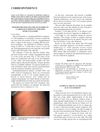
January 2005 in “Pediatric Dermatology” UVA1-light therapy successfully treated a child's skin condition, mycosis fungoides.
 12 citations
,
January 2005 in “Pediatric Dermatology”
12 citations
,
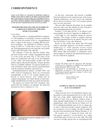
January 2005 in “Pediatric Dermatology” Fox Fordyce disease might be more common in prepubertal girls than thought and can be managed with treatment.
 9 citations
,
January 2005 in “Pediatric Dermatology”
9 citations
,
January 2005 in “Pediatric Dermatology” Fox Fordyce disease can occur in prepubertal girls and may be underdiagnosed.
 3 citations
,
January 2018 in “Reproduction, Fertility and Development”
3 citations
,
January 2018 in “Reproduction, Fertility and Development” Birth control pills increase certain receptor activities in female gerbil prostate glands and can lead to prostate changes.

PRP injections with tadalafil and stretching safely improved Peyronie's symptoms but didn't significantly change curvature long-term.
 24 citations
,
March 2018 in “Pigment Cell & Melanoma Research”
24 citations
,
March 2018 in “Pigment Cell & Melanoma Research” The environment around melanocyte stem cells is key for hair regeneration and color, with certain injuries affecting hair color and potential treatments for pigmentation disorders.
 8 citations
,
February 2013 in “Central European Journal of Biology”
8 citations
,
February 2013 in “Central European Journal of Biology” Melanocytes are diverse cells important for pigmentation and skin health, influenced by genetics and environment.
 115 citations
,
October 2003 in “Journal of Neuroscience”
115 citations
,
October 2003 in “Journal of Neuroscience” Aβ afferents do not sprout into the superficial spinal cord layers after nerve injury.
 19 citations
,
January 2000 in “Biological and Pharmaceutical Bulletin”
19 citations
,
January 2000 in “Biological and Pharmaceutical Bulletin” Diclofenac salt delivery through skin varies based on the salt's counterions.
 January 2025 in “Nature Communications”
 Large-scale reconstructions enhance understanding of vibrissal sensory mapping in the brain.
 April 2026 in “bioRxiv (Cold Spring Harbor Laboratory)”
 Dopamine receptors in the brain influence itch-related scratching behavior.
47 citations
,
May 1994 in “Experimental Brain Research” The mystacial pad's innervation in adult rats is more complex than previously thought.
 20 citations
,
August 2014 in “Therapeutic delivery”
20 citations
,
August 2014 in “Therapeutic delivery” The transfollicular route shows promise for noninvasive, targeted drug delivery but needs more research.
123 citations
,
November 2003 in “Neuroscience Letters” TRPV4 helps sense pressure in mouse skin.
9 citations
,
January 2015 in “Springer eBooks” Using hair follicles can improve skin drug delivery.
 February 2024 in “Pharmaceutical research”
 Hair follicles affect how well small molecules can pass through the skin, and this varies depending on the molecule's features.
14 citations
,
September 2017 in “Hormones and behavior” δ-GABAA receptors affect alcohol consumption based on the estrous cycle and influence movement regardless of the cycle.
5 citations
,
August 2005 in “Anatomy and Embryology” Rat skin has a linear system of nerve fibers linked to hair follicles and muscles.

A new imaging method helps see and study touch nerve endings in mouse skin.
 April 2023 in “The journal of investigative dermatology/Journal of investigative dermatology”
 Researchers found three types of melanocytes in developing mouse skin, each with different genes and locations.

Proper niche formation in Drosophila requires Slit-Robo signaling for cell migration.
36 citations
,
July 2005 in “Journal of Neuroendocrinology” Blocking certain brain processes reduces mating behavior in female rats.
 1 citations
,
September 2017 in “Dermatologic Surgery”
1 citations
,
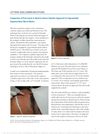
September 2017 in “Dermatologic Surgery” The cephalic approach for nerve blocks is less painful than the anterior approach during hair restoration surgery.
June 2023 in “bioRxiv (Cold Spring Harbor Laboratory)” Dopaminergic neurons in the gut have distinct subtypes, some releasing both dopamine and acetylcholine.
 2 citations
,
August 2023 in “Development”
2 citations
,
August 2023 in “Development” Hair follicles in the back of the rosette fancy mouse have reversed orientations due to a gene mutation.
 January 2022 in “Journal of Cutaneous and Aesthetic Surgery”
 Using truncal anesthesia on the supraorbital nerve reduces pain in hair loss treatments and improves patient comfort.