Search
for
Sort by
Research
240-270 / 1000+ results
research rwSALT: a regrowth-weighted SALT score providing direct pixel-level measurement rather than visual estimation
rwSALT accurately measures hair regrowth in alopecia areata using scalp photos.
research Cicatricial alopecia secondary to radiation therapy: case report and review of the literature.
Keeping radiation doses under 16 Gy may reduce permanent hair loss.

research TrichoScan®: A useful method for measuring hair growth parameters and enhancing patient selection for hair restoration surgery
The TrichoScan method effectively measures hair growth and helps choose patients for hair restoration surgery.
research Congress abstracts SPEDM
The Bethesda system is effective for identifying thyroid cancer but has low sensitivity.

research Dermoscopy — 4th Conference of the Section of Dermoscopy and Other Skin Imaging Techniques (DiTOS) of the Polish Dermatological Society — Abstracts
Hair loss can be caused by cancer, treatments, or skin conditions, and trichoscopy helps diagnose it.
research Sunscreen remanence on the skin: a noninvasive real time in vivo spectral analysis assessing the quenching of specular ultraviolet A light reflectance
Sunscreens with UVA blockers effectively reduce skin fluorescence for several hours.
research Microscopic high-resolution digital volumetric imaging of human hair fibers
DVI provides detailed 3D imaging of hair and shows how various products protect and enhance hair.
![Comparative Oncology: Evaluation of 2-Deoxy-2-[18F]Fluoro-D-Glucose (FDG) Positron Emission Tomography/Computed Tomography (PET/CT) for the Staging of Dogs with Malignant Tumors](/images/assets/d55cf8d9-d8ee-4735-9b38-42a266b4059d/small/24322.jpg)
research Comparative Oncology: Evaluation of 2-Deoxy-2-[18F]fluoro-D-glucose (FDG) Positron Emission Tomography/Computed Tomography (PET/CT) for the Staging of Dogs with Malignant Tumors
FDG PET/CT scans can change cancer treatment plans for dogs.

research OPTICAL COHERENCE TOMOGRAPHY AS AN ADVANCED TOOL IN DIFFERENT APPLICATIONS
Optical Coherence Tomography has potential in diagnosing hair loss and monitoring blood clotting, and could be improved for deeper tissue observation and better hair loss understanding.

research Repurposing of Various Current Medicines as Radioprotective Agents
Some existing medicines show promise as safe treatments to protect against the side effects of radiation therapy.
research The preventive effect of vitamin D3 on radiation-induced hair toxicity in a rat model
Vitamin D3 may protect rat hair follicles from radiation damage.
research The Case Files
Early diagnosis, decontamination, and supportive care are crucial for managing acute radiation syndrome.
research Stimuli-responsive hydrogels for radiation-induced skin injury: from passive barriers to autonomous drug delivery systems
Advanced hydrogels can autonomously deliver drugs to treat radiation skin injuries, but challenges remain for clinical use.
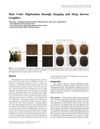
research Hair color digitization through imaging and deep inverse graphics
A new method accurately captures and renders hair color for virtual reality and hair dye use.
research เครองมอประมวลผลภาพดจทลสำหรบวดขอมลของเสนผมบนหนงศรษะของผปวยโรคผมบางทางพนธกรรม
The tool accurately measures hair count and size on scalps with 79.45% and 68.19% accuracy, respectively.

research Dynamic Trichoscopy
Trichoscopy is useful for diagnosing and monitoring hair and scalp conditions over time.
research Simultaneous quantitation of nine hydroxy-androgens and their conjugates in human serum by stable isotope dilution liquid chromatography electrospray ionization tandem mass spectrometry
A new method accurately measures nine specific hormones in human blood.
research Optimized skin optical clearing for optical coherence tomography monitoring of encapsulated drug delivery through the hair follicles
A PEG-400/oleic acid mixture best improves drug delivery monitoring through hair follicles.
research Limitations of Treatment-Induced Alopecia Grading Instruments in Evaluating Therapeutic Response
Current methods for grading hair loss from cancer treatment are not accurate enough and need improvement.
research The Effects of Multiple Power Densities of Carbon Dioxide Laser on Photothermal Damage in Rat Skin Tissue
Higher power CO2 laser causes more severe skin burns and damage.

research Multimodal Non-Invasive Skin Imaging in Dermatology: Current Modalities, Clinical Applications, and Future Integration
Integrating various skin imaging technologies improves diagnosis and treatment in dermatology.
research Dose‐response of human follicles during laser‐based hair removal: Ex vivo photoepilation model with classification system embracing morphological and histological features
Higher light doses cause more damage to hair follicles, predicting better hair removal results.
research Preparation of3H-labelled testosterone metabolites
The conclusion is that tritium-labeled testosterone metabolites can be made and are better converted into dihydrotestosterone in skin cells than in prostate tissue.
research Advancements in Dermatological Imaging Modalities
New imaging technologies improve skin diagnosis but face cost and training challenges.
research The Cross-section Trichometer
The Cross-section Trichometer is a promising tool for measuring hair characteristics without cutting the hair and may have various clinical uses.
research Assessment and Treatment Outcomes of Persistent Radiation-Induced Alopecia in Patients With Cancer
Persistent radiation-induced hair loss is dose-dependent, and treatments like topical minoxidil can be effective.

research Hormesis and medicine
Low doses of some substances can be beneficial, while high doses can be harmful or toxic.

research The efficacy of a photolyase-based device on the cancerization field: a clinical and thermographic study
The photolyase-based device significantly changed the size and heat of potential skin cancer areas in patients.
research Pediatric Radiation-Induced Alopecia Post Intracranial Vascular Malformation Embolization: A Case Report with Dermoscopic Findings
A 7-year-old girl experienced temporary hair loss due to radiation, with signs of possible hair regrowth.