July 2026 in “Cell Transplantation” This systematic umbrella review highlights the central role of dermal papilla (DP) fibroblasts in the pathogenesis of androgenic alopecia (AGA). The review synthesizes evidence from 43 articles, revealing that DP cells express high levels of androgen receptor and 5α-reductase type II, which, upon activation by dihydrotestosterone, lead to several detrimental effects: downregulation of Wnt/β-catenin signaling, upregulation of TGF-β/BMP pathway, altered secretion profiles, impaired DP cell aggregation, destruction of hair follicle stem cell activation, and induction of inflammation and fibrosis. These findings underscore the dysfunction of DP cells as a key driver of hair follicle miniaturization in AGA, suggesting that targeting DP cell dysfunction could be a viable therapeutic strategy. Evidence regarding the role of dermal sheath cells as a DP cell reserve remains limited.
August 2016 in “The journal of investigative dermatology/Journal of investigative dermatology” Different types of skin cells create unique support structures that can affect skin cell growth and could help in skin repair.
18 citations
,
July 2012 in “Cell Biology International Reports” Human mesenchymal stem cells can become dermal papilla cells, aiding hair growth.
 4 citations
,
June 2022 in “Journal of Cosmetic Dermatology”
4 citations
,
June 2022 in “Journal of Cosmetic Dermatology” Multi-peptide factors from fibroblasts may stimulate hair growth by increasing growth factors and β-catenin in hair cells.
Some fibroblast growth factors may promote hair growth similarly to minoxidil and could potentially treat hair loss.
 8 citations
,
July 2019 in “Cell Proliferation”
8 citations
,
July 2019 in “Cell Proliferation” Researchers found a way to turn skin cells into cells that can grow new hair.
4 citations
,
December 2022 in “Cells” Engineered nanovesicles from fibroblasts may help treat hair loss by promoting hair growth.
 16 citations
,
August 2019 in “Cell Proliferation”
16 citations
,
August 2019 in “Cell Proliferation” Keratinocytes help keep hair follicle cells and skin cells separate in 3D cultures, which is important for hair growth research.
 1 citations
,
September 2019 in “Journal of Investigative Dermatology”
1 citations
,
September 2019 in “Journal of Investigative Dermatology” Human hair matrix cells and dermal papilla fibroblasts can form early hair follicle structures but don't produce hair shafts yet.
 June 2020 in “Journal of Investigative Dermatology”
 Scientists successfully grew mini hair follicles using human skin cells, which could help treat baldness.
 28 citations
,
October 2011 in “International Journal of Molecular Medicine”
28 citations
,
October 2011 in “International Journal of Molecular Medicine” Adenosine helps hair grow longer and stronger by boosting certain growth factors and signaling pathways.
 19 citations
,
May 2016 in “Clinical, cosmetic and investigational dermatology”
19 citations
,
May 2016 in “Clinical, cosmetic and investigational dermatology” FGF-2&D/P nanoparticles can help treat hair loss.
 March 2026 in “Mendeley Data”
 Basement membrane-like ECM supports fibroblast aggregation and cohesion.
 24 citations
,
April 2012 in “Developmental Biology”
24 citations
,
April 2012 in “Developmental Biology” Dermal papillae cells, important for hair growth, come from multiple cell lines and can be formed by skin cells, regardless of their origin or hair cycle phase. These cells rarely divide, but their ability to shape tissue may contribute to their efficiency in inducing hair growth.
 April 2023 in “Journal of Investigative Dermatology”
 The research found that certain factors in hair follicle cells control hair growth and development, and these could be used to create new treatments for hair loss.
 7 citations
,
July 2005 in “Journal of Dermatological Science”
7 citations
,
July 2005 in “Journal of Dermatological Science” The gene URB is more active in human hair growth cells and responds to a hair-related hormone.
 May 2024 in “The journal of investigative dermatology/Journal of investigative dermatology”
 β-Catenin is essential for new hair growth after skin injury.
 April 2017 in “Journal of Investigative Dermatology”
 The hair follicle dermal sheath is essential for hair shedding and needs to communicate with the outer root sheath for normal hair growth cycles.
 April 2017 in “Plastic and reconstructive surgery. Global open”
 Baby and adult skin cells are different, with baby cells having more active pathways that could help grow new hair follicles.
 April 2017 in “Plastic and reconstructive surgery. Global open”
 Fetal scalp cells have more regenerative genes than adult cells, and decellularized muscle matrix is better for muscle repair than commercial alternatives.
 April 2023 in “The journal of investigative dermatology/Journal of investigative dermatology”
 Estetrol may help prevent hair loss and promote hair growth in women.
 21 citations
,
October 2017 in “Journal of Investigative Dermatology”
21 citations
,
October 2017 in “Journal of Investigative Dermatology” The document concludes that understanding dermal papilla cells is key to improving hair regeneration treatments.
 4 citations
,
January 2021 in “Archives of dermatological research”
4 citations
,
January 2021 in “Archives of dermatological research” The study created a new model to better understand human hair growth and health.
 300 citations
,
August 2012 in “Seminars in Cell & Developmental Biology”
300 citations
,
August 2012 in “Seminars in Cell & Developmental Biology” The conclusion is that certain cell interactions and signals are crucial for hair growth and regeneration.
36 citations
,
September 1996 in “PubMed” DP and DS cells are different from DF cells in structure and function.
31 citations
,
December 1991 in “Annals of the New York Academy of Sciences” ORS and hair matrix cells balance growth and differentiation better than normal keratinocytes, with human dermal fibroblasts crucial for proper differentiation.
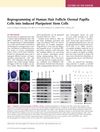 26 citations
,
February 2012 in “Journal of Investigative Dermatology”
26 citations
,
February 2012 in “Journal of Investigative Dermatology” Human hair follicle cells can be successfully transformed into different types of cells, but not more efficiently than other adult cells.
5 citations
,
October 2020 in “Bioengineering & translational medicine” Researchers used a laser to create advanced skin models with hair-like structures.
September 2016 in “Journal of dermatological science” Human induced pluripotent stem cells can be used to create cells that help grow hair.
 314 citations
,
April 2010 in “Developmental Cell”
314 citations
,
April 2010 in “Developmental Cell” β-catenin in the dermal papilla is crucial for normal hair growth and repair.