13 citations
,
April 1964 in “PubMed” Phosphatide distribution in mouse skin remains consistent in both normal and cancerous growths.
June 2025 in “Proceedings of the National Academy of Sciences” A PIK3CA mutation in Schwann cells causes severe nerve damage and increased glycolysis, but early treatment can help.
79 citations
,
June 1993 in “Molecular and Cellular Biology” The K5 promoter controls gene expression in skin cells, with specific DNA segments crucial for targeting and regulation.
 June 2010 in “Melanoma research”
 LDE225 is a promising skin-applied treatment for basal cell carcinoma with good skin penetration and effectiveness.
 4 citations
,
February 2021 in “Plant journal”
4 citations
,
February 2021 in “Plant journal” OsUEV1B protein is essential for controlling phosphate levels in rice.
 3 citations
,
February 2021 in “Experimental dermatology”
3 citations
,
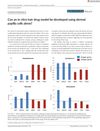
February 2021 in “Experimental dermatology” Dermal papilla microtissues could be useful for initial hair growth drug testing.
 3 citations
,
January 2005 in “Biological & Pharmaceutical Bulletin”
3 citations
,
January 2005 in “Biological & Pharmaceutical Bulletin” The peptide GPIGS helps hair cells grow and speeds up hair regrowth in mice.
March 2024 in “European Journal of Neuroscience” Dopaminergic neurons in the gut have diverse subtypes with different neurotransmitter contents.
 5 citations
,
June 2024 in “Developmental Cell”
5 citations
,
June 2024 in “Developmental Cell” Activating TRPV1 can boost hair growth by involving neurons, macrophages, and fibroblasts.
4 citations
,
October 2021 in “Journal of Clinical Medicine” Carriers of a specific gene mutation have subtle skin changes without visible symptoms.
22 citations
,
April 2010 in “Journal of Cellular Biochemistry” Certain mutations in the hairless protein disrupt its ability to regulate the hair cycle.
11 citations
,
March 2015 in “Life sciences” Vitamin D3-activated cell byproduct promotes hair growth in mice by increasing blood vessel growth.
80 citations
,
June 2002 in “Molecular Biology of the Cell” Type II keratins are uniquely phosphorylated during stress and mitosis, affecting their structure and function.
 73 citations
,
June 2001 in “Endocrinology”
73 citations
,
June 2001 in “Endocrinology” Prolactin affects when mice shed and grow hair.
 February 2023 in “Scientific Reports”
 Cold Atmospheric Microwave Plasma (CAMP) helps hair cells grow and could potentially treat hair loss.
 40 citations
,
December 2012 in “PLoS ONE”
40 citations
,
December 2012 in “PLoS ONE” Removing Ctip2 in skin cells causes skin inflammation similar to atopic dermatitis.
 2 citations
,
February 2004 in “Biopolymers”
2 citations
,
February 2004 in “Biopolymers” 4-(4-Phenoxybenzoyl)benzoic acid derivatives can both increase and decrease certain types of reactive oxygen species, and may be relevant to hair loss.
38 citations
,
January 2017 in “PPAR Research” PPAR-γ helps control skin oil glands and inflammation, and its disruption can cause hair loss diseases.
July 2025 in “Journal of Investigative Dermatology” May 2025 in “Texas Digital Library (University of Texas)” Extracellular ATP promotes growth, while adenosine inhibits it in Arabidopsis plants.
34 citations
,
August 2012 in “Calcified Tissue International”  51 citations
,
August 2013 in “Journal of Investigative Dermatology”
51 citations
,
August 2013 in “Journal of Investigative Dermatology” Human skin cells can create new hair follicles when transplanted into mice.
Lhx2 helps retinal cells respond to signals for eye development.
 11 citations
,
July 2015 in “Gene”
11 citations
,
July 2015 in “Gene” DHT affects bone growth by altering gene activity in osteoblasts, potentially complicating steroid use.
January 2005 in “Enlighten: Publications (The University of Glasgow)” Melanocyte pathology requires keratinocyte hyperplasia and regulation dysfunction.
January 2015 in “ScholarlyCommons (University of Pennsylvania)” IL-19 and IL-24 help cells respond to DNA damage and could be targeted for cancer and age-related disease treatments.
January 2025 in “Fìzìologìčnij žurnal” PDRN may reduce inflammation and complications in revision rhinoplasty for patients with high fibrinogen levels.
21 citations
,
August 2007 in “Experimental Dermatology” Overexpression of hurpin in mice leads to abnormal skin and higher skin cancer risk.
1 citations
,
June 2016 in “FEBS open bio” Fish oil increased cell growth and macrophages in the skin but didn't affect COX-2 expression.