3 citations
,
May 2023 in “Journal of the American Academy of Dermatology” Certain drugs can cause hair loss, but stopping the drug usually leads to hair regrowth.
 3 citations
,
August 2024 in “Cureus”
3 citations
,
August 2024 in “Cureus” Upadacitinib may cause hair loss.
 June 2023 in “British journal of dermatology/British journal of dermatology, Supplement”
 Some multiple sclerosis treatments may trigger hair loss conditions like alopecia areata.
 2 citations
,
August 2022 in “Federal Practitioner”
2 citations
,
August 2022 in “Federal Practitioner” A severe medication reaction required long treatment and led to hair loss and thyroid issues.
 49 citations
,
December 2018 in “JAAD case reports”
49 citations
,
December 2018 in “JAAD case reports” Dupilumab may cause significant hair loss, which can reverse after stopping the drug.
 4 citations
,
January 2017 in “Indian Dermatology Online Journal”
4 citations
,
January 2017 in “Indian Dermatology Online Journal” A child used a hair growth lotion for hair loss, but it caused excessive hair growth on his face and neck instead.
 January 2018 in “SOJ microbiology & infectious diseases”
 Etanercept, a psoriasis treatment, caused hair loss in a patient.
 1 citations
,
October 2013 in “Expert Review of Dermatology”
1 citations
,
October 2013 in “Expert Review of Dermatology” Diagnosing alopecia areata is challenging and requires careful examination and various tests to distinguish it from other hair loss types.
 70 citations
,
February 2015 in “Expert Opinion on Drug Discovery”
70 citations
,
February 2015 in “Expert Opinion on Drug Discovery” Topical drugs and near-infrared light therapy show potential for treating alopecia.
 1 citations
,
September 2007 in “European journal of paediatric neurology”
1 citations
,
September 2007 in “European journal of paediatric neurology” Low dose valproic acid treatment caused hair loss in a young patient.
November 2025 in “SHILAP Revista de lepidopterología” Animal and mathematical models help understand and develop treatments for alopecia areata.
 1 citations
,
October 2024 in “Journal of Nepal Paediatric Society”
1 citations
,
October 2024 in “Journal of Nepal Paediatric Society” Stopping Cyclosporine A led to hair regrowth in a child with alopecia.
March 2023 in “International Journal of Trichology” A man developed temporary hair loss after taking a cancer drug, which might indicate a better treatment response.
 7 citations
,
May 1978 in “International Journal of Dermatology”
7 citations
,
May 1978 in “International Journal of Dermatology” Recent hair loss research shows some progress, especially in understanding male pattern baldness, but effective treatments for many types of hair loss are still lacking.
 October 2025 in “Dermatology Practical & Conceptual”
 Psoriasis patients are more likely to develop alopecia areata due to complex autoimmune interactions.
 2 citations
,
January 2014 in “Journal of clinical and investigative dermatology”
2 citations
,
January 2014 in “Journal of clinical and investigative dermatology” Some drugs used to treat immune conditions may cause different types of hair loss.
 April 2023 in “Journal of Investigative Dermatology”
 Some patients who had a severe drug reaction developed long-term hair loss.
August 2024 in “Bioorganic Chemistry” Cedrol from ginger can promote hair growth when taken orally.
 September 2021 in “Journal of skin and stem cell”
 Lactium, a milk protein, can help reduce symptoms of skin disorders linked to stress and anxiety without side effects.
 1 citations
,
October 2023 in “Clinical, cosmetic and investigational dermatology”
1 citations
,
October 2023 in “Clinical, cosmetic and investigational dermatology” Tofacitinib improved hair loss and skin symptoms in a patient after secukinumab caused hair loss.
 August 2024 in “Current Protocols”
 The C3H/HeJ mouse model is useful for studying and testing treatments for alopecia areata.
Baricitinib may reactivate trichilemmal cysts in people with a history of these cysts.
May 2024 in “Indian Journal of Pharmacology” Tofacitinib effectively regrew scalp hair in an 11-year-old girl with alopecia areata.
 1 citations
,
July 2019 in “Clinical Rheumatology”
1 citations
,
July 2019 in “Clinical Rheumatology” Leflunomide is more likely to help treat alopecia areata than cause it.
Tofacitinib and low-dose IL-2 may help maintain hair regrowth in alopecia areata without ongoing treatment.
 83 citations
,
May 1999 in “International Journal of Dermatology”
83 citations
,
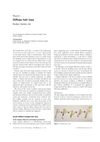
May 1999 in “International Journal of Dermatology” Hair loss that spreads out can often fix itself or be treated by finding and handling the cause.
 9 citations
,
April 1987 in “International Journal of Dermatology”
9 citations
,
April 1987 in “International Journal of Dermatology” Stopping the depression medication improved the woman's eyebrow hair loss, and a treatment for a skin condition caused by mites was effective.
 4 citations
,
January 2016 in “Postepy Dermatologii I Alergologii”
4 citations
,
January 2016 in “Postepy Dermatologii I Alergologii” Many hair diseases, including those caused by medications and psychological issues, can lead to hair loss and require proper treatment and specialist care.
 1 citations
,
January 1967 in “The BMJ”
1 citations
,
January 1967 in “The BMJ” The document concludes that while some hair and scalp disorders can be treated, hair loss from destroyed follicles is permanent, and damaged hair can only regrow naturally.
 1 citations
,
May 1965 in “Medical Clinics of North America”
1 citations
,
May 1965 in “Medical Clinics of North America” Hair growth dysfunction involves various conditions with limited treatment options.