 19 citations
,
March 2019 in “Behavioural Brain Research”
19 citations
,
March 2019 in “Behavioural Brain Research” Finasteride use can cause depression-like behavior in male rats.
14 citations
,
May 2022 in “International Journal of Molecular Sciences” Platelet-rich plasma improves bladder function and reduces overactivity in ketamine-induced bladder issues.
13 citations
,
July 2017 in “Annals of Oncology” Chemotherapy toxicity might be reduced by using DNA neutralizing agents.
10 citations
,
August 2016 in “Dermatology Online Journal” Nilotinib can cause skin issues like red bumps and hair loss.
7 citations
,
January 2017 in “Dermatology Online Journal” TNF-inhibitor induced alopecia can be treated effectively with different therapies.
5 citations
,
January 2025 in “Cancers” Improving treatment plans can reduce hair loss and improve life quality for ovarian cancer patients.
 3 citations
,
April 2019 in “Human & Experimental Toxicology”
3 citations
,
April 2019 in “Human & Experimental Toxicology” Finasteride causes harmful organ changes in female mice.
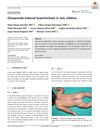 3 citations
,
March 2018 in “Pediatric Dermatology”
3 citations
,
March 2018 in “Pediatric Dermatology” Two children grew extra hair from taking omeprazole, which went away after they stopped the medication.
 2 citations
,
January 2023 in “BioMed Research International”
2 citations
,
January 2023 in “BioMed Research International” Beetroot extract nanogel may help treat hair loss caused by testosterone.
 2 citations
,
January 2012 in “InTech eBooks”
2 citations
,
January 2012 in “InTech eBooks” Chemotherapy often causes hair loss, which usually grows back within 3 to 6 months, but there's no effective treatment to prevent it.
1 citations
,
October 2025 in “Journal of Visualized Experiments” The method creates skin organoids with hair follicles for research on skin conditions and treatments.
1 citations
,
January 2018 in “The Open Dermatology Journal” Spironolactone may cause increased brain pressure in some patients.
 1 citations
,
August 1995 in “Archives of Disease in Childhood”
1 citations
,
August 1995 in “Archives of Disease in Childhood” Minoxidil helped a boy regrow his hair after intense chemotherapy for leukaemia.

Finasteride can cause depression and suicidal thoughts.

Finasteride can cause depression and suicidal thoughts.
 May 2026 in “International Journal of Molecular Sciences”
 Chemotherapy-induced hair loss may be linked to immune system changes, and certain treatments could help but need careful use.
 April 2026 in “BMC Oral Health”
 Finasteride can cause recurrent mouth ulcers.
 January 2026 in “Cell and Tissue Biology”
 TS-13 speeds up hair regrowth after chemotherapy without affecting treatment effectiveness.
 December 2025 in “The Journal of Clinical Psychiatry”
 Finasteride can cause depression and suicidal thoughts; safer alternatives are recommended.
May 2025 in “Dermatology Online Journal” Erlotinib can cause excessive eyelash growth.

Baricitinib may reactivate trichilemmal cysts in people with a history of these cysts.
Understanding wound healing and signaling pathways could lead to new alopecia treatments.
 February 2025 in “International Journal of Dermatology”
 Pressure from injectable treatments can cause hair loss by compressing blood vessels.
 August 2024 in “Drug Design Development and Therapy”
 Decursin shows promise for treating cancer, neuroprotection, inflammation, and hair loss.

Autophagy helps activate hair stem cells and hair growth by changing their energy use to glycolysis.
August 2023 in “Portuguese journal of dermatology and venereology” Cyclosporine can reverse hair graying.

Scalp tonics are popular for stress-related hair loss, but minoxidil is used less due to side effects and inconvenience.

Ganoderma lucidum extract promotes hair growth in bald rats, with higher doses producing better results, similar to the effects of Minoxidil 2%.
 88 citations
,
August 2019 in “Nature communications”
88 citations
,
August 2019 in “Nature communications” Researchers found a specific immune receptor in patients that causes severe skin reactions to a drug.
 30 citations
,
May 1991 in “Psychosomatics”
30 citations
,
May 1991 in “Psychosomatics” Some psychiatric medications can cause reversible hair loss.