April 2023 in “Journal of Drug Delivery Science and Technology” The new minoxidil gel improves hair growth and reduces skin irritation.
July 2025 in “Journal of Investigative Dermatology” Low-dose oral minoxidil is safe for the heart in the short term for hair loss patients.
September 2019 in “Zagazig university medical journal” Minoxidil helps hair growth but has side effects.
 1 citations
,
September 2023 in “Journal of The American Academy of Dermatology”
1 citations
,
September 2023 in “Journal of The American Academy of Dermatology” Low dose oral minoxidil can help with hair loss when used alone.

Minoxidil is the only approved cream for hair loss, but new treatments are being looked into.
 May 2023 in “International journal of science and research”
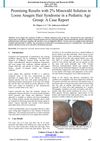
 2% minoxidil solution improved hair density and quality in children with Loose Anagen Hair Syndrome.
July 2024 in “Chemical Engineering Journal” A new microneedle system with minoxidil nanoparticles effectively promotes hair regrowth with fewer side effects.
26 citations
,
January 2005 in “PubMed” RUM-loaded SLN shows promise for treating acne and hair loss topically.
 December 2024 in “Biological and Pharmaceutical Bulletin”
 Gum arabic improves minoxidil delivery to hair follicles, enhancing hair growth.
 21 citations
,
January 2017 in “Skin Pharmacology and Physiology”
21 citations
,
January 2017 in “Skin Pharmacology and Physiology” Caffeine-based liquid 0.2% is as effective as minoxidil 5% for treating male hair loss.
 12 citations
,
March 2020 in “Journal of Bioactive and Compatible Polymers”
12 citations
,
March 2020 in “Journal of Bioactive and Compatible Polymers” Nanoparticles show potential for controlled release of hair loss drugs, improving treatment effectiveness.
 12 citations
,
February 1999 in “British Journal of Dermatology”
12 citations
,
February 1999 in “British Journal of Dermatology” Minoxidil increased small openings in blood vessel walls near growing hair in rats.
4 citations
,
July 2018 in “International Journal of Research in Dermatology” Topical finasteride with minoxidil is effective for treating hair loss and may reduce the need for oral finasteride.
August 2025 in “OPAL (Open@LaTrobe) (La Trobe University)” Optimized microneedles promote hair regrowth better than minoxidil without safety risks.

The 0.05% dutasteride topical solution effectively promotes hair growth with fewer side effects than oral treatments.
 3 citations
,
October 1988 in “Clinics in Dermatology”
3 citations
,
October 1988 in “Clinics in Dermatology” Using 3% topical minoxidil can help women with hair loss, but more research is needed.

Low-dose oral and topical minoxidil are recommended for managing hair loss in transplant patients, with specific doses and precautions.
 36 citations
,
September 2018 in “American Journal of Clinical Dermatology”
36 citations
,
September 2018 in “American Journal of Clinical Dermatology” Combination of 0.25% finasteride and 3% minoxidil works better than just 3% minoxidil for increasing hair thickness in women.
 5 citations
,
August 2021 in “Journal of The European Academy of Dermatology and Venereology”
5 citations
,
August 2021 in “Journal of The European Academy of Dermatology and Venereology” Sublingual minoxidil safely promotes hair growth.
 September 2025 in “Editora Pasteur eBooks”
 Low-dose oral minoxidil is as effective as or better than topical minoxidil for hair growth but may cause mild side effects.
 34 citations
,
January 1987 in “Dermatology”
34 citations
,
January 1987 in “Dermatology” Topical minoxidil effectively and safely treats extensive alopecia areata but doesn't change its course.
April 2026 in “International Journal of Medical Arts” January 2013 in “프로그램북(구 초록집)” Home-use microneedles with 5% minoxidil are safe and effective for hair growth.
4 citations
,
March 1991 in “Dermatitis” Minoxidil can cause skin reactions, so testing is important for those with side effects.
 February 2024 in “Dermatology Reports”
 Microneedling combined with minoxidil is more effective and safe for hair growth in men with hair loss.
 1 citations
,
July 2024 in “Journal of Cosmetic Dermatology”
1 citations
,
July 2024 in “Journal of Cosmetic Dermatology” Low SULT activity in hair follicles leads to better response to oral minoxidil for hair loss.
 January 2018 in “Sohag Medical Journal”
 Combining topical dutasteride with microneedling is more effective for hair growth than microneedling alone.
3 citations
,
October 2013 The new hydrogel and microemulsion could be better for hair loss treatment than current solutions.
April 2023 in “Klinicheskaya dermatologiya i venerologiya” Oral Minoxidil may be better for hair growth than topical, but its long-term safety is unclear.
 January 2025 in “Dermatologic Therapy”
 Low-dose oral minoxidil may help with symptoms and hair regrowth in lichen planopilaris without serious side effects.