 1 citations
,
August 2019 in “Pediatric dermatology”
1 citations
,
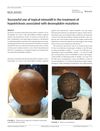
August 2019 in “Pediatric dermatology” Topical minoxidil helped an 8-year-old boy with a genetic hair disorder grow hair.
 1 citations
,
May 2018 in “Clinical chemistry”
1 citations
,
May 2018 in “Clinical chemistry” The girl's unexpected pubic hair growth led to a diagnosis different from complete androgen insensitivity syndrome.
 1 citations
,
January 2014 in “Progress in Neurology and Psychiatry”
1 citations
,
January 2014 in “Progress in Neurology and Psychiatry” Skin diseases can cause psychological issues, and better integration of dermatology and psychiatry is needed to improve patient care.
1 citations
,
October 2013 in “The American Journal of Gastroenterology” Infliximab can trigger lupus-like symptoms in Crohn's disease patients.
1 citations
,
July 2006 in “Journal of Investigative Dermatology” A 4kb fragment of the desmocollin 3 promoter targets gene expression to specific skin and hair follicle areas.
1 citations
,
January 2006 High temperatures and cosmetic processes can damage hair keratin, affecting its structure and strength.
 April 2021 in “Journal of Investigative Dermatology”
 The research found genes that may protect certain scalp cells from hair loss.
 April 2017 in “Journal of Investigative Dermatology”
 The hair follicle dermal sheath is essential for hair shedding and needs to communicate with the outer root sheath for normal hair growth cycles.
 March 2024 in “Poster presentations”
 A woman with lupus and Kikuchi-Fujimoto disease improved with treatment.
 April 2026 in “Frontiers in Cell and Developmental Biology”
 Hair follicles in mice help detect and respond to germs.

Plakophilin 1 helps control skin cell immune responses to prevent excessive inflammation.
 November 2025 in “Stem Cell Research & Therapy”
 Human hair follicle cells can help regenerate hair and reduce inflammation, aiding in hair loss treatment.
 November 2023 in “International Journal of Medical Sciences”
 New regenerative medicine-based therapies for hair loss look promising but need more clinical validation.
 November 2023 in “Journal of Dermatological Science”
 Cells that move well may improve hair loss treatments by entering hair follicles.
 December 2025 in “Cosmetics”
 The bio-based complex effectively repairs and protects chemically damaged hair.

RNase L hinders hair follicle regeneration by altering immune signals.
July 2025 in “Journal of Investigative Dermatology” TRIV-509 quickly improves skin barrier and cell health in atopic dermatitis.
July 2025 in “Journal of Investigative Dermatology” Machine learning can help identify biomarkers for personalized Pemphigus vulgaris treatment.
 February 2025 in “Journal of Clinical Investigation”
 RNase L hinders hair growth by altering immune signals.
January 2025 in “Analytical Methods” A new fluorescent material can detect dextran sulfate sodium, turning green when present, useful for forensic and environmental monitoring.
December 2024 in “International Journal of Molecular Sciences” Targeting CXCL12 may help treat hair loss caused by androgens.
October 2024 in “Cosmetics” ATG effectively reduces hair frizz without damaging hair strength.
 September 2024 in “Cureus”
 Early detection and targeted management are crucial for better outcomes in systemic lupus erythematosus.

RCVS should be considered in thunderclap headaches, and MRA and DSA are better for diagnosis than CT angiogram.
July 2024 in “Journal of Investigative Dermatology” A KLK5 inhibitor effectively improved skin symptoms in a mouse model of Netherton Syndrome.
July 2024 in “Journal of Investigative Dermatology” JAK inhibitors improve hair growth in alopecia areata, especially in patchy types.
 April 2024 in “Research Square (Research Square)”
 16-MHA can restore the barrier and moisture of damaged hair, making it similar to undamaged hair.

Genetic testing can help diagnose skin conditions but needs more research for full effectiveness.
 January 2024 in “International Journal of Cosmetic Science”
 A new method using 1,4-n-butylene dimaleate effectively repairs and strengthens damaged hair.
 November 2023 in “Experimental Dermatology”
 Exosomes from human hair follicle cells can improve aging hair follicle cell function and help regenerate hair follicles.