7 citations
,
June 2015 in “EMBO Reports” Forensic DNA phenotyping can help generate new leads in cold cases but faces accuracy, legal, and acceptance challenges.
14 citations
,
June 1989 in “Journal of dermatology” Three siblings had both Vohwinkel's disease and congenital alopecia, with no effective treatment.
 68 citations
,
March 2002 in “Journal of pharmaceutical sciences”
68 citations
,
March 2002 in “Journal of pharmaceutical sciences” Nonionic liposomes are the best for delivering genes to skin cells.
28 citations
,
October 2014 in “Development” Fz3 and Fz6 can partially replace each other in tissue polarity and axon guidance.
 August 2025 in “International Journal of Contemporary Pediatrics”
 HLD10 can include increased body hair and Mongolian spots.
October 2022 in “bioRxiv (Cold Spring Harbor Laboratory)” Small changes in cell division and differentiation can activate blood progenitors.
12 citations
,
January 2013 in “International Journal of Genomics” The study identified key genes involved in goat hair growth.
Mutations in specific genes cause different types of ectodermal dysplasias.
January 2026 in “International Journal of Molecular Sciences” Eyebrow follicles are best for accurate genetic testing after stem cell transplants.
January 2008 in “Memorial University Research Repository (Memorial University)” Pygopus 2 helps ovarian cancer cells grow by aiding ribosomal RNA production, independent of Wnt signaling.
February 2026 in “Journal of Chittagong Medical College Teachers Association” A 17-year-old girl with Kartagener's syndrome also has unusual skin, hair, and nail issues.
5 citations
,
December 2011 in “Springer eBooks” Electrical stimulation with minoxidil boosts hair cell growth.
13 citations
,
February 2025 in “Nature Communications” A new neural network helps identify key regulators in cell changes, aiding in understanding diseases and finding new treatments.
18 citations
,
June 2018 in “Journal of Dental Research” Msx2 is essential for proper enamel formation by preventing abnormal cell transformation.
May 2009 in “OPAL (Open@LaTrobe) (La Trobe University)” Suppressing the HGPS mutation may improve symptoms and suggest reversibility.
17 citations
,
December 2022 in “Biosensors” Triboelectric nanogenerators can power wearable medical devices for long-term self-treatment and monitoring.
 May 2026 in “Zenodo (CERN European Organization for Nuclear Research)”
 The EDAR V370A allele in East Asians likely evolved due to reliance on aquatic resources providing essential nutrients.
 May 2026 in “Zenodo (CERN European Organization for Nuclear Research)”
 The EDAR V370A allele in East Asians likely evolved due to reliance on aquatic resources providing essential nutrients.
 2 citations
,
March 2022 in “Portuguese Journal of Nephrology & Hypertension”
2 citations
,
March 2022 in “Portuguese Journal of Nephrology & Hypertension” A rare EGFR mutation in newborns leads to severe health issues and early death.
 October 2012 in “Faculty Opinions – Post-Publication Peer Review of the Biomedical Literature”
 Six new genes linked to early hair loss were found, which also surprisingly connect to Parkinson's disease and lower fertility.
 April 2019 in “Journal of Investigative Dermatology”
 Non-coding RNA boosts retinoic acid production and signaling, aiding regeneration.
23 citations
,
March 1958 in “JNCI Journal of the National Cancer Institute” Male-to-female skin grafts in mice are rejected due to sex-linked antigens.
12 citations
,
October 2024 in “Cell” September 2014 in “Genes and Cells” Genetically modified umbilical cord blood cells improved skin wound healing in rats.

The human scalp has different types of pigment cells in hair follicles with varying abilities to produce pigment.
 6 citations
,
August 2020 in “JCRPE”
6 citations
,
August 2020 in “JCRPE” A boy with a rare form of early puberty caused by a new gene mutation responded well to treatment aimed at reducing testosterone and preserving adult height.
20 citations
,
October 2005 in “Archives of Dermatological Research”  98 citations
,
June 2001 in “Journal of biological chemistry/The Journal of biological chemistry”
98 citations
,
June 2001 in “Journal of biological chemistry/The Journal of biological chemistry” A cluster of sulfur-rich hair protein genes was found on chromosome 17.
 1 citations
,
August 2012 in “Journal der Deutschen Dermatologischen Gesellschaft”
1 citations
,
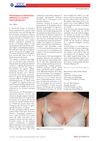
August 2012 in “Journal der Deutschen Dermatologischen Gesellschaft” A woman's hyperandrogenism was caused by a genetic mutation leading to non-classic adrenogenital syndrome.