3 citations
,
May 2023 in “Pediatric Dermatology” A 9-year-old boy had a rare scalp condition usually seen in young men.
 April 2026 in “Tissue Engineering and Regenerative Medicine”
 The GPRC6A-Duox1 axis helps control hair growth and loss by affecting hydrogen peroxide production.
 1 citations
,
June 2022 in “Chinese medical journal/Chinese Medical Journal”
1 citations
,
June 2022 in “Chinese medical journal/Chinese Medical Journal” Two new mutations in the CDH3 gene cause hair loss and vision problems in a young girl.
 124 citations
,
August 1994 in “Journal of Investigative Dermatology”
124 citations
,
August 1994 in “Journal of Investigative Dermatology” Dexamethasone speeds up hair loss in mice, while cyclosporin A slows it down.
September 2024 in “Journal of the American Academy of Dermatology” Most U.S. keratinocyte carcinoma patients are older white males living in urban areas.
 May 2024 in “British journal of dermatology/British journal of dermatology, Supplement”
 CYLD deficiency in skin tumors disrupts hair follicle cell processes and protein secretion.
37 citations
,
August 2011 in “Journal of Bone and Mineral Research” A girl had rickets due to a gene mutation affecting vitamin D response.
64 citations
,
March 2004 in “Journal of Clinical Investigation” Targeting ornithine decarboxylase can help prevent skin cancer.
 April 2021 in “Elsevier eBooks”
 The document's conclusion cannot be provided because the document is not accessible or understandable.
February 2023 in “Default Digital Object Group” April 2025 in “International Journal of Clinical & Medical Case Studies” Dextroamphetamine may help treat alopecia areata.
January 2008 in “Journal of Practical Medical Techniques” Microencapsulated cells can regenerate hair follicles in rat ears.
2 citations
,
July 2019 in “PeerJ” Removing the VDR gene in skin cells reduces their growth and affects hair-related genes.
3 citations
,
January 2000 in “Journal of Dermatological Treatment” Oral calcitriol helped improve scleroderma and hair regrowth in a young woman.
January 2008 in “HAL (Le Centre pour la Communication Scientifique Directe)” The mutant HR bmh protein affects hair follicle formation by failing to repress vitamin D receptor activity.
July 1999 in “Journal of the American Academy of Dermatology” 5 citations
,
December 2014 in “Molecular cytogenetics” A specific genetic change is linked to mental disorders, intellectual disability, and possibly autoimmune disease in a family.
April 2022 in “Reactions Weekly”  73 citations
,
April 2010 in “Anais Brasileiros de Dermatologia”
73 citations
,
April 2010 in “Anais Brasileiros de Dermatologia” Dermoscopy helps diagnose and monitor treatment for hair loss from scarring conditions like discoid lupus and lichen planopilaris.
Dutasteride reduces prostate cancer risk by 23% in high-risk men.
1 citations
,
December 2014 in “Journal of the Society of Cosmetic Scientists of Korea” CRF can cause hair loss, but blocking its receptors might prevent this.
47 citations
,
September 1995 in “British Journal of Dermatology” Diphencyprone therapy for hair loss can cause vitiligo.
 8 citations
,
August 2016 in “Annales de Dermatologie et de Vénéréologie”
8 citations
,
August 2016 in “Annales de Dermatologie et de Vénéréologie” A woman with anorexia improved significantly after being treated for scurvy with vitamin C, despite not showing typical scurvy symptoms.
1 citations
,
June 2016 in “Medicina” Monilethrix is a genetic disorder causing brittle hair, diagnosed using tricoscopy.
 January 2018 in “Advances in Dermatology and Allergology”
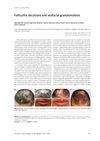
 Treatment with dapsone, topical corticosteroids, and antibiotics improved the man's skin conditions.
215 citations
,
September 2003 in “Journal of Biological Chemistry” Vitamin D receptor and hairless protein are essential for hair growth.
65 citations
,
May 2006 in “Journal of Investigative Dermatology” Dexamethasone may influence hair growth by altering estrogen receptor activity in hair cells.
87 citations
,
August 1974 in “Journal of Investigative Dermatology”  July 2014 in “Journal of the Portuguese Society of Dermatology and Venereology”
 Trichoscopy is useful for diagnosing and monitoring hair and scalp conditions.

Finding functions for unknown GPCRs is hard but key for making new drugs.