 January 2024 in “bioRxiv (Cold Spring Harbor Laboratory)”
 The research found that genetic factors for male pattern baldness in African men differ significantly from those in Europeans.
 December 2014 in “Bangladesh Journal of Veterinary Medicine”
 Ectoparasites cause skin issues in Egyptian lesser blind mole rats, affecting their population.
 April 2019 in “Journal of Investigative Dermatology”
 Removing REDD1 in mice increases skin fat by making fat cells larger and more numerous.
 April 2011 in “The FASEB Journal”
 Aralia continentalis root extract may help with hair growth.
 1 citations
,
April 2007 in “Journal of Korean Medicine Rehabilitation”
1 citations
,
April 2007 in “Journal of Korean Medicine Rehabilitation” Saengbal-eum may help hair grow on mice with removed hair.
 15 citations
,
January 2010 in “Experimental Dermatology”
15 citations
,
January 2010 in “Experimental Dermatology” Hair loss in certain young mice is linked to a specific gene and can be caused by lack of iron.
23 citations
,
January 1985 in “Journal of Neuropathology & Experimental Neurology” Cupric chloride treatment corrected abnormal Purkinje cell development in brindled mice.
9 citations
,
July 2008 in “Archives of Dermatological Research” July 2025 in “Journal of Investigative Dermatology”  13 citations
,
July 2012 in “Pigment Cell & Melanoma Research”
13 citations
,
July 2012 in “Pigment Cell & Melanoma Research” A mutation in the Adam10 gene causes freckle-like spots on Hairless mice.
 31 citations
,
April 2007 in “Experimental Dermatology”
31 citations
,
April 2007 in “Experimental Dermatology” Stress in mice delays hair growth and treatments blocking substance P can partly reverse this effect.
 53 citations
,
May 2010 in “Journal of Cellular Physiology”
53 citations
,
May 2010 in “Journal of Cellular Physiology” Mice without Vitamin D receptors have hair growth problems because of issues in the hedgehog signaling pathway.
126 citations
,
October 1998 in “Experimental Dermatology” The hr gene is crucial for skin and hair health, with mutations causing hair disorders.
 4 citations
,
January 1992 in “The Tohoku Journal of Experimental Medicine”
4 citations
,
January 1992 in “The Tohoku Journal of Experimental Medicine” Zinc made mice's coarse hair turn into fine hair without affecting skin structure.
 2 citations
,
November 2017 in “Journal of Cosmetic Dermatology”
2 citations
,
November 2017 in “Journal of Cosmetic Dermatology” Injecting platelet-rich plasma under the skin significantly improves hair growth and quality without harmful effects.
June 1967 in “Journal of Cellular Physiology” The 3D hair follicle model improves understanding of hair growth and drug testing.
 June 2025 in “Journal of the Pakistan Medical Association”
 2dDR may help regrow hair in male pattern baldness.
 June 2023 in “Current Issues in Molecular Biology”
 DN106212, an extract from a plant, is better at promoting hair growth than other tested substances by affecting hair growth factors and follicle development.
The models can help find better inhibitors for conditions like baldness and prostate disorders.
 86 citations
,
March 1993 in “Toxicology and Applied Pharmacology”
86 citations
,
March 1993 in “Toxicology and Applied Pharmacology” Finasteride affects male rat genitalia development, causing abnormalities during specific pregnancy days.
1 citations
,
May 2024 in “Tạp chí Nghiên cứu Y học” Eclipta prostrata extract significantly promotes hair growth in rats.
32 citations
,
January 2017 in “Physiology & Behavior” New hair growth corticosterone levels are higher in diabetic mice, indicating long-term stress.
 1 citations
,
September 2020 in “Journal of Dermatological Science”
1 citations
,
September 2020 in “Journal of Dermatological Science” The gene LRRC15 is more active in balding areas of the scalp compared to non-balding areas.
 2 citations
,
September 1980 in “Experientia”
2 citations
,
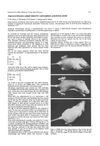
September 1980 in “Experientia” Polyethylene alanine caused hair loss in young lab animals but not in adults, with hair regrowth occurring within 20 days.
36 citations
,
July 1980 in “Journal of Toxicology and Environmental Health” High doses of ethynylestradiol in rats caused growth issues, organ changes, and some tumors, but didn't increase overall tumor rates.
 95 citations
,
December 1980 in “The New England Journal of Medicine”
95 citations
,
December 1980 in “The New England Journal of Medicine” Minoxidil helped bald patient regrow hair.
 1 citations
,
December 2017 in “JAMA Facial Plastic Surgery”
1 citations
,
December 2017 in “JAMA Facial Plastic Surgery” Artificial hair implantation using scaffolds is possible and PHDPE is more biocompatible than ePTFE.
January 2001 in “Zhongguo linchuang jiepouxue zazhi” Human hair keratin may help repair spinal cord injuries.
14 citations
,
September 1999 in “Mammalian genome” The scraggly mutation causes hair loss and skin defects in mice.
February 2014 in “PubMed” Modified rat hair follicle stem cells can help create artificial hair follicles, blood vessels, and skin.