 25 citations
,
January 2022 in “Endocrine journal”
25 citations
,
January 2022 in “Endocrine journal” Long COVID patients may have hormonal imbalances linked to their symptoms.
19 citations
,
February 2023 in “Public Health” Over 25% of COVID-19 patients had symptoms lasting more than a year.
 8 citations
,
October 2022 in “Medicina-lithuania”
8 citations
,
October 2022 in “Medicina-lithuania” Patients with long COVID after Omicron had fewer hospitalizations and milder symptoms but more fatigue, insomnia, and cough compared to those with Delta.
 8 citations
,
September 2021 in “bioRxiv (Cold Spring Harbor Laboratory)”
8 citations
,
September 2021 in “bioRxiv (Cold Spring Harbor Laboratory)” Women, younger age, and low BMI increase the risk of long COVID symptoms.
 88 citations
,
October 2020 in “Open Forum Infectious Diseases”
88 citations
,
October 2020 in “Open Forum Infectious Diseases” Some people who recover from COVID-19 continue to have symptoms like fatigue and cough for over 120 days, and some experience hair loss about 59 days after getting sick.
4 citations
,
May 2022 in “Medicina” Kampo medicine can help treat general fatigue from long COVID.
3 citations
,
February 2023 in “Journal of Infection and Public Health” More symptoms during initial COVID infection increase the risk of long-term effects.
January 2025 in “Current Allergy and Asthma Reports”  78 citations
,
June 2022 in “Infection”
78 citations
,
June 2022 in “Infection” Many COVID-19 survivors experience long-term symptoms like fatigue and sleep issues, needing ongoing medical support.
 22 citations
,
January 1985 in “Annals of Internal Medicine”
22 citations
,
January 1985 in “Annals of Internal Medicine” Minoxidil in breast milk may harm nursing infants.
 1 citations
,
January 2014 in “Side effects of drugs annual”
1 citations
,
January 2014 in “Side effects of drugs annual” Antihelminthic drugs treat worm infections but face challenges like low treatment coverage and potential drug resistance, with various side effects reported for different drugs.
Most people with post-COVID syndrome experience symptoms like fatigue, but Omicron variants cause fewer persistent symptoms.
 October 2023 in “Clinical medicine and medical research”
 Thyroid function may influence hair loss after COVID-19.
 January 2023 in “Book of Abstracts”
 COVID-19 can cause different types of hair loss, with telogen effluvium being the most common.
 June 2026 in “Cell Regeneration”
 The olfactory epithelium can regenerate throughout life, aided by specific cells, genes, and new research methods.
 July 2021 in “Research Square (Research Square)”
 Semecarpus anacardium leaf extract fights breast cancer and extends survival in mice.
1 citations
,
June 2019 in “Oral diseases”  37 citations
,
June 2002 in “The Laryngoscope”
37 citations
,
June 2002 in “The Laryngoscope” Ectodermal dysplasia causes various symptoms and early treatment is important for eye, dental, and skin issues.
5 citations
,
May 2020 in “Journal of the American Academy of Dermatology” AGA might indicate higher risk for severe COVID-19.
 28 citations
,
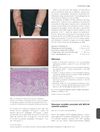
February 2010 in “British journal of dermatology/British journal of dermatology, Supplement”
28 citations
,
February 2010 in “British journal of dermatology/British journal of dermatology, Supplement” WNT10A mutations cause varied symptoms in patients with odonto-onycho-dermal dysplasia.
 December 2024 in “Chemical Senses”
 Taste disorders in Cronkhite-Canada syndrome are severe in the front of the tongue but improve with treatment.
June 2024 in “European neuropsychopharmacology” 10 citations
,
April 2022 in “Critical reviews in food science and nutrition” Skin odorant receptors respond to flavors and could be targeted to improve skin health and treat diseases.
 October 2021 in “JAAD Case Reports”
 Topical glycopyrrolate lotion helped reduce excessive sweating from eating in a diabetic man.
April 2019 in “The journal of investigative dermatology/Journal of investigative dermatology” A synthetic sandalwood odorant can boost antimicrobial production in hair follicles, making them more resistant to bacteria.
 33 citations
,
February 1996 in “Lancet”
33 citations
,
February 1996 in “Lancet” Losartan can cause temporary loss of taste.
 January 2024 in “Wiadomości Lekarskie”
 High PMP 22 levels in type 2 diabetes patients may cause hearing loss.
 11 citations
,
December 2014 in “The American journal of pathology”
11 citations
,
December 2014 in “The American journal of pathology” A gene deletion in mice causes weak protein, immune issues, hair loss, airway problems, and wasting disease.
29 citations
,
September 1942 in “Archives of ophthalmology” Vogt-Koyanagi syndrome often leads to partial or complete blindness and responds poorly to treatment.
39 citations
,
September 2018 in “American Journal of Medical Genetics Part A” A new genetic mutation in the ODC1 gene causes developmental delay and other symptoms in a young girl.