5 citations
,
July 2005 in “British journal of dermatology/British journal of dermatology, Supplement” A man grew hair on his penis, which is not common, and needed surgery to remove it.
 February 2010 in “Journal of the American Academy of Dermatology”
 Umbilical cord blood transplantation improved the boy's symptoms despite complications.
48 citations
,
March 1993 in “The Laryngoscope” Cholesteatoma shows abnormal and increased EGF receptor expression, indicating its rapid growth.
 1 citations
,
April 2025 in “Pediatria i Medycyna Rodzinna”
1 citations
,
April 2025 in “Pediatria i Medycyna Rodzinna” Restoring EDA and WNT pathways early may help improve skin, hair, and teeth issues in hypohidrotic ectodermal dysplasia.
 78 citations
,
June 2005 in “Annals of oncology”
78 citations
,
June 2005 in “Annals of oncology” Cetuximab can cause excessive eyelash growth.
April 2025 in “Digital Commons - East Tennessee State University (East Tennessee State University)” Cromolyn sodium oleate gel is more effective and safer for treating atopic dermatitis than dexamethasone.
24 citations
,
March 2022 in “Stem Cell Research & Therapy” Dendritic epidermal T cells help wounds heal faster by boosting skin stem cell growth.
15 citations
,
December 2009 in “PubMed” A child with eruptive vellus hair cysts showed some improvement with calcipotriene cream.
 October 2025 in “EMJ Dermatology”
 Histopathology is crucial for accurately diagnosing eruptive vellus hair cysts.
36 citations
,
June 1988 in “Australian Journal of Biological Sciences” Mouse epidermal growth factor injections in sheep affected wool growth and skin, but saline did not.
26 citations
,
January 1992 in “Carcinogenesis” TPA strongly increases ODC activity in certain skin cells, potentially aiding tumor growth.
 1 citations
,
June 2014 in “International Journal of Dermatology”
1 citations
,
June 2014 in “International Journal of Dermatology” Pregnancy can trigger follicular mucinosis, which may resolve after delivery.
149 citations
,
March 1981 in “American Journal of Ophthalmology” Eyelid mites may contribute to eye problems.
 November 2021 in “Dermatologic Surgery”
 The technique removes sweat glands effectively.
3 citations
,
January 2022 in “Burns & Trauma” CTHRC1 helps sweat glands recover by rebuilding nearby blood vessels.
 February 2010 in “Journal of The American Academy of Dermatology”
 Surgery on a baby with a skin disorder improved eyelid position and eye health.
 May 2022 in “bioRxiv (Cold Spring Harbor Laboratory)”
 Primary cilia affect the size and oil production of eye glands but not the oil's makeup.
 July 2022 in “Dermatology Reports”
 A rare scalp condition called Erosive pustular dermatosis is hard to diagnose and treat.
Encapsulating hair follicle cells in a special gel boosts their activity.
 May 2021 in “Journal of the Endocrine Society”
 A patient produced cortisol after adrenalectomy, possibly due to residual tissue or other body parts making steroids.
Recognizing mild or atypical cases of ectodermal dysplasia is crucial for better treatment and future planning.
6 citations
,
November 2018 in “Journal of molecular histology” Testosterone increases fluid secretion and aquaporin expression in the vas deferens, which is important for male fertility.
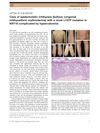 October 2011 in “Journal of dermatology”
 A man with a rare skin condition and a new gene mutation developed high calcium levels due to his treatment.
 January 2023 in “The Annals of african surgery”
 Hormone treatment before hypospadias surgery can increase penis size and reduce surgery complications.
1 citations
,
May 2017 in “Molecular and Clinical Oncology” An epidermal cyst in the temporal bone can occur as a rare delayed complication after ear surgery.
33 citations
,
August 2009 in “Journal of Investigative Dermatology” Overexpressing the epigen gene in mice leads to enlarged sebaceous glands and greasy fur.
January 2002 in “Linchuang pifuke zazhi” A young woman had a rare scalp tumor usually found in older women.
January 2026 in “Indian Journal of Ophthalmology - Case Reports” Trichilemmal cysts can appear on children's eyelids and may be mistaken for other conditions.
39 citations
,
January 1998 in “Dermatology” Milia, SM, and EVHC may be related conditions, not separate ones.
7 citations
,
January 1989 in “Archives of Dermatological Research” The side gland of Suncus murinus is a good model for studying human sebaceous glands.