 February 2013 in “Journal of the American Academy of Dermatology”
 Certain gene variations may increase the risk of alopecia, and platelet-rich plasma treatment can improve hair density in those with hair loss; a rare case of facial Becker's nevus was linked to uneven beard growth.
13 citations
,
April 2024 in “JAAD Case Reports” Deucravacitinib may effectively treat discoid lupus erythematosus.
 4 citations
,
June 2021 in “Wounds-a Compendium of Clinical Research and Practice”
4 citations
,
June 2021 in “Wounds-a Compendium of Clinical Research and Practice” Chronic scalp lesions with crusts and pus that heal with strong topical steroids suggest Erosive Pustular Dermatosis, confirmed by biopsy showing specific immune cells.
 April 2023 in “Journal of Investigative Dermatology”
 LSD1 is essential for healthy skin development and creating the skin's protective barrier.
85 citations
,
March 2008 in “Journal of Cell Science” The mutation causing Hutchinson-Gilford progeria syndrome leads to severe skin problems and early death in mice.
12 citations
,
December 2016 in “Medical Hypotheses” A vaccine may prevent benign prostatic hyperplasia (BPH).
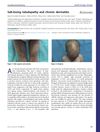 July 2018 in “Kidney international”
 Genetic testing for EGFR mutations is crucial in similar cases.
 3 citations
,
September 1980 in “Experientia”
3 citations
,
September 1980 in “Experientia” Dobutamine does not mimic dopamine at therapeutic doses but may at very high concentrations; microfilaments, not microtubules, are important for wound healing in Xenopus embryos.
 March 2025 in “Experimental Dermatology”
 Overexpression of IKZF1 and Ikaros causes hair loss in mice similar to alopecia areata.
 27 citations
,
July 2017 in “Scientific Reports”
27 citations
,
July 2017 in “Scientific Reports” N-WASP is essential for healthy skin and preventing inflammation.
 August 2016 in “Journal of Investigative Dermatology”
 The enzyme CD73 helps control human hair growth and could be targeted to treat hair growth disorders.
 13 citations
,
September 2019 in “Clinical, Cosmetic and Investigational Dermatology”
13 citations
,
September 2019 in “Clinical, Cosmetic and Investigational Dermatology” Early treatment of EPDS can improve outcomes and reduce recurrence risk.
1 citations
,
April 2016 in “Journal of Investigative Dermatology” Zinc deficiency causes reversible hair loss by disrupting hair growth and stem cell function.
 2 citations
,
April 2018 in “Journal of Investigative Dermatology”
2 citations
,
April 2018 in “Journal of Investigative Dermatology” Frontal fibrosing alopecia shows increased inflammation and JAK-STAT pathway activity without reduced hair proteins.
2 citations
,
May 2023 in “Biology” New mouse models of Pemphigus show severe symptoms and need better treatments.
 November 2023 in “Cell Proliferation”
 A protein from fat-derived stem cells, DKK1, is linked to hair loss and blocking it may help treat alopecia areata.
4 citations
,
February 2023 in “Research Reports in Clinical Cardiology” Certain genes and high cholesterol levels increase heart disease risk in Ethiopian patients with high blood pressure.
 June 2023 in “British Journal of Dermatology”
 The protein called small nuclear ribonucleoprotein polypeptide E is identified as a cause of a type of hair loss without other symptoms.
4 citations
,
November 2015 in “The journal of investigative dermatology. Symposium proceedings/The Journal of investigative dermatology symposium proceedings” Eosinophilic esophagitis may trigger alopecia areata in some patients.
January 2026 in “International Journal of Dermatology” Treatment improved scalp conditions and hair loss with no recurrence after 1 year.
5 citations
,
September 2013 in “BMB Reports” BMPR1a-ECD reduces wrinkles much more effectively than retinoic acid.

Farudodstat can prevent hair follicle immune damage linked to alopecia areata.
 8 citations
,
October 2019 in “Immunological investigations”
8 citations
,
October 2019 in “Immunological investigations” The AIRE gene variant rs2075876 is linked to a higher risk of alopecia areata in males.
35 citations
,
April 1998 in “PubMed” Activated erbB-2 in mice skin causes severe skin and hair abnormalities.
June 2023 in “bioRxiv (Cold Spring Harbor Laboratory)” Dopaminergic neurons in the gut have distinct subtypes, some releasing both dopamine and acetylcholine.

MITF and WNT3A are key in Dun Mongolian horse pigmentation.
16 citations
,
October 2013 in “Anais Brasileiros de Dermatologia” Scalp condition healed with prednisone and tacrolimus.
 27 citations
,
May 2007 in “Archives of dermatological research”
27 citations
,
May 2007 in “Archives of dermatological research” Diphencyprone treatment increases CD8 lymphocytes in the scalp, which is associated with hair regrowth in alopecia areata patients.
 October 2022 in “Portuguese journal of dermatology and venereology”
 Dupilumab led to complete hair regrowth and improved skin condition in a young man with severe eczema and hair loss.

Not having the gene PLAAT3 leads to fat loss, high insulin resistance, and abnormal fat levels in the blood due to a disruption in fat cell development and function.