 12 citations
,
March 2019 in “Lasers in Surgery and Medicine”
12 citations
,
March 2019 in “Lasers in Surgery and Medicine” Low-level laser therapy improves hair growth and dermal papilla cell function.
 6 citations
,
January 2011 in “Journal of pediatric endocrinology & metabolism/Journal of pediatric endocrinology and metabolism”
6 citations
,
January 2011 in “Journal of pediatric endocrinology & metabolism/Journal of pediatric endocrinology and metabolism” An 11-year-old Greek girl was diagnosed with a rare genetic disorder, highlighting the importance of genetic testing and family history.
 12 citations
,
January 2018 in “Biomaterials Science”
12 citations
,
January 2018 in “Biomaterials Science” Softer hydrogel surfaces help maintain hair growth-related functions in skin cells.
 October 2024 in “SPIRE - Sciences Po Institutional REpository”
 Glypicans help hair follicle stem cells differentiate by interacting with specific receptors, influencing hair growth.
7 citations
,
November 1997 in “Reproduction Fertility and Development” Epidermal growth factor disrupts hair and gland formation in bandicoots.

The research identified key molecules that help hair matrix and dermal papilla cells communicate and influence hair growth in cashmere goats.
9 citations
,
October 2015 in “Journal of Cutaneous Pathology” Erythematous papulopustular eruptions in cancer patients using EGFR inhibitors show specific skin changes that vary with severity and treatment type.
 5 citations
,
March 2023 in “bioRxiv (Cold Spring Harbor Laboratory)”
5 citations
,
March 2023 in “bioRxiv (Cold Spring Harbor Laboratory)” Dynamic, light touch is sensed through a common mechanism involving Piezo2 channels in sensory axons.
August 2020 in “bioRxiv (Cold Spring Harbor Laboratory)” Normal cells outcompete and remove mutant cells in the pancreas with the help of the EphA2 receptor.
5 citations
,
April 2017 in “The journal of investigative dermatology/Journal of investigative dermatology” The gene therapy showed significant wound healing and was safe for treating severe RDEB.
39 citations
,
December 1998 in “Journal of Cell Science” The LEF-1 binding site enhances gene expression in hair follicles, with other proteins aiding specific regulation.
 35 citations
,
April 2014 in “American Journal of Medical Genetics”
35 citations
,
April 2014 in “American Journal of Medical Genetics” Boys with less severe EDA mutations in XLHED have milder symptoms and better sweat and hair production.
18 citations
,
January 2019 in “European journal of histochemistry” Cattle skin has leptin which might control skin and hair growth.
 January 2017 in “Korean Journal of Pharmacognosy”
 Modified red ginseng extract promotes hair growth and has antioxidant and anti-inflammatory effects.
22 citations
,
September 2003 in “Journal of Investigative Dermatology” New mutations in the EBP gene cause CDPX2, affecting bones, skin, eyes, and hair, with females generally less affected than males.
February 2024 in “Epigenomes” Epigenetic mechanisms control skin development by regulating gene expression.
Neuropeptides affect hair growth and could be used to control it.
4 citations
,
May 2023 in “Cells” Baricitinib and its combination with lonafarnib improve fat cell formation in certain genetic disorders.

CaBP1 and 2 are important for maintaining the activity of calcium channels necessary for hearing in inner ear cells.
11 citations
,
February 2011 in “International Journal of Molecular Sciences” Different sPLA2 enzymes have unique roles in phospholipid metabolism and biological processes.
19 citations
,
October 2008 in “Expert Review of Dermatology” EGF receptor is crucial for skin health and its inhibitors can cause skin rashes.
 56 citations
,
December 2011 in “The Plant Journal”
56 citations
,
December 2011 in “The Plant Journal” AGD1 is important for root hair development in Arabidopsis, working with phosphoinositide signaling and the actin cytoskeleton.
April 2023 in “Journal of Investigative Dermatology” PRP can improve hair growth in people with hair loss, but more research is needed.
July 2024 in “Journal of Investigative Dermatology” Reactive lipids from aging cells change the extracellular matrix, affecting cell function and inflammation.
33 citations
,
August 2000 in “Experimental Cell Research” 49 citations
,
September 2015 in “Psychoneuroendocrinology” 5α-reductase affects dopamine receptors linked to sensorimotor gating, which may help understand disorders like schizophrenia.
1 citations
,
February 2025 in “Journal of Dairy Science” The SLICK1 allele in Holstein heifers affects hair and immune traits without altering prolactin signaling.
Poly-D,L-lactic acid boosts hair growth in aged skin by activating hair follicle stem cells.
November 2025 in “OPAL (Open@LaTrobe) (La Trobe University)” DAB labeling effectively identifies collagen type III and PDGFR in horse skin, but may show false positives.
 9 citations
,
July 2017 in “Dermatologic Therapy”
9 citations
,
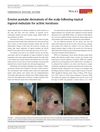
July 2017 in “Dermatologic Therapy” Two elderly men developed scalp inflammation after using a gel for skin lesions, which healed with treatment except for some permanent hair loss.