January 1962 in “Archives of Dermatology” A 5-year-old girl has lipoid proteinosis, causing voice issues, hair thinning, skin lesions, and tongue movement problems.
46 citations
,
March 2005 in “Endocrinology” Overexpression of the glucocorticoid receptor in mice causes developmental defects similar to ectodermal dysplasia.
6 citations
,
February 2023 in “Lara D. Veeken” Satoyoshi syndrome is likely an autoimmune disease.
 January 2024 in “JAAD case reports”
 MSUD patients need careful monitoring of amino acids and zinc to prevent severe symptoms.
1 citations
,
September 2011 in “Journal of the American Geriatrics Society” A potential genetic link between Werner syndrome and kidney disease was suggested.
 13 citations
,
September 2011 in “Archives of dermatology”
13 citations
,
September 2011 in “Archives of dermatology” A patient with steroid sulfatase deficiency had a unique hair pattern and a brain malformation not previously linked to the condition.
 October 2023 in “Indian Dermatology Online Journal”
 Schimmelpenning Syndrome requires careful evaluation and tailored treatment for skin, eye, and developmental issues.
 26 citations
,
September 1969 in “The American journal of medicine”
26 citations
,
September 1969 in “The American journal of medicine” Cronkhite-Canada Syndrome often leads to death within 6-18 months.
 23 citations
,
January 2015 in “Journal of The American Academy of Dermatology”
23 citations
,
January 2015 in “Journal of The American Academy of Dermatology” People with myotonic dystrophy type 1 have a higher chance of getting skin tumors, including melanoma.
1 citations
,
September 2021 in “Journal of Cosmetic Dermatology” B-mode ultrasonography and shear-wave elastography can help predict androgenetic alopecia early.
November 2019 in “European journal of internal medicine” A Laotian man with unusual skin changes and multiple growths in his gut was diagnosed with Cronkhite-Canada Syndrome and improved with nutritional and immune-based treatments.
January 2018 in “VCU Scholars Compass (Virginia Commonwealth University)” Desmosomes are crucial for skin and heart development, and JNK may help regulate them.
 4 citations
,
July 2014 in “International Journal of Dermatology”
4 citations
,
July 2014 in “International Journal of Dermatology” Twins had rare skin cysts likely due to genetics.
23 citations
,
January 2017 in “BMC Medical Genetics” A new CDH3 gene mutation was found in a Spanish patient with sparse hair and eye issues.
 1 citations
,
December 2018 in “Journal of genetic medicine”
1 citations
,
December 2018 in “Journal of genetic medicine” A small change in the TRPS1 gene leads to a less severe form of a syndrome affecting hair, nose, and finger development.
 14 citations
,
December 2017 in “Journal of Bone and Mineral Metabolism”
14 citations
,
December 2017 in “Journal of Bone and Mineral Metabolism” Women with polycystic ovary syndrome have a higher risk of certain fractures.
23 citations
,
March 2017 in “JAAD case reports” The document suggests a possible link between FAM111B gene mutations and increased cancer risk, particularly pancreatic cancer.
 April 2018 in “Journal of Investigative Dermatology”
 Desmoglein 3 organization in cell connections changes without calcium, affecting cell adhesion.
 19 citations
,
February 2008 in “Archives of Dermatological Research”
19 citations
,
February 2008 in “Archives of Dermatological Research” Mast cells might contribute to hair loss by causing skin thickening.
 October 2025 in “EMJ Dermatology”
 Histopathology is crucial for accurately diagnosing eruptive vellus hair cysts.
 55 citations
,
November 2018 in “American journal of human genetics”
55 citations
,
November 2018 in “American journal of human genetics” Mutations in the LSS gene cause a rare type of hereditary hair loss.
Controlling Tslp can improve health in AEC syndrome patients.
16 citations
,
September 2015 in “International Journal of Molecular Sciences” A specific gene variant causes severe skin issues and increases infection risk, requiring careful medical monitoring.
October 2025 in “Indian Journal of Paediatric Dermatology” Zinc treatment improved skin and hair issues in a boy with a zinc-related condition.
 January 2022 in “Dermatology Review”
 EGFR inhibitors can cause unusual localized hair growth.
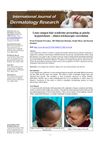 January 2026 in “International Journal of Dermatology Research”
 Early recognition of loose anagen hair syndrome is important to prevent misdiagnosis and unnecessary treatments.
January 2025 in “Case Reports in Genetics” A rare gene variant causes sexual development issues in siblings, needing personalized treatment.
16 citations
,
January 2010 in “Journal of Korean medical science/Journal of Korean Medical Science” A Korean boy's skin and digestive symptoms were caused by a rare genetic disorder that affects zinc absorption, and he got better with zinc supplements.
110 citations
,
November 1984 in “The American Journal of Medicine” A genetic defect in vitamin D receptors causes severe rickets and hair loss in children, but some heal as they age.
November 2022 in “Journal of Investigative Dermatology” NCSTN gene mutation causes abnormal skin cell differentiation and more inflammation, contributing to Hidradenitis Suppurativa.