 21 citations
,
January 2015 in “Dermatologic Therapy”
21 citations
,
January 2015 in “Dermatologic Therapy” Latanoprost may cause scalp inflammation and delayed healing.
193 citations
,
June 1990 in “Journal of Investigative Dermatology” 303 citations
,
October 2000 in “Nature” RXRα is crucial for hair growth and skin cell function.
2 citations
,
June 2013 in “Journal of Clinical Pathology” The LMNA mutation affects skin structure even in asymptomatic carriers.
 10 citations
,
November 2018 in “Genetics in medicine”
10 citations
,
November 2018 in “Genetics in medicine” Lack of cystatin M/E causes thin hair and dry skin.
 51 citations
,
May 2021 in “Nature Communications”
51 citations
,
May 2021 in “Nature Communications” High proliferation and cell delamination drive early skin development, while later stages may not rely on cell division orientation.
March 2026 in “Frontiers in Bioengineering and Biotechnology” Stem cell-derived fibroblasts can effectively repair skin wounds.
26 citations
,
December 2003 in “Experimental Dermatology” Specific keratin gene mutations can cause monilethrix.
27 citations
,
July 2013 in “Journal of Investigative Dermatology” Revertant cell therapy shows promise for treating type XVII collagen deficiency, but better cell selection methods are needed.
July 2026 in “Journal of Investigative Dermatology” 9 citations
,
April 1985 in “Archives of Dermatology” Recognizing the "bamboo hair defect" is crucial for diagnosing Netherton's syndrome.
 October 2011 in “Journal of dermatology”
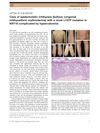
 A man with a rare skin condition and a new gene mutation developed high calcium levels due to his treatment.
 February 2026 in “SHILAP Revista de lepidopterología”
 Engineered exosomes with EGF and FGF improve hair growth in mice with hair loss.
36 citations
,
July 1996 in “The journal of investigative dermatology/Journal of investigative dermatology” Mice with the 'lanceolate hair' mutation have abnormal hair and skin similar to human Netherton's syndrome.
Encapsulating hair follicle cells in a special gel boosts their activity.
62 citations
,
March 2017 in “Journal of Investigative Dermatology” Mutations in the ACTB gene cause Becker’s nevi and may lead to muscle issues in Becker’s nevus syndrome.
 21 citations
,
February 2017 in “PLoS ONE”
21 citations
,
February 2017 in “PLoS ONE” RhoA helps skin stem cells grow, aiding wound healing.
 April 2017 in “The journal of investigative dermatology/Journal of investigative dermatology”
 Astrotactin2 affects hair follicle orientation and skin cell polarity.
 April 2023 in “bioRxiv (Cold Spring Harbor Laboratory)”
 Sweat gland development involves two unique skin cell programs and a temporary skin environment.
 9 citations
,
March 2023 in “Biomimetics”
9 citations
,
March 2023 in “Biomimetics” New materials that better mimic natural skin structure could improve healing, especially for chronic wounds.
5 citations
,
January 2016 in “International Journal of Trichology” Erlotinib can cause hair loss and texture changes.
1 citations
,
December 2024 in “Tissue Barriers” The epidermis is the stiffest skin layer.
78 citations
,
October 2007 in “Journal of Investigative Dermatology” Delta1 is crucial for controlling skin cell growth and preventing tumors in mice.
1 citations
,
January 2022 in “bioRxiv (Cold Spring Harbor Laboratory)” Injury boosts normal skin cell growth, reducing cancer cell advantage.
January 2026 in “Open MIND” Targeting the PIEZO1 and MLCK axis may offer a new treatment for hair loss.
 100 citations
,
March 2006 in “Journal of biological chemistry/The Journal of biological chemistry”
100 citations
,
March 2006 in “Journal of biological chemistry/The Journal of biological chemistry” Cystatin M/E strongly inhibits cathepsin V and cathepsin L, important for skin formation.
 December 2025 in “Cureus”
 Localized dystrophic epidermolysis bullosa (DEB) can lead to scarring alopecia, highlighting the need to recognize and address this complication.
CRISPR gene editing reduces harmful molecules in cells from Emery–Dreifuss Muscular Dystrophy patients.
 137 citations
,
October 2009 in “The American journal of pathology”
137 citations
,
October 2009 in “The American journal of pathology” Matriptase is crucial for keeping epithelial tissues healthy and functioning properly.
10 citations
,
December 2015 in “Experimental dermatology” EGFR helps mouse hair follicles stop growing by reducing certain growth regulators.