26 citations
,
May 2011 in “Tissue Engineering Part A” Hydrogel surface properties affect mouse embryoid body differentiation.
 6 citations
,
August 1993 in “Archives of Dermatology”
6 citations
,
August 1993 in “Archives of Dermatology” The study found that polymorphous light eruption varies among patients and can be distinguished from benign summer light eruption by the time it takes for symptoms to appear after sun exposure.
3 citations
,
August 2008 in “PubMed” Repeated digital perming with sodium thioglycolate lotion significantly damages hair protein and structure.
 February 2026 in “The European Physical Journal E”
 Root hair growth mechanics depend on turgor pressure and cell wall properties.
December 2021 in “2021 International Conference on Electronic Information Technology and Smart Agriculture (ICEITSA)” Chemical dyes damage hair's internal structure more than perming, as shown by a special imaging technique.
 April 2018 in “Radiotherapy and Oncology”
 Mitochondria may influence how cells respond to radiation, affecting nearby non-irradiated cells.
9 citations
,
January 2014 in “Journal of analytical & bioanalytical techniques” The study did not conclude whether hair can reliably indicate kidney stones, cholelithiasis, hypertension, or diabetes.
 March 2023 in “International journal of pharmaceutical sciences review and research”
 The F2 Emulgel with Tridax procumbens extract showed good physical properties and antimicrobial effectiveness for wound healing.
 14 citations
,
January 2020 in “International Journal of Biological Sciences”
14 citations
,
January 2020 in “International Journal of Biological Sciences” Multiphoton microscopy can effectively assess breast cancer treatment responses without labels.
27 citations
,
July 1983 in “Journal of Investigative Dermatology” 2 citations
,
December 2024 in “Microscopy Research and Technique” A new laser-based microscope can clearly image biological structures without labels.
8 citations
,
January 2020 in “PeerJ” Alopecia Areata causes significant structural and compositional changes in hair.
85 citations
,
October 2007 in “International Journal of Dermatology” Curly hair shape is due to uneven growth patterns in the hair follicle.
29 citations
,
April 2011 in “Journal of Microscopy” The modified osmium method improves hair cortex staining for better visualization.
1 citations
,
February 2021 in “bioRxiv (Cold Spring Harbor Laboratory)” A300 membranes help skin heal faster by promoting cell growth and repair.
17 citations
,
October 2023 in “Science Progress” Polycaprolactone and barium titanate composites show promise for use in biomedical applications.
 13 citations
,
May 2016 in “International journal of biological macromolecules”
13 citations
,
May 2016 in “International journal of biological macromolecules” Keratin's mechanical properties are influenced by hydrogen bonds and secondary structure, and can be improved with the SPD-2 peptide.
1 citations
,
December 2022 in “Skin Research and Technology” The technique helps measure how hair styling ingredients affect hair's stiffness and flexibility.
21 citations
,
December 2012 in “Biological Trace Element Research” Higher hair levels of calcium and magnesium are linked to higher body weight, while lower levels are linked to worse metabolic health.
 8 citations
,
November 2022 in “International Journal of Cosmetic Science”
8 citations
,
November 2022 in “International Journal of Cosmetic Science” Human hair varies widely and should be classified by curl type rather than race.
25 citations
,
January 2013 in “Colloids and surfaces. B, Biointerfaces” Hair dye colors mainly target melanin granules in black hair.
May 2025 in “Journal of Cosmetic Dermatology” The new device shows promise in promoting hair growth in men with hair loss.
13 citations
,
December 2017 in “Stem cells” Low-dose radiation affects hair stem cell function and survival by changing their genetic material's structure.
February 2024 in “Institutional Repository of the Federal Technological University of Paraná (RIUT) (Federal University of Technology – Paraná)” Photobiomodulation can influence gene and protein expression related to healing and inflammation.
 14 citations
,
January 2014 in “Cells Tissues Organs”
14 citations
,
January 2014 in “Cells Tissues Organs” Ionizing radiation causes irreversible skin damage, with single doses leading to acute injury and hair graying, and fractional doses causing more severe long-term tissue damage.
7 citations
,
July 2025 in “The Journal of Physiology” C-tactile nerves are sensitive to hair movement.
 24 citations
,
November 2015 in “Scientific reports”
24 citations
,
November 2015 in “Scientific reports” Human hair has a new region with ordered filaments and the cuticle contains β-keratin sheets.
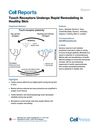 31 citations
,
November 2016 in “Cell Reports”
31 citations
,
November 2016 in “Cell Reports” Touch sensitivity in mouse skin decreases during hair growth due to changes in touch receptors.
 4 citations
,
October 2022 in “Journal of Biomedical Materials Research Part A”
4 citations
,
October 2022 in “Journal of Biomedical Materials Research Part A” Magnesium oxide-infused membranes help heal wounds faster by reducing inflammation and promoting skin and hair follicle growth.
5 citations
,
July 2014 in “Journal of X-Ray Science and Technology” Hair analysis can help diagnose cell ion channel activity and calcium deficiency.