 27 citations
,
December 2001 in “Clinical and experimental dermatology”
27 citations
,
December 2001 in “Clinical and experimental dermatology” Different hair removal methods have pros and cons, and more evidence is needed to prove laser treatments work.
 14 citations
,
January 2013 in “Journal of Cutaneous Medicine and Surgery”
14 citations
,
January 2013 in “Journal of Cutaneous Medicine and Surgery” Some cancer treatments can cause permanent hair loss.
September 2017 in “Journal of Investigative Dermatology” Photodynamic therapy can potentially remove nonpigmented hair by damaging hair follicles.
31 citations
,
January 2014 in “The Scientific World JOURNAL” Eclipta prostrata extract protects skin cells from UVB damage and has strong antioxidant properties.
1 citations
,
August 1985 in “Proceedings annual meeting Electron Microscopy Society of America” SEM/EDX can analyze hair elements but struggles with trace elements, limiting its forensic use.
6 citations
,
July 2024 in “Cureus” Magnetized water may improve agriculture and human health, but more research is needed.
 January 2021 in “Indian Journal of Pharmaceutical Sciences”
 Laser hair removal doesn't affect thyroid hormones.
 December 2018 in “Zenodo (CERN European Organization for Nuclear Research)”
 Biofield Energy Treatment may boost hair growth.
 63 citations
,
December 2002 in “Archives of Dermatology”
63 citations
,
December 2002 in “Archives of Dermatology” The 308-nm excimer laser is a promising treatment for vitiligo with varying success and mild side effects.
8 citations
,
September 2015 in “Radiotherapy and oncology” Scalp cooling does not stop hair loss from radiotherapy.
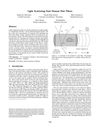
Researchers developed a new model for more realistic computer graphics of hair by considering how light scatters on hair fibers.
 April 2019 in “The journal of investigative dermatology/Journal of investigative dermatology”
 Scientists discovered a new way UVB light increases skin pigmentation through the ATP-P2X7 pathway.
 June 2017 in “Journal of The American Academy of Dermatology”
 LED light helps hair follicle cells grow and prevents them from dying by activating certain cell pathways.
Consciousness Energy Healing improved hair growth in mice.
August 2022 in “Dermatologic Therapy” 1 citations
,
August 1984 in “Therapeutische Umschau. Revue thérapeutique” Permanent hair removal with lasers is the most promising treatment for excessive hair growth.
14 citations
,
July 2015 in “International Journal of Molecular Sciences” S-Methylmethionine sulfonium can protect skin from UVB damage.
34 citations
,
August 2018 in “Cancer research” Fixing DNA errors is crucial to prevent skin cancer.
 December 2024 in “Problems of Biological Medical and Pharmaceutical Chemistry”
 Students from the Middle East and Moscow have different hair element levels due to their environments.
 2 citations
,
February 2022 in “BMJ”
2 citations
,
February 2022 in “BMJ” Emollients can make fabrics more flammable, so take safety precautions.
8 citations
,
January 2023 in “Skin Research and Technology” The laser treatment effectively and safely reduces post-acne redness in adult Chinese patients.
 May 2018 in “Journal of Cosmetic and Laser Therapy”
 The editorial discusses the effectiveness and safety of various laser and energy-based cosmetic treatments.
143 citations
,
January 2013 in “Dermatologic surgery” In-office laser hair removal works well long-term, especially Nd:YAG for darker skin, but home devices need more testing.
 9 citations
,
May 2005 in “Facial plastic surgery”
9 citations
,
May 2005 in “Facial plastic surgery” Laser hair removal can be safe and effective for dark-skinned individuals with the right laser settings.
September 2025 in “Journal of Cosmetic Dermatology” Single-needle radiofrequency is effective and safe for treating facial sebaceous hyperplasia.
12 citations
,
January 2021 in “Dermatology Research and Practice” The 1927 nm Thulium laser effectively and safely treats postinflammatory hyperpigmentation in darker skin tones.
5 citations
,
July 2022 in “Radiation Research” The mouse model helps study and develop treatments for radiation-induced saliva reduction.
 2 citations
,
February 2023 in “Transgenic Research”
2 citations
,
February 2023 in “Transgenic Research” The E2 protein affects gene activity in hair follicles of mice.
 161 citations
,
July 2003 in “ACM Transactions on Graphics”
161 citations
,
July 2003 in “ACM Transactions on Graphics” Researchers developed a new model for more realistic computer graphics rendering of hair by considering how light scatters on hair fibers.
 February 2021 in “Dermatological reviews”
 Nonablative radiofrequency therapy improves hair density, thickness, and growth rate.