2 citations
,
February 2021 in “FEBS open bio” Human hair keratins K85 and K35 create unique filament patterns important for early hair formation.
6 citations
,
October 2003 in “Journal of applied polymer science” A new method using poly(ethylene imine) improves hair dyeing at lower temperatures with better color retention.
June 1958 in “Mycopathologia” Selective chemical epilation effectively treats tinea capitis without harmful side effects.
 46 citations
,
January 2009 in “Textile Research Journal”
46 citations
,
January 2009 in “Textile Research Journal” Researchers developed a new method to identify animal hair in textiles, which is effective for various fibers and more reliable than previous methods.
March 2026 in “Materials Today Bio” The new cryo-MAP technique enables rapid and successful hair growth by transplanting hair follicle organoids.
1 citations
,
June 2022 in “bioRxiv (Cold Spring Harbor Laboratory)” Reprogramming 3D environments can create hair follicles in the lab.
1 citations
,
January 2010 in “Biological and medical physics series” Human hair's structure and properties were studied using advanced microscopes and mechanical tests.
January 2000 in “Neuroscience Research” September 2025 in “OPAL (Open@LaTrobe) (La Trobe University)” Researchers created an efficient method to extract DNA from marmoset hair, avoiding blood chimerism.
July 2025 in “OPAL (Open@LaTrobe) (La Trobe University)” Single-spin PRP may be more effective for hair loss, but more research is needed.

New methods efficiently isolate dermal papilla cells from hair follicles, preserving their characteristics better than traditional methods.
13 citations
,
March 2019 in “PLoS ONE” A new method improves protein analysis in hair, aiding health and disease research.
May 2016 in “Hair transplant forum international” January 1990 in “Advances in forensic haemogenetics” Human hair protein patterns are inherited genetically.
4 citations
,
December 2018 in “Zenodo (CERN European Organization for Nuclear Research)” Biomagnetic forces can deform red blood cells.
19 citations
,
May 2016 in “Cytotechnology”  January 2018 in “Archives of general internal medicine”
 The document concludes that automatic biofiber hair implant is a new method for improving hair growth.
 December 2025 in “BMC Medical Genomics”
 Hair follicles can be used to study gene expression and understand conditions like COPD.
 March 2026 in “Frontiers in Pharmacology”
 Exprecell™ is as effective as traditional methods but produces more f-PRF and is simpler to use.
January 1991 in “Acta Dermato Venereologica” A new method effectively visualizes keratin in hair without harsh chemicals.

A new sprayable hydrogel helps heal wounds faster and reduces inflammation.
1 citations
,
September 2022 in “Biomaterials advances” 3D bioprinting can effectively regenerate hair follicles and skin tissue in wounds.
September 2025 in “OPAL (Open@LaTrobe) (La Trobe University)” Researchers created an efficient method to extract DNA from marmoset hair, reducing blood chimerism.
 1 citations
,
March 2005 in “International Journal of Cosmetic Science”
1 citations
,
March 2005 in “International Journal of Cosmetic Science” Twisting hair weakens it, but strength can be recovered at low twist levels.
March 2023 in “International Journal of bioprinting” Zinc/silicon-infused hydrogel helps regenerate hair follicles.

The document concludes that the FOLLYSIS© system improves hair transplant processes and patient monitoring with high accuracy and less skin trauma.
 February 2023 in “International journal of research - granthaalayah”
 The new microscope method helps study energy from pre-cancerous skin cells.
1 citations
,
May 2016 in “Journal of nature and science” The method successfully imaged hair follicles under the skin using iron nanoparticles.
 8 citations
,
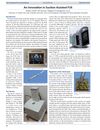
March 2016 in “Hair transplant forum international”
8 citations
,
March 2016 in “Hair transplant forum international” The new FUE device improves hair transplant safety and efficiency.
Encapsulating hair follicle cells in a special gel boosts their activity.