 34 citations
,
March 2011 in “Plastic and Reconstructive Surgery”
34 citations
,
March 2011 in “Plastic and Reconstructive Surgery” Custom-designed implants effectively repaired skull damage in most soldiers injured in combat.
 7 citations
,
November 2017 in “Cureus”
7 citations
,
November 2017 in “Cureus” Ear creases might indicate heart disease risk, needing more research.
3 citations
,
May 2008 in “Journal of Visualized Experiments” Mouse Epidermal Neural Crest Stem Cells can become various cell types.
9 citations
,
August 2002 in “British journal of ophthalmology” The document reports a rare case of ECCL with a new association with optic disc colobomas.
3 citations
,
February 2018 in “Aesthetic plastic surgery” The Locked Cheek Lift is a simple, effective method for cheek and lower eyelid rejuvenation with a high success rate and minimal complications.

Insect eggshells form through specialized cell processes and gene regulation, with potential for pest control innovations.
1 citations
,
January 2012 The CRABP I gene in cashmere goats is highly conserved but has unique features at specific amino sites.
May 2018 in “Dermatologic Surgery” 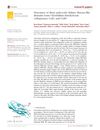 18 citations
,
February 2015 in “Acta Crystallographica Section D: Structural Biology”
18 citations
,
February 2015 in “Acta Crystallographica Section D: Structural Biology” The study concludes that certain domains in Clostridium histolyticum enzymes are structurally unique, bind calcium to become more stable, and play distinct roles in breaking down collagen, with potential applications in medicine and drug delivery.
Calorie restriction changes the elemental and isotopic makeup of mouse hair and bone.
2 citations
,
December 2013 in “The Journal of Dermatology” October 2020 in “Faculty Opinions – Post-Publication Peer Review of the Biomedical Literature” Stem cell niche exit in C. elegans is influenced by Sh1 cell membrane protrusions.
 7 citations
,
August 2008 in “Cases Journal”
7 citations
,
August 2008 in “Cases Journal” A hair tightly wrapped around a toddler's toe caused severe crying and was treated by surgery.
3 citations
,
March 2025 in “Science Advances” A specific DNA duplication in Polish chickens affects feather shape by altering gene expression.
14 citations
,
May 2008 in “Journal of Visualized Experiments” Mouse epidermal neural crest stem cells can become various cell types and are easily obtained from hair follicles.
 July 2025 in “Communications Biology”
 Rat vibrissae structure relates to their sensory function.
May 2015 in “European Journal of Paediatric Neurology” ECCL should be considered in patients with specific skin and eye lesions.
 7 citations
,
January 2023 in “Frontiers in cell and developmental biology”
7 citations
,
January 2023 in “Frontiers in cell and developmental biology” Celsr1 is crucial for skin cell alignment, while Celsr2 has little effect on this process.
A new method allows detailed tracking of cell regeneration in crustacean legs.
June 2023 in “bioRxiv (Cold Spring Harbor Laboratory)” Scientists created cell lines to study a genetic skin disorder using CRISPR technology.
33 citations
,
October 2012 in “Journal of Morphology” Reptile skin hardens by layering beta-proteins on keratin.
 December 2025 in “Nature Communications”
 Club-like receptors detect light touch but not whisking.
25 citations
,
October 2002 in “The journal of investigative dermatology/Journal of investigative dermatology” Mouse profilaggrin helps in skin cell differentiation and may be involved in calcium signaling.
29 citations
,
December 2004 in “Developmental biology” cDermo-1 causes dense skin, feathers, and scales in chickens.
49 citations
,
March 1996 in “Experimental Brain Research”  27 citations
,
December 2013 in “Endocrinology”
27 citations
,
December 2013 in “Endocrinology” Researchers created a mouse model for Cushing's syndrome to study glucocorticoid excess and potential treatments.
 13 citations
,
June 2010 in “Journal of The American Academy of Dermatology”
13 citations
,
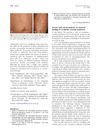
June 2010 in “Journal of The American Academy of Dermatology” A man with Cronkhite-Canada syndrome had all 20 nails detach but improved with treatment.
 March 2026 in “bioRxiv (Cold Spring Harbor Laboratory)”
 Spiny mice have a unique skin structure that helps them heal and regenerate quickly.
August 2015 in “Han'gug dongmul jawon gwahag hoeji/Han-guk dongmul jawon gwahak hoeji/Journal of animal science and technology” TRα and CRABPII genes change their activity levels during goat fetal skin development.