 April 2023 in “Journal of Investigative Dermatology”
 A new pain-measuring system using sensors and AI can effectively detect pain in mice, which may help assess pain in humans and develop treatments.
 1 citations
,
June 2024 in “European Journal of Dentistry”
1 citations
,
June 2024 in “European Journal of Dentistry” Human placental extract may be better for tooth repair than current materials.
 May 2025 in “International Research Journal of Ayurveda & Yoga”
 Carica papaya latex gel may reduce hair fall and promote regrowth in patchy hair loss.
 December 2025 in “Zenodo (CERN European Organization for Nuclear Research)”
 The herbal gel effectively reduces hair fall and promotes hair growth using natural ingredients.
14 citations
,
September 2023 in “Foods” Microfluidics can create precise, efficient delivery systems for food and cosmetics, but scaling up is challenging.
 4 citations
,
September 2023 in “Stem cell research & therapy”
4 citations
,
September 2023 in “Stem cell research & therapy” Special particles from umbilical cord stem cells help heal skin wounds in diabetic mice by preventing certain immune cell death.
 10 citations
,
January 2024 in “Polymer Chemistry”
10 citations
,
January 2024 in “Polymer Chemistry” Lipid–polymer hybrid nanoparticles can improve genome editing delivery and outcomes.
 August 2025 in “Advanced Science”
 The corrections confirm the original findings on scarless hair follicle regeneration.
January 1992 in “Filosofia oggi” PRP gel is a safe, affordable treatment needing trained staff and proper facilities.
December 2025 in “Brazilian Journal of Chemical Engineering” May 2026 in “Colloids and Surfaces B Biointerfaces” 
Plasma gel and PRP treatments improve skin and hair with minimal side effects.
 August 2025 in “BMC Pregnancy and Childbirth”
 A new EDA gene variant causes X-linked hypohidrotic ectodermal dysplasia in a Chinese family.
 6 citations
,
November 2017 in “Dermatologic Therapy”
6 citations
,
November 2017 in “Dermatologic Therapy” Combining mometasone furoate cream with adapalene gel is safer and more effective for hair regrowth in alopecia areata than using the cream alone.
46 citations
,
May 2006 in “Laser Physics” Particles similar in size to hair cells penetrate hair follicles better.
8 citations
,
March 2009 in “Differentiation” Adult vibrissa follicle stem cells can regenerate hair follicles, glands, and skin.
 1 citations
,
February 2022 in “International Journal of Health and Pharmaceutical (IJHP)”
1 citations
,
February 2022 in “International Journal of Health and Pharmaceutical (IJHP)” Combining cantigi and henna leaf extracts boosts antioxidant activity.
5 citations
,
February 2005 in “Journal of the American Academy of Dermatology” Focal palmoplantar callosities may help diagnose non-Herlitz junctional epidermolysis bullosa.
 14 citations
,
July 2012 in “Journal of the American Academy of Dermatology”
14 citations
,
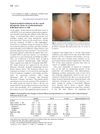
July 2012 in “Journal of the American Academy of Dermatology” Topical tacalcitol ointment can help improve symptoms of EFFC.
 13 citations
,
January 2019 in “Colloids and Surfaces B: Biointerfaces”
13 citations
,
January 2019 in “Colloids and Surfaces B: Biointerfaces” The new drug delivery systems made with surfactants and block polymers are stable and not toxic.
7 citations
,
August 2021 in “Pharmaceutics” Freeze-dried dexamethasone nanoparticles in a hydrogel are stable and effective for treating alopecia areata.
October 2013 in “International Journal of Pediatric Endocrinology/International journal of pediatric endocrinology” A boy with early puberty and laughing seizures was treated, stopping seizures and slowing puberty.
Niosomes improve aminexil's effectiveness in preventing hair loss without needing propylene glycol.
3 citations
,
January 2000 in “Current Medical Research and Opinion” Eflornithine HCl 13.9% cream is safe for skin use with mild, temporary irritation.
 7 citations
,
June 2022 in “Frontiers in Medicine”
7 citations
,
June 2022 in “Frontiers in Medicine” ADSC-derived extracellular vesicles show promise for skin and hair regeneration and wound healing.
 October 2023 in “International Journal of Pharmaceutics”
 Using minoxidil with tocopherol acetate in ethosomes improves hair regrowth in hair loss treatment.
January 2025 in “Regenerative Biomaterials” Curcumin-primed milk vesicles may help treat hair loss by promoting hair growth.
 January 2026 in “Zenodo (CERN European Organization for Nuclear Research)”
 The herbal hair conditioner with fenugreek and mint was effective for hair care.
 10 citations
,
June 2018 in “Aaps Pharmscitech”
10 citations
,
June 2018 in “Aaps Pharmscitech” The flutamide-loaded hydrogel is a promising, skin-friendly treatment for acne and hair loss, potentially requiring less frequent application.