 January 2026 in “The mycota”
 Fungal-based ingredients in haircare products offer natural benefits like moisturizing and scalp health, supporting eco-friendly solutions.
![Influence of FHIT on Benzo[a]pyrene-Induced Tumors and Alopecia in Mice: Chemoprevention by Budesonide and N-Acetylcysteine](/images/assets/f8f56777-f891-4879-8c45-c87d6aa82563/small/35499.jpg) 24 citations
,
May 2006 in “Proceedings of the National Academy of Sciences of the United States of America”
24 citations
,
May 2006 in “Proceedings of the National Academy of Sciences of the United States of America” Budesonide and N-acetylcysteine reduced tumors and alopecia in mice, regardless of FHIT gene status.
 35 citations
,
November 1996 in “Journal of the American Academy of Dermatology”
35 citations
,
November 1996 in “Journal of the American Academy of Dermatology” Itraconazole was effective in treating unusual M. canis infections in only one of two HIV-infected men.
7 citations
,
November 1997 in “Reproduction Fertility and Development” Epidermal growth factor disrupts hair and gland formation in bandicoots.
5 citations
,
October 2022 in “Biology” CAP1 helps Arabidopsis plants grow better under ammonium stress.
49 citations
,
January 2010 in “Plant and Cell Physiology” LPR1 regulates root growth under low phosphate stress independently of SIZ1 in Arabidopsis thaliana.
A Moroccan athlete got a rare scalp infection, stressing the need for better hygiene in sports.
3 citations
,
April 2016 in “Innovare Academic Sciences - Innovare Journal of Ayurvedic Sciences” Cyperus rotundus is effective and safe for treating various diseases.
 53 citations
,
September 2007 in “Veterinary dermatology”
53 citations
,
September 2007 in “Veterinary dermatology” Allergic cats with yeast overgrowth improved with antifungal treatment.
1 citations
,
July 2019 in “Small ruminant research” Nerve growth factor helps cashmere goat hair cells grow by activating a specific protein.
July 2022 in “British Journal of Dermatology” 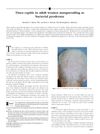 32 citations
,
August 2003 in “Journal of the American Academy of Dermatology”
32 citations
,
August 2003 in “Journal of the American Academy of Dermatology” Tinea capitis can be misdiagnosed as bacterial infection in adult women but is treatable with antifungal medication.
29 citations
,
October 2009 in “Pharmacology Biochemistry and Behavior”  18 citations
,
November 1994 in “Histochemical Journal”
18 citations
,
November 1994 in “Histochemical Journal” The enzyme PST is found in developing human kidneys and helps with detoxification and development.
 January 2024 in “Theranostics”
 Exosomes from special stem cells help treat ulcerative colitis by reducing inflammation and stress.
Urtica dioica L. extract may help treat skin fungus but is less effective than standard treatment.
Arabidopsis Formin 2 stabilizes actin filaments to aid cell-to-cell trafficking.
 14 citations
,
March 2019 in “Plant methods”
14 citations
,
March 2019 in “Plant methods” The new microrhizotron tool effectively observes and measures pepper plant roots non-destructively.
1 citations
,
June 2011 in “Journal of Dermatological Case Reports” Shaving and applying erythromycin cream and clotrimazole powder effectively treated trichomycosis axillaris.
 350 citations
,
June 1989 in “The American Journal of Medicine”
350 citations
,
June 1989 in “The American Journal of Medicine” Itraconazole is potentially effective for treating invasive aspergillosis, but more research is needed.
 100 citations
,
September 2016 in “Clinical transplantation/Clinical transplantation.”
100 citations
,
September 2016 in “Clinical transplantation/Clinical transplantation.” Voriconazole can cause serious side effects, especially in long-term use.

Menopause-related skin changes may increase fungal infections and inflammation.
 May 2024 in “ABDIKAN Jurnal Pengabdian Masyarakat Bidang Sains dan Teknologi”
 A family medicine approach improves treatment and quality of life for children with enterobiosis.
5 citations
,
November 2001 in “Auris Nasus Larynx” Accurate diagnosis of Winer's dilated pore in the ear is crucial to avoid unnecessary aggressive treatment.
12 citations
,
July 2019 in “Veterinary Dermatology” Nestin-expressing progenitor cells become outer root sheath keratinocytes.
 April 2019 in “Journal of Medical Science And clinical Research”
 The grey patch variant of tinea capitis is most common, mainly spread through family and animals.
24 citations
,
February 2011 in “The American journal of pathology” AIRE protein, defective in APECED patients, is found in skin and hair cells and interacts with cytokeratin 17.
July 2025 in “Carbohydrate Polymers” The green alga Parachlorella sp. has potential for use in cosmetics and health products due to its antioxidant, anti-hypertensive, and hair growth properties.
 7 citations
,
August 2022 in “Nature communications”
7 citations
,
August 2022 in “Nature communications” A specific group of slow-growing stem cells marked by Thy1 is crucial for skin maintenance and healing in mice.
 September 2023 in “Nature communications”
 Alk1 in specific cells is crucial for proper nerve branching and hair function.