 June 1997 in “The American Journal of Cosmetic Surgery”
 Reharvesting hair from donor sites using punch and strip methods can provide more hair for transplants and improve scar appearance.
 1 citations
,
May 2026 in “bioRxiv (Cold Spring Harbor Laboratory)”
1 citations
,
May 2026 in “bioRxiv (Cold Spring Harbor Laboratory)” UT-018 speeds up wound healing and boosts hair growth in mice.
June 2022 in “Narrative Inquiry in Bioethics” Organ transplants can greatly improve life but also bring challenges, requiring empathy and better communication from providers.
41 citations
,
July 2019 in “Clinical Cosmetic and Investigational Dermatology” The skin's immune system helps it regenerate and fight infections.
Higher TGF-β signaling may increase skin cancer risk in organ transplant recipients.
August 2023 in “Journal of Investigative Dermatology” Skin organoids can regenerate hair by forming specific cell units with certain signals.
12 citations
,
October 2024 in “Cell”  July 2026 in “Research Data Repository, Duke University”
 DMAP scaffolds help tissue regeneration by activating B cells and humoral immunity.
 2 citations
,
March 2019 in “Plastic and Reconstructive Surgery”
2 citations
,
March 2019 in “Plastic and Reconstructive Surgery” The letter suggests that a modified fat processing technique may increase regenerative cells but calls for more trials to confirm its effectiveness for skin and hair treatments.
 2 citations
,
August 2013 in “Facial Plastic Surgery Clinics of North America”
2 citations
,
August 2013 in “Facial Plastic Surgery Clinics of North America” The conclusion is that careful planning and technique in hair transplant surgery are crucial for successful graft harvesting and minimizing scars, with proper aftercare to avoid complications.
44 citations
,
September 2016 in “American Journal Of Pathology” Neural crest-derived progenitor cells in the cornea could help treat corneal issues without transplants.
39 citations
,
April 2023 in “Science Advances” CD34+ cells help heal damaged limbs by promoting blood vessel growth.
8 citations
,
March 2013 in “Cell Transplantation” Injecting young pig stem cells can make old pig skin look younger and more elastic.
18 citations
,
October 2021 in “Journal of Advanced Research” A new tissue engineering method could greatly improve hair regeneration therapies.
5 citations
,
May 2024 in “BMC Biotechnology” Using Matrigel with stem cells improves tissue healing.
February 2014 in “PubMed” Modified rat hair follicle stem cells can help create artificial hair follicles, blood vessels, and skin.
 January 2019 in “Hair transplant forum international”
 FUE is recommended as the initial choice for hair transplant on skin grafts.
 August 2009 in “Journal of Oral and Maxillofacial Surgery”
 Hair transplantation and micrografting are effective for facial enhancement with nearly 100% graft survival when done carefully.
14 citations
,
April 2015 in “Stem Cell Research & Therapy” Granulation tissue-derived cells can aid wound healing and serve as an alternative source of stem cells for tissue repair.
 6 citations
,
July 2015 in “Dermatology practical & conceptual”
6 citations
,
July 2015 in “Dermatology practical & conceptual” Feily's method prevents scalp necrosis in dense hair transplants by allowing time for blood flow to return before grafting.
 2 citations
,
January 2023 in “Eastern Journal Of Medicine”
2 citations
,
January 2023 in “Eastern Journal Of Medicine” PRF is preferred for better healing in dental surgeries.
 25 citations
,
August 2007 in “Molecular Therapy”
25 citations
,
August 2007 in “Molecular Therapy” Researchers found a safe and effective way to pick genetically modified skin cells with high growth potential using CD24.
 9 citations
,
August 2024 in “Tissue Engineering and Regenerative Medicine”
9 citations
,
August 2024 in “Tissue Engineering and Regenerative Medicine” Collagen-heparin-FGF2-VEGF scaffolds can improve skin healing.
 July 2014 in “Plastic and Reconstructive Surgery”
 Hair follicles stored in a special medium had the highest survival rate, and "plucked" follicles and follicular units showed better growth after transplant.
 January 2012 in “Elsevier eBooks”
 Hair transplantation is highly effective with careful technique and attention to patient needs.
 10 citations
,
December 2011 in “Cell Transplantation”
10 citations
,
December 2011 in “Cell Transplantation” Researchers successfully grew human hair follicle cells that could potentially lead to new hair loss treatments.
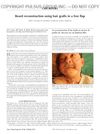 January 2011 in “Plastic Surgery”
 Hair grafts successfully restored a realistic beard and hid scars, satisfying the patient.
 1 citations
,
June 2017 in “PLOS ONE”
1 citations
,
June 2017 in “PLOS ONE” Host cells are crucial for the maturation of reconstructed hair follicles.
September 2003 in “International Society of Hair Restoration Surgery” Transplanted hair keeps growing like it did in the donor area.
44 citations
,
January 2015 in “Development” Human Schwann cells can be quickly made from hair follicle stem cells for nerve repair.